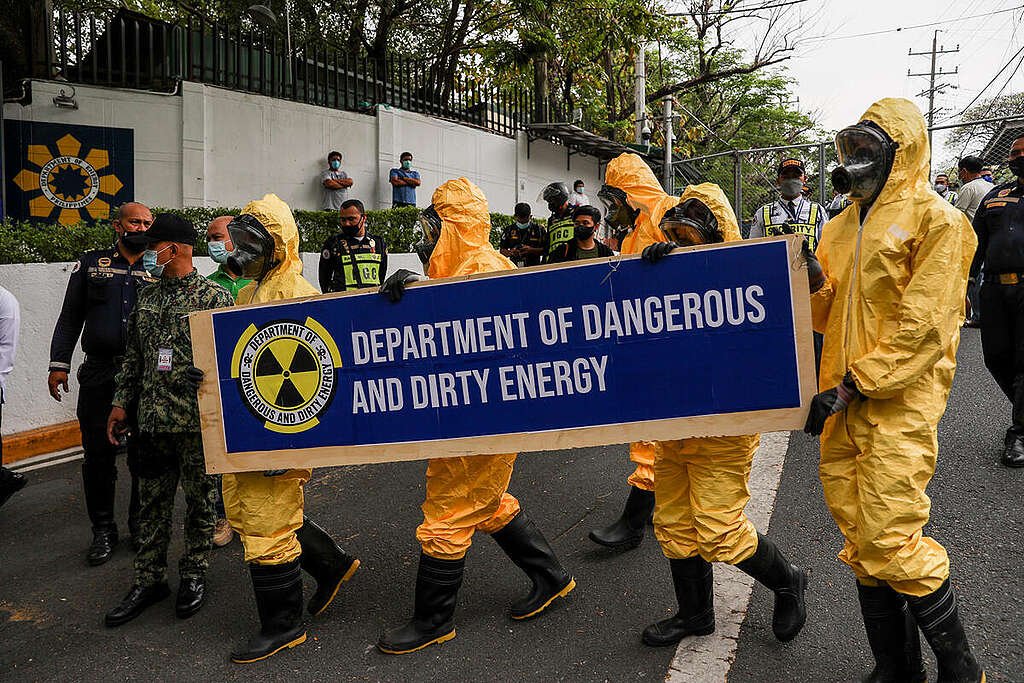
MANILA (April 13) — Environmental group Greenpeace Philippines warned that the Philippines is risking a major policy contradiction, as the government pushes for new oil and gas exploration even while preparing to strengthen its global climate commitments.
The group criticized plans to expand fossil fuel development in ecologically sensitive and protected areas—including the Liguasan Marsh, parts of Tawi-Tawi, Cebu, and the Malampaya—calling the move “misguided” amid a global energy crisis rooted in oil dependency.
“Pivoting towards more local fossil fuel sources is not the answer to a crisis caused by a war driven by oil,” said Jefferson Chua of Greenpeace Philippines.
Energy Security vs. Climate Risk
The government has framed the exploration push as part of its response to volatile global fuel prices and supply disruptions, particularly following tensions in the Middle East and the declaration of a national energy emergency.
Officials have pointed to the untapped reserves in Mindanao, with the Department of Energy describing Liguasan Marsh’s potential as “very good.” Estimates suggest the area could hold billions of cubic feet of natural gas and up to 202 million barrels of oil.
Bangsamoro officials have also backed the move, with regional leaders arguing that developing local reserves could provide a long-term energy solution for Mindanao.
‘Carbon Bomb’ Warning
But Greenpeace argues that tapping these reserves—particularly in Liguasan Marsh—could trigger severe environmental consequences.
The marsh is home to carbon-rich peatlands, which act as natural carbon sinks. Once disturbed, these ecosystems can release large amounts of greenhouse gases.
“Opening Liguasan Marsh to extraction risks turning it into a massive carbon bomb,” Chua warned.
Beyond emissions, environmentalists say extraction could:
- Disrupt fragile wetland ecosystems
- Threaten biodiversity
- Increase disaster risks for nearby communities