Summit calls for investment and stronger systems as Western Mindanao confronts growing waste
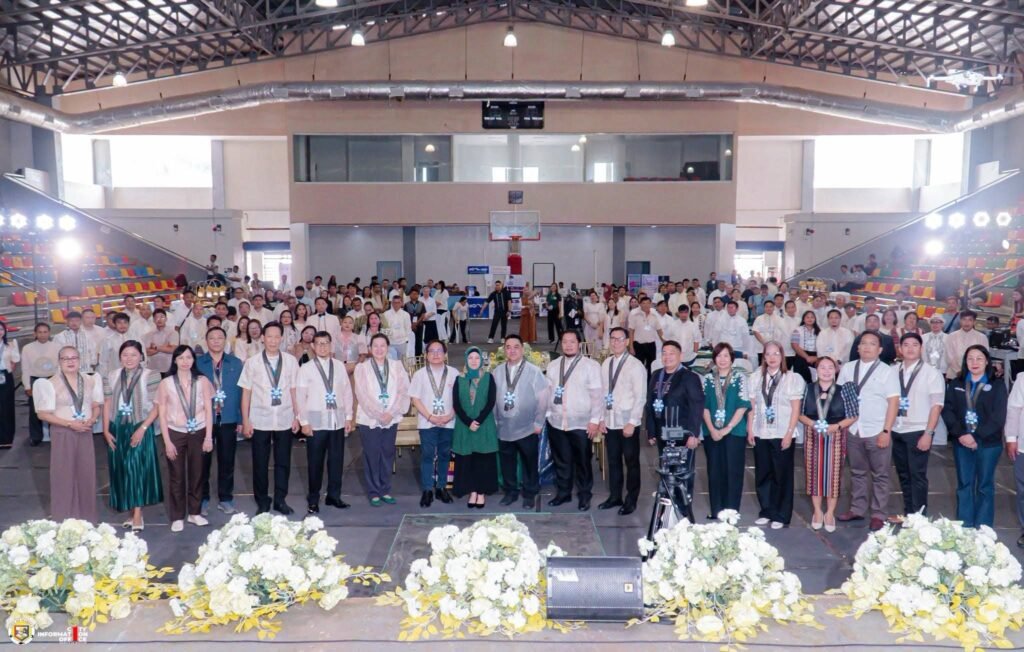
Photo: DENR Zamboanga Peninsula
ISABELA CITY, Basilan(August 25) — For an island city surrounded by water, managing garbage is more than keeping streets clean. Every plastic bottle that escapes collection can become a marine pollutant; every poorly managed dump can become a threat to public health and the environment.
That is why Isabela City is pushing to change the way Western Mindanao looks at waste—from something to collect and dispose of into a resource that can create jobs and attract investment.
The issue took center stage during the three-day Environmental Summit and Investment Forum, which brought together government agencies, local governments, development organizations and private stakeholders to promote stronger solid waste management and a circular economy.
The summit’s theme, “Closing the Loop: Strengthening Solid Waste Management through Innovation and Partnership,” reflects a problem that cannot be solved by waste segregation campaigns alone.
Mayor Hataman said Isabela City is trying to move beyond the familiar “take, make, use, dispose” model through resource recovery, recycling and reuse.
The city has launched programs such as the Isabela Seasweepers, which recover plastic waste from coastal areas, while also working to involve indigenous communities in recycling chains.
It is also implementing a 10-year solid waste management plan based on Waste Analysis and Characterization Studies, which are intended to identify what residents throw away and help government design more targeted waste programs.
“We have shifted our governance from basic waste disposal to systemic resource recovery,” Hataman said.
But the summit also exposed a critical reality: a circular economy cannot be built by local governments alone.
Waste management requires collection systems that work, facilities that can process recoverable materials, markets for recycled products, financing, enforcement and communities willing to change long-established habits.
Without these pieces, the circular economy risks remaining a good slogan rather than a working system.
DENR-EMB IX Regional Director Atty. Abbas Lao stressed the importance of innovation, collaboration and investment in addressing solid waste challenges.
Baguio City Mayor Benjamin Magalong likewise urged local governments to stop treating garbage simply as a disposal problem.
Waste, he said, can become an economic resource capable of creating jobs and attracting investments.
That shift in thinking is important for communities. Recycling does not end when households separate their garbage. Someone still has to collect, sort, process, transport and find a market for those materials.
This is where private investment and government policy must meet.
The Department of Environment and Natural Resources–Environmental Management Bureau, Mindanao Development Authority, United Nations Development Programme and Isabela City government used the summit to bring these sectors together.
Key officials also signed a Partnership Activation and Pledge of Support for stronger solid waste management initiatives.
But commitments on paper will ultimately have to be measured against what residents see on the ground: cleaner waterways, reliable waste collection, functioning recovery facilities, less plastic reaching the sea and better livelihoods for people working in the recycling chain.
For Isabela City, the challenge is particularly urgent.
As an island community, it has little room for waste to simply disappear. Garbage that is not properly managed can find its way back through the sea, the food chain and the community itself.
The summit therefore offers an opportunity—but also a test.
If Isabela City can turn its waste programs into a functioning system supported by investment, enforcement and community participation, it could offer a model for other island communities in Western Mindanao.
But if the push stops at summits, pledges and segregation campaigns, the region’s garbage problem will remain exactly that: a problem waiting to wash back onto its shores.