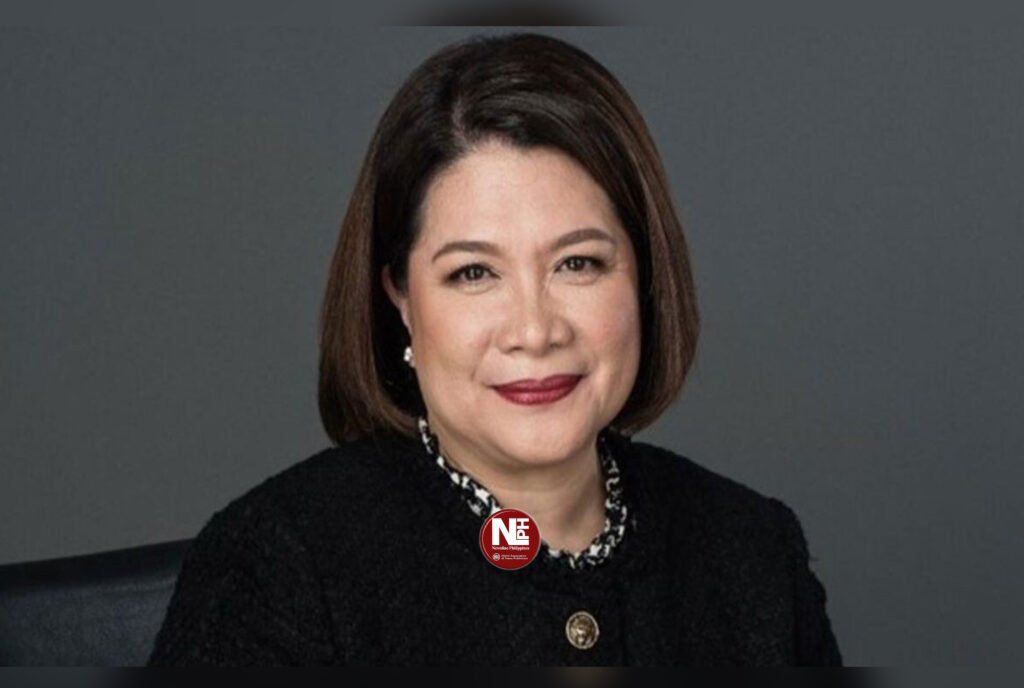
MANILA(January 30) — Eradicating corruption in government, particularly in multibillion-peso flood control projects, may take “several lifetimes” because it is deeply embedded in systems designed to look compliant but are deliberately abused, former Independent Commission for Infrastructure (ICI) commissioner and SGV & Co. country managing partner Rossana Fajardo said Tuesday.
Speaking publicly for the first time since resigning from the ICI, Fajardo said her three-month stint exposed how officials and politicians exploit budget and procurement processes—especially at the Department of Public Works and Highways (DPWH)—to enable kickbacks while appearing to follow the rules.
“There are processes in place and controls in place,” Fajardo said at the Philippine Business for Social Progress (PBSP) annual meeting. “The issue is that people intentionally override these controls.”
A system designed to be abused
Fajardo said the individuals behind the flood control mess were “very smart,” underscoring that technical expertise alone cannot prevent corruption when values are absent or distorted.
“Even if you put the smartest and most capable people there, if values are misplaced, they can still do things contrary to what they are asked to do,” she said.
She added that undoing corruption would require dismantling entrenched networks across institutions—an effort she warned cannot be achieved quickly or by oversight bodies alone.
Fajardo resigned from the ICI on Dec. 26, 2025, saying she had fulfilled her mandate. Her exit followed that of fellow commissioner and former DPWH secretary Rogelio Singson, who stepped down earlier due to health reasons but later returned as part of a technical working group reviewing new flood control proposals.
Budget insertions, weak accountability
The ICI was created to scrutinize major infrastructure projects amid allegations of padded budgets and ghost flood control works. Fajardo became publicly known after a tense congressional hearing in December, when she questioned Budget Secretary-in-charge Rolando Toledo about unexplained discrepancies between the National Expenditure Program (NEP) and the General Appropriations Act (GAA).
“Who do you hold accountable for this very large difference between the NEP and the GAA?” she asked, referring to alleged insertions linked to flood project kickbacks.
Her remarks on Tuesday echoed long-standing concerns raised by auditors and civil society groups that flood control allocations—often justified by climate resilience—have become one of the most corruption-prone items in the national budget.
Private sector urged to push back
Fajardo called on businesses and institutions to stop being passive observers, warning that corrupt officials are becoming “prouder and braver” in denying wrongdoing.
“It’s time to be more demanding and more outspoken,” she said. “We need to bring concerns to the right people and institutions that can restore integrity and accountability in government.”
Her comments were reinforced by business leader Manuel V. Pangilinan, who said weak institutions make it difficult for companies to operate fairly and efficiently in the Philippines.
“When you’re facing government and you look for support, there are no strong institutions you can rely on—media, judiciary, academe, even the church,” Pangilinan said.
He cited the telecommunications sector as an example, arguing that regulatory bottlenecks and rigid competition rules prevent rationalization that could improve services.
Still, Pangilinan said businesses have a responsibility to improve lives, not just profits.
“The ultimate test of business is how well you improve the welfare of the people,” he said.
Flood control cases move to trial
Fajardo’s remarks come as courts begin hearing cases linked to alleged ghost flood control projects.
On Tuesday, the Sandiganbayan Fourth Division arraigned former DPWH Bulacan First District Engineering Office officials Brice Hernandez, Jaypee Mendoza, and Christina Pineda, who all pleaded not guilty to graft charges over a ₱92.8-million flood control project in Pandi, Bulacan.
The arraignment of former district engineer Arjay Domasig was reset to Feb. 9 after he appeared without counsel. Also awaiting arraignment are former senator Ramon “Bong” Revilla Jr. and former DEO accountant Juanito Mendoza, both of whom have filed motions to dismiss the charges.
The accused also face a separate, non-bailable malversation case before another Sandiganbayan division.
A familiar cycle
While prosecutions inch forward, Fajardo warned that cases alone will not fix a system that repeatedly allows public funds meant for flood protection—often in vulnerable communities—to be siphoned off.
“You can put all the controls you want,” she said, “but if people choose not to follow them, corruption will continue.”