
CAGAYAN DE ORO CITY (October 7) — At the heart of Northern Mindanao’s drive toward more inclusive governance, the Department of the Interior and Local Government–Region 10 (DILG-10) is working to move gender equality from policy paper to daily practice.
This week, regional officials reaffirmed their “obligation” to advance Gender and Development (GAD) as a core component of governance, underscoring that gender sensitivity must be reflected not just in programs, but in the way institutions make decisions and deliver services.
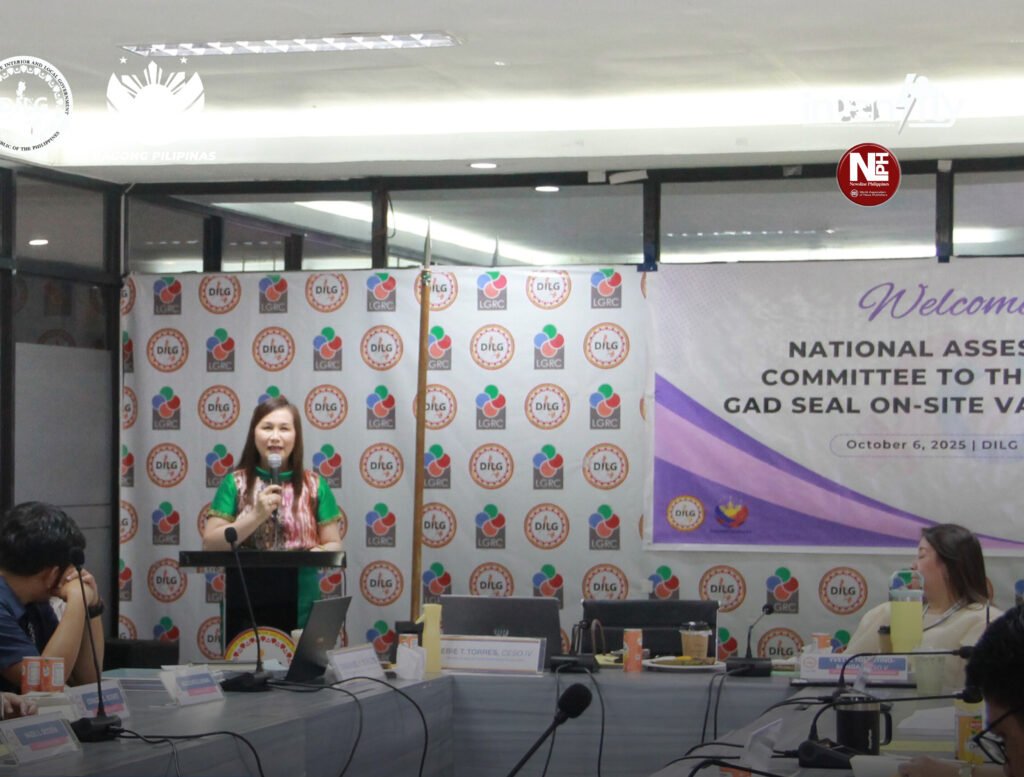
“The GAD Seal is not just a recognition, but a call to sustain and strengthen efforts to ensure that no one is left behind,” said Debie Torres, director of DILG’s Bureau of Local Government Supervision, during an on-site validation for the GAD Seal Program.
Turning policy into practice
The GAD Seal Certification Program, institutionalized through Department Order No. 2023-237 and Resolution No. 03, series of 2022, is part of the department’s broader effort to systematize gender mainstreaming across local government units (LGUs). It encourages offices to adopt measurable gender-responsive policies—ranging from equitable human resource practices to inclusive infrastructure and welfare initiatives.
DILG-10 Assistant Director Yvette Sunga said the seal’s validation process allows the region to reflect on its own systems. “We see it as more than an evaluation—it’s an opportunity to strengthen compliance, improve services, and share learnings that support inclusive governance,” she said.
Inclusive design and workplace safety
Within the department, gender-responsive policy has taken tangible form. The DILG-10 GAD Focal Point System Executive Committee and Technical Working Group has implemented initiatives promoting both employee welfare and gender sensitivity: dormitories and shuttle services for safer commuting, medical and wellness programs, the Annual Parangal recognition system, and infrastructure upgrades like covered walkways and the Mini-Forest Greenery Project.
These seemingly small efforts, officials noted, represent the local government’s evolving understanding of how gender inclusion influences productivity, well-being, and equity.
Policy ripple effect
Beyond the agency, DILG-10 hopes its example will inspire LGUs to integrate GAD principles into their local policies—such as gender-responsive budgeting, safe-space ordinances, and equitable access to public services.
The department’s regional validation exercises aim to guide cities and municipalities in aligning local ordinances with the national gender mainstreaming framework.
As Torres put it, “Gender mainstreaming is not an add-on—it is a governance standard. It’s how we make sure our policies truly serve all sectors of society.”
For Northern Mindanao, that means building not only better local institutions, but a culture of governance where equality is embedded in every decision made.