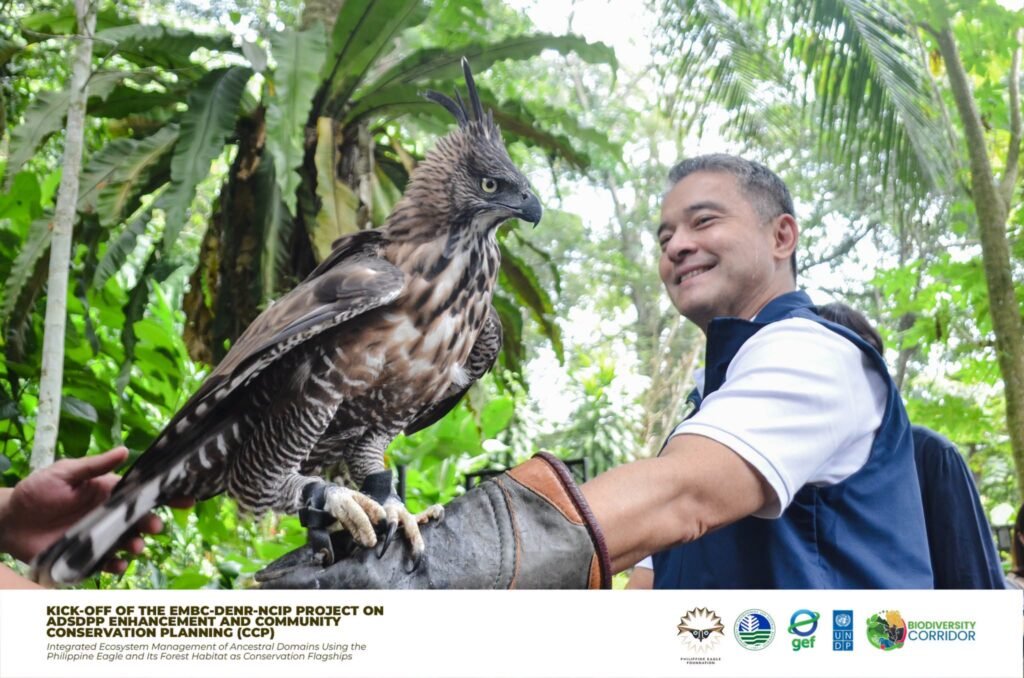
Meet Viggo: The Philippine Eagle on the P1,000 bill

Date:

Share post:

Photo: Philippine Eagle Foundation

DAVAO CITY (September 2) — For many Filipinos, the Philippine Eagle is a familiar image on the P1,000 polymer banknote.

But visitors to the Philippine Eagle Center (PEC) recently had the rare chance to see one up close—and learn the story behind the bird on their money.

Viggo, the Philippine Eagle featured on the P1,000 banknote, was the star of two special Keeper’s Talk sessions at the center on Aug. 30 and 31.

Held twice a day, the sessions allowed visitors to get a closer look at Viggo while learning about the country’s national bird, its behavior, breeding and the continuing effort to save the species from extinction.

The activity is part of the Philippine Eagle Foundation’s (PEF) effort to develop the center into more than just a place where people see captive eagles.

The foundation wants the PEC to become an ecotourism and education hub where visitors can better understand wildlife and their role in protecting it.

More than a bird on a banknote
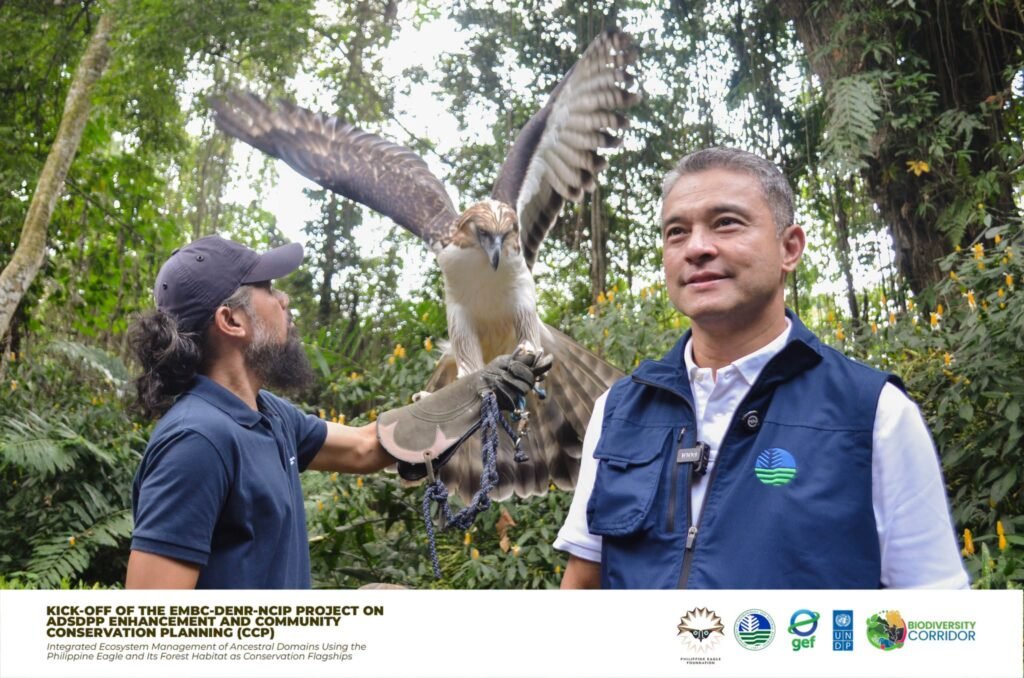
For visitors, seeing Viggo in person offered a different experience from simply seeing his image printed on money.

According to PEF Communications Officer and Conservation Education and Development Program Interim Lead Irick Francisco, the encounters are meant to help people understand the Philippine Eagle beyond its impressive appearance.

“People can learn about the eagle’s biological nature,” said senior animal keeper Dominic Tadena, Viggo’s surrogate mate.

Visitors were particularly interested in how Philippine Eagles reproduce, including the use of artificial insemination in conservation breeding.

Helping eagles produce the next generation

Viggo normally stays in a specially prepared enclosure with nesting materials during the breeding season.

But for the special sessions, he took a short break from his breeding routine to meet visitors.

Tadena said Viggo remains healthy and receives a carefully prepared diet that includes rabbit, guinea pig, white rat and goat meat.

Viggo is also part of the foundation’s conservation breeding program.

One technique used by the PEF is Cooperative Artificial Insemination, or CAI.

In simple terms, the method helps human-imprinted male eagles produce offspring with female eagles that are also comfortable around people.

A trained keeper builds a trusting relationship with the male eagle and collects its semen. The semen is then used to fertilize a female eagle’s egg.

The technique has been used by the foundation together with natural breeding for many years.

Among its successful offspring is Mabuhay, born in 2013—a milestone in the foundation’s efforts to increase the number of Philippine Eagles under human care.

The work is especially important because the Philippine Eagle remains critically endangered.

‘Nakakulong sila pero…’

One question visitors often ask is why the eagles have to live in enclosures.

Francisco said the answer is connected to conservation breeding.

“Nakakulong sila pero it is part of breeding,” he explained.

For the foundation, keeping some eagles under human care is part of a larger effort to produce offspring that can help strengthen the population of the species.

The challenge is helping the public understand why these birds are in captivity and how conservation facilities contribute to their survival.

Changing how people see wildlife

The PEC’s educational work goes beyond Philippine Eagles.

The center also features animals such as snakes and crocodiles—creatures that are often feared or misunderstood.

By allowing visitors to learn about these animals, the foundation hopes to replace fear and negative stereotypes with greater understanding and respect for wildlife.

The goal is not simply to have people leave the center impressed by what they saw.

It is to have them leave understanding why these animals matter and what people can do to protect them.

Bringing people closer to conservation

The Philippine Eagle Center currently welcomes around 5,000 to 8,000 visitors each month.

The foundation hopes visitor numbers will eventually return to pre-pandemic levels as public interest in wildlife and conservation continues to grow.

For visitors who met Viggo, however, the experience offered something more personal than seeing a famous bird behind an enclosure.

It was a reminder that the Philippine Eagle on a P1,000 bill is not merely a national symbol.

It is a living species fighting for survival—and its future depends on how much Filipinos understand, value and protect it.

RIZAL MEMORIAL COLLEGEspot_img

Related articles

Making every peso count for children: CBETT expands across Mindanao

DAVAO CITY (September 2) — When government officials decide how to spend public money, families want to know...

DepEd school safety drill to focus on preparedness, not fear

CAGAYAN DE ORO CITY (September 2) — Schools across the country will hold a nationwide safety drill on...

Cardinal Ambo: Don’t just survive disasters—demand accountability

MANILA (September 2) — Filipinos should stop treating recurring floods, unsafe infrastructure and preventable deaths as inevitable consequences...

Thailand nagpasidaan sa posibleng ‘prostitusyon’ sa pagdunggo sa 5K ka US Marines ug sailors

DAKBAYAN SA DAVAO (Septiembre 2) - Una pa man makadunggo ang kapin singko mil (5,000) ka mga...