DAVAO CITY (July 22) — More than 160 government officials, civil society groups, migrant advocates and other stakeholders are set to gather here next week to tackle emerging migration issues, including climate-driven displacement, irregular migration and the growing movement of people from rural areas to cities.
The 2nd Mindanao Summit on Migration Governance, Peace, and Development will be held July 28 to 30 at the Pinnacle Hotel and Suites, bringing together stakeholders to discuss migration challenges and craft policy recommendations for government.
Organized by the Mindanao Migrants Center for Empowering Actions, Inc. (MMCEAI) and its partner institutions, the three-day summit will focus on how migration can be managed in ways that protect migrants and their families while supporting peace and development.
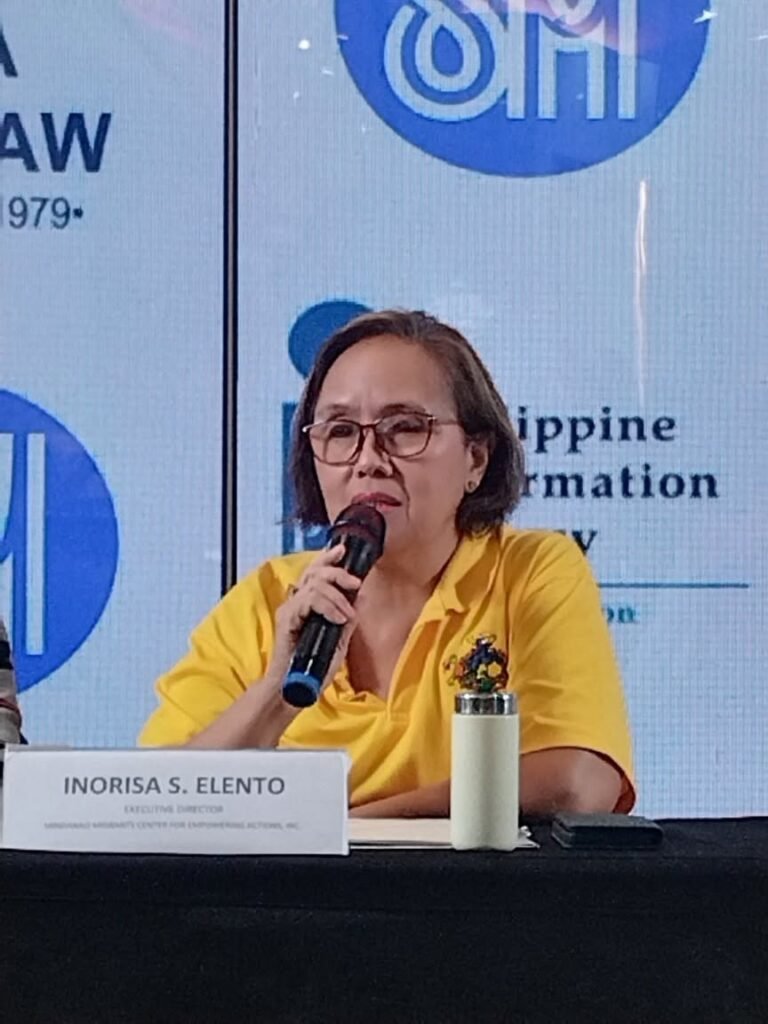
Speaking at the Kapehan sa Davao on Monday, MMCEAI Executive Director Inorisa Sialana Elento said migration can open doors to better livelihoods and social mobility but can also expose migrants to exploitation, family separation, unsafe working conditions and irregular migration routes.
“Migration realities continue to evolve and become increasingly complex, requiring stronger coordination, evidence-based policymaking, and collective action among stakeholders,” Elento said.
Beyond the OFW story
The summit will feature thematic workshops on four key concerns: children of overseas Filipino workers (OFWs), irregular migration corridors, climate-induced migration, and internal migration and urbanization.
Elento said the concerns of migrants’ children often receive less attention despite the significant impact of parental migration on families and communities.
“While we are discussing OFWs, sometimes and oftentimes, we miss discussing the issues and agenda of our children of migrant workers,” she said.
The summit will also examine irregular migration corridors, particularly informal routes used by Filipinos returning from Sabah, Malaysia, and the challenges of tracing and reconnecting them with their communities of origin across Mindanao.
Another concern is internal migration, as people increasingly move from rural areas to urban centers in search of jobs and better opportunities.
Elento said better management of these population shifts is needed to prevent pressure on government resources and avoid gaps in basic services.
Climate change driving people from home
Climate-induced migration is also expected to take center stage as more communities are forced to leave their homes because of floods, landslides, coastal changes and other disasters.
Atty. Mark Peñalver, executive director of Interfacing Development Interventions and Sustainability, said environmental stress and climate change have become major drivers of displacement.
“Migration right now is not just driven by economic or social issues. Looking at the bigger picture, migration is now heavily induced by environmental factors and climate change,” Peñalver said.
He cited recent coastal uplift, flooding and landslides in Mindanao and neighboring provinces that have disrupted livelihoods, particularly among fishing and farming communities.
For families displaced by disasters, the challenges do not end after they leave their homes.
Peñalver warned that people living in temporary relocation sites may become more vulnerable to human trafficking and fraudulent recruitment schemes, especially when they are desperate for income and employment.
Environmental pressures, he added, can undermine the economic sustainability of communities, forcing residents to move from one place to another in search of safer homes and more stable livelihoods.
From discussion to policy
Organizers said the summit aims to turn discussions into concrete policy action.
Policy resolutions developed during the thematic workshops will be consolidated and formally submitted to national government agencies for consideration in future programs, policies and legislative interventions.
For Mindanao, organizers said, migration should no longer be viewed simply as the movement of people from one place to another.
It is increasingly tied to the region’s biggest challenges—from the welfare of OFW families and irregular migration to climate disasters, urbanization, livelihoods and peace.
The summit seeks to bring these concerns together and push for a more coordinated response that protects migrants while helping communities adapt to a rapidly changing world.