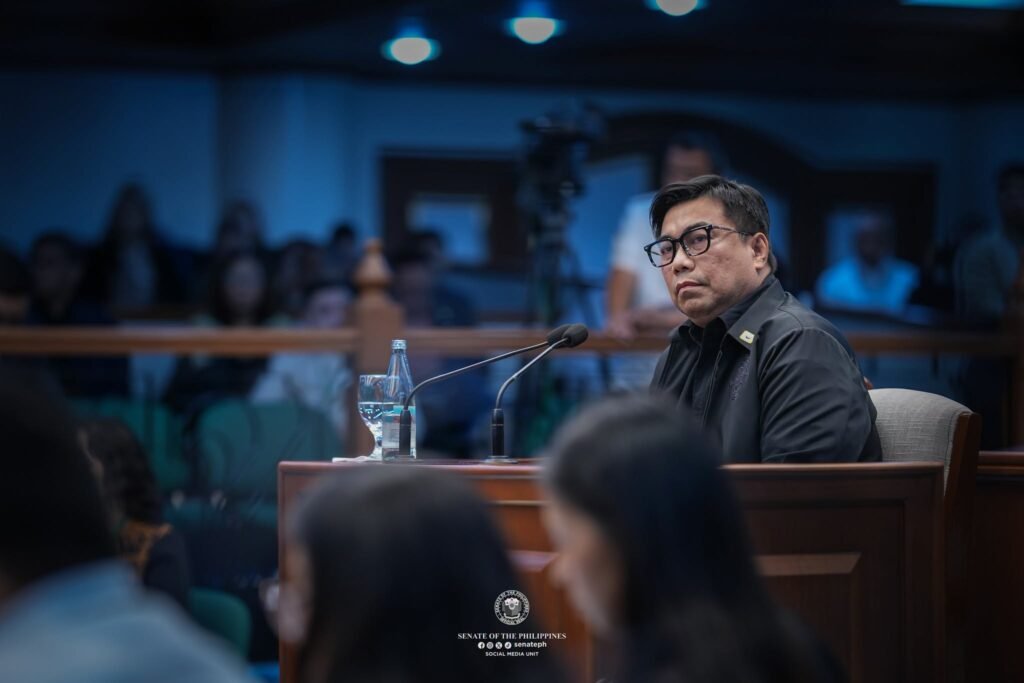
MANILA (July 23) — The National Bureau of Investigation has narrowed its search to fewer than 20 people as it tries to identify the alleged assassin whom Vice President Sara Duterte reportedly contacted to kill President Ferdinand Marcos Jr., NBI Director Melvin Matibag told the Senate impeachment court Wednesday.
Testifying on the ninth day of Duterte’s impeachment trial, Matibag said investigators are now focused on verifying the identities of persons of interest allegedly connected to the vice president’s controversial online press conference in November 2024.
The disclosure puts a sharper focus on one of the most explosive allegations surrounding the political feud between the Marcos and Duterte camps. But it also leaves a crucial question unanswered: Has the investigation uncovered evidence of an actual assassination plot, or is the case still largely anchored on the vice president’s public statements?
Matibag’s testimony indicated that the NBI’s investigation remains ongoing. The bureau is working to establish the identities of individuals it believes may be linked to the alleged threat, but the testimony did not establish that Duterte successfully recruited an assassin, paid anyone to carry out a killing, or that an assassination attempt was actually set in motion.
That distinction could prove critical in the impeachment proceedings.
Duterte’s remarks in November 2024 triggered a government security response and intensified the already bitter political rupture between the Marcos and Duterte families. The incident has since become a central element in the impeachment case, with lawmakers and prosecutors scrutinizing whether her statements amounted to a genuine threat against the president or political rhetoric delivered amid an escalating power struggle.
The NBI’s narrowing of its list of persons of interest may indicate progress in the investigation, but it does not, on its own, establish criminal culpability.
For the impeachment court, the issue is likely to go beyond identifying the alleged assassin. It must also weigh the credibility and context of the evidence, determine whether Duterte’s statements were intended to be acted upon, and assess whether the conduct alleged against her rises to the level of an impeachable offense.
The case therefore presents a delicate test for both law enforcement and the political system: how to investigate a potentially serious threat against the country’s president without allowing an unresolved allegation to become a substitute for proof.
As the NBI continues its search, the impeachment proceedings will increasingly turn on the evidence that investigators can actually produce—not merely on the extraordinary claims that set the controversy in motion.