CAGAYAN DE ORO CITY (July 20) — For a child who has already endured abuse and exploitation, telling the story once can be difficult enough.
Being asked to tell it again—and again—to police, social workers, prosecutors, doctors and the courts can deepen the trauma.
The Department of Justice (DOJ) and the Department of Social Welfare and Development (DSWD) in Northern Mindanao are working to change that.
Through a more child-centered approach to justice, the agencies are reducing repeated interviews with children rescued from human trafficking and online sexual abuse while strengthening the support they need to recover and pursue justice.
The approach comes as Northern Mindanao records more than 100 convictions for trafficking in persons and another 100-plus convictions under the law against Online Sexual Abuse and Exploitation of Children (OSAEC).
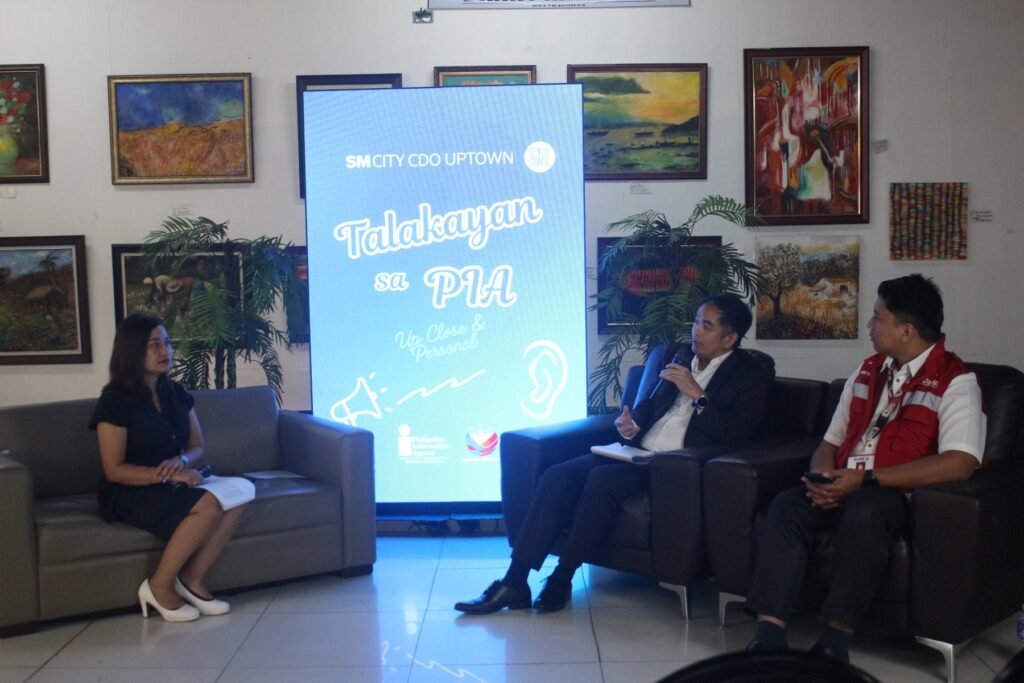
Speaking during the Talakayan sa PIA on July 7 at SM City CDO Uptown, Senior Assistant City Prosecutor Louie Borja of the DOJ-10 said one of the reforms being used is the Video In-Depth (VID) Interview.
Instead of repeatedly recounting their experiences to different authorities, child victims undergo one comprehensive interview conducted by a trained expert interviewer.
“One interview lang didto. Gamiton nato ang usa ka interview to prevent re-traumatization sa bata,” Borja said.
(There will only be one interview. We will use a single interview to prevent the child from being retraumatized.)
The interview is recorded and can be used by agencies involved in the investigation and prosecution of the case, helping preserve the child’s testimony while reducing the emotional burden of repeatedly reliving traumatic experiences.
Borja said the DOJ also assigns prosecutors to monitor trafficking cases and act promptly on complaints. The recorded VID interview may be presented as evidence during prosecution, reducing the need for children to repeatedly appear before different authorities.
Justice without more trauma
The DOJ’s Witness Protection Program also provides another layer of support, encouraging victims and witnesses to pursue cases without fear of intimidation or financial pressure from traffickers.
Qualified witnesses may receive state protection and financial assistance while cooperating with authorities.
“We make sure that justice is served against perpetrators of human trafficking,” Borja said.
But for government agencies, justice does not end with the conviction of an offender.
The recovery of the child is equally important.
Mark Anthony E. Viernes, RSW, Community-Based and Sectoral Section Head and Social Welfare Officer IV of DSWD Field Office 10, said social workers help children and their families understand what is happening at every stage of the legal process.
“As social workers, mutabang mi sa pagpasabot sa dagan sa kaso,” Viernes said.
(As social workers, we help explain the legal process to the child and the family.)
Through its Recovery and Reintegration Program for Trafficked Persons, the DSWD provides psychological first aid, counseling, temporary shelter, educational and livelihood assistance, family assessment and reintegration services.
These interventions aim to help victim-survivors regain a sense of safety, return to school or other productive activities, and rebuild their lives after exploitation.
The DOJ and DSWD also coordinate during rescue operations to ensure children receive immediate protection, counseling and appropriate care.
Long-term arrangements are carefully assessed, especially when family members may be involved in the abuse or exploitation.
“Our goal is not only to rescue the child but also to prevent further psychological injury while ensuring that the perpetrators are prosecuted,” Borja said.
The discussion was part of the observance of National Anti-Trafficking Awareness Month 2026.
The DOJ and DSWD called on government agencies, local government units and communities to report suspected cases of human trafficking, online sexual abuse and child exploitation.
For authorities, community vigilance remains crucial: A child’s rescue is only the beginning. The bigger challenge is making sure the child is protected, supported and given a fair chance to heal—while those responsible are brought to justice.