17 crew members arrested, but authorities still have to get to the networks behind the boats
Photo: Naval Command Western Mindanao
ZAMBOANGA CITY (August 29) — Two boats, more than P147 million worth of undocumented fuel and cigarettes, and 17 arrested crew members—but authorities are still left with a bigger problem: identifying and dismantling the networks that put the contraband on the water in the first place.
The Naval Command Western Mindanao (NCWM) intercepted the shipments in separate operations on Aug. 22 and Aug. 24, exposing once again how Western Mindanao’s extensive maritime routes continue to be used to move potentially untaxed and undocumented goods.
The seizures involved P52.27 million worth of undocumented diesel fuel and the motorboat used to transport it, followed two days later by P95.01 million worth of foreign-brand cigarettes aboard another vessel.
NCWM Commander Rear Admiral Constancio Arturo Reyes Jr. said the first interception took place Aug. 22 in waters off Barangay Labuan in Zamboanga City’s West District.
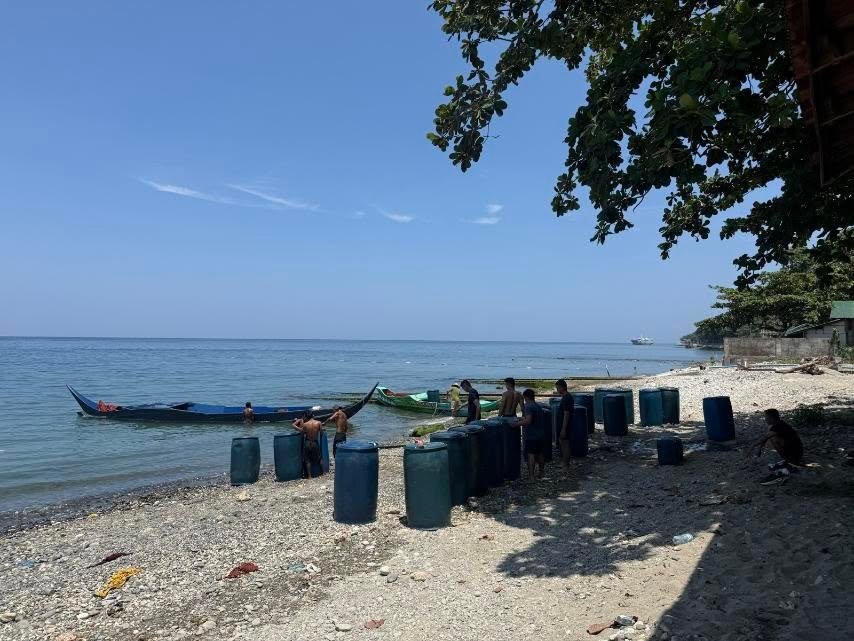
Naval operatives stopped an unmarked motorboat carrying several drums of undocumented diesel fuel. Seven crew members were arrested.
On Aug. 24, naval forces intercepted M/B Jiboy off Pangasinan Island in Sulu, finding 611 master cases and 37 reams of undocumented foreign-brand cigarettes valued at approximately P95.01 million.
Ten crew members were arrested.
The combined seizures represent a substantial amount of goods that authorities say were being transported outside the legitimate customs system.
But the arrests also underscore a recurring difficulty in anti-smuggling operations: the people caught aboard the boats may not necessarily be the people who financed, organized or profited from the shipments.
The NCWM did not immediately identify the owners of the cargo or vessels, nor did it disclose where the shipments originated or their intended destinations.
Those details could be critical in determining whether the two interceptions were isolated incidents or part of larger, organized smuggling routes operating across Western Mindanao.
The bigger catch
All seized vessels, fuel and tobacco products were turned over to the Bureau of Customs (BOC), Port of Zamboanga, for inventory and legal disposition.
That puts the next phase of the cases largely in the hands of customs and prosecutors: establishing ownership, tracing the supply chain, determining the applicable violations and pursuing those ultimately responsible.
The question is whether the cases will end with the seizure of the cargo and the prosecution of boat crews—or whether investigators can move further upstream to the financiers, suppliers and intended recipients.
Smuggling is not simply a maritime security problem.
When fuel and cigarettes enter the market without the required documentation and taxes, legitimate businesses that pay duties and comply with regulations can be placed at a disadvantage. Government, meanwhile, potentially loses revenue that would otherwise go toward public services.
The scale of the latest seizures also illustrates the economic stakes.
The two shipments alone were estimated at more than P147 million, although the actual value of the government revenue potentially lost cannot be determined from the seizure figures alone.
A sea of routes
Western Mindanao presents a particularly difficult enforcement environment.
Its long coastline, numerous islands and proximity to international maritime routes provide legitimate avenues for commerce—and, potentially, opportunities for illicit trade.
That makes interdiction only one part of the equation.
Authorities need sustained intelligence operations, coordinated monitoring of maritime routes, financial investigation and effective prosecution if they are to prevent smugglers from simply replacing one seized boat with another.
Reyes said the NCWM would continue its maritime security operations against illicit activities.
“We will sustain our maritime security operations to disrupt smuggling networks and deny the use of Western Mindanao waters for illegal activities,” Reyes said.
The latest operations demonstrate that authorities can intercept large shipments.
The bigger test, however, is whether they can follow the cargo trail beyond the boats—and reach the people who make the smuggling business possible.