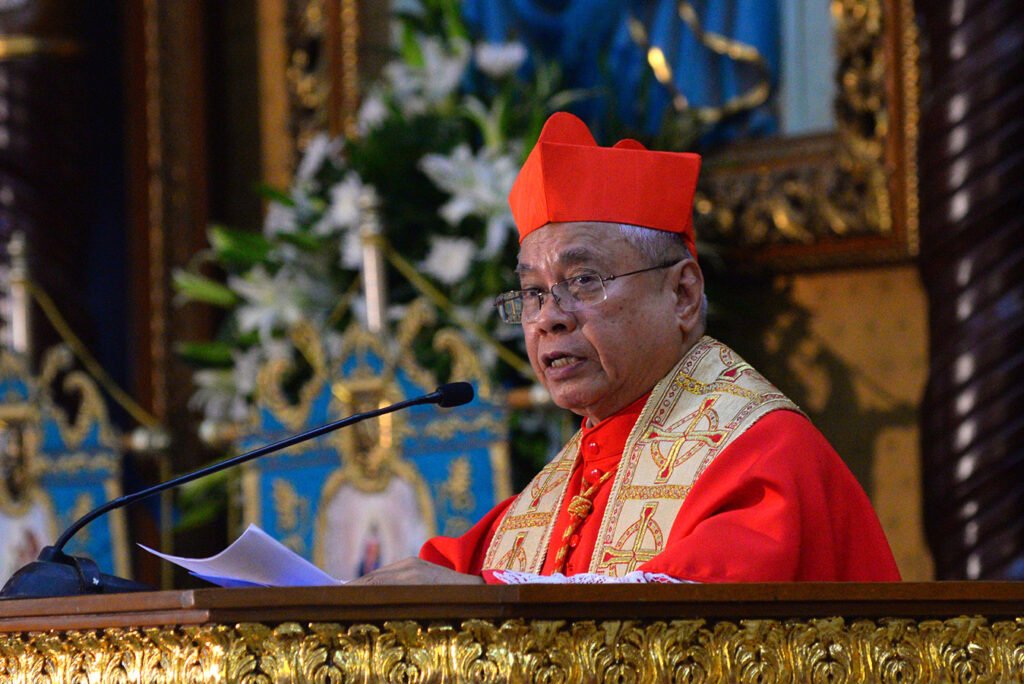
MANILA(April 5) — At a time when many Filipinos are grappling with rising costs and deepening inequality, former Cotabato archbishop Orlando Quevedo used one of the Catholic Church’s most sacred liturgies to draw a stark line between faith and the country’s lived reality.
During the Easter Vigil—described by Augustine of Hippo as the “mother of all vigils”—Quevedo departed from purely spiritual reflection and instead anchored his homily on the nation’s mounting crises: surging prices, an ongoing oil squeeze, and what he called “rampant corruption.” In doing so, he reframed the traditional imagery of darkness not as an abstract moral condition, but as a daily burden carried most heavily by the poor.
“Hunger stalks the land,” Quevedo said, tying economic distress directly to governance failures. The statement cuts through familiar Holy Week rhetoric, situating suffering not only in personal sin but in systemic conditions that continue to go unaddressed.
The intervention is significant. In a country where religious observances often coexist with political inertia, Quevedo’s message underscores a persistent tension: the Church’s moral voice remains influential, yet its critiques of inequality and corruption rarely translate into structural change. By naming inflation and hunger within a liturgical setting, the cardinal effectively challenged both leaders and the faithful to confront uncomfortable questions about accountability.
His contrast was deliberate. Against the “darkness” of economic and political strain, Quevedo invoked the Paschal candle—the light of Christ—as a symbol not just of personal salvation, but of collective liberation. The implication is pointed: hope, in this framing, is not passive. It demands action in the face of injustice.
The Mass, concelebrated by Jose Advincula and Charles Brown, followed the traditional rites marking the first proclamation of Christ’s resurrection. Yet Quevedo’s homily ensured the message did not remain confined to ritual.
In invoking both faith and frustration, the Easter Vigil became more than a celebration of resurrection—it turned into a quiet but pointed critique of a nation where, for many, the promise of light still struggles to break through the dark.