MANILA (August 11) — The Bangsamoro’s first parliamentary elections could face a delay if typhoons or severe flooding make it unsafe or impossible for voters to reach polling places on Sept. 14, the Commission on Elections (Comelec) said.
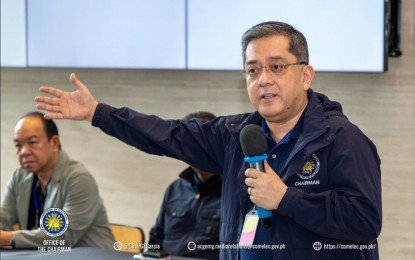
Comelec Chairperson George Garcia said the poll body is preparing for the possibility of postponing the Bangsamoro Parliamentary Elections (BPE) if bad weather disrupts voting.
Under the Omnibus Election Code, the Comelec may postpone elections in cases of force majeure, including typhoons and flooding. If the Sept. 14 polls are postponed, Garcia said the elections must be held within 30 days.
“That is an option we are considering,” Garcia said during a media walkthrough of the BPE Data Centers 1 and 2 in Makati City.
The warning comes as the Comelec races against time to prepare for an election involving 2,393,202 registered votersacross the Bangsamoro Autonomous Region in Muslim Mindanao (BARMM).
Flooded schools could become the biggest problem
Garcia said the Comelec is less worried about transmitting election results during bad weather than about whether voters can physically reach their polling places.
Many schools designated as voting centers are located in areas vulnerable to flooding.
“We are looking into where we can relocate voting centers, should there be heavy rain on election day, so that our citizens can still cast their votes,” Garcia said.
That could become a major logistical challenge.
Moving polling places at the last minute means informing voters, transporting election materials and ensuring that the new sites are accessible, secure and properly equipped.
For voters in remote and flood-prone communities, the question is not simply whether the election will proceed.
It is whether they will be able to get to the ballot box safely.
Election technology ready for the storm
Garcia said the Comelec is confident that bad weather will not significantly disrupt the electronic transmission of election results.
The poll body is using Starlink systems for data transmission and expects the technology to continue operating even during typhoons and heavy rain.
Election paraphernalia are also being secured in Comelec warehouses before deployment.
The more vulnerable point, Garcia said, comes once the equipment reaches municipalities.
Municipal treasurers will be responsible for ensuring that automated counting machines (ACMs), laptops, ballots and other election materials are stored in facilities that can protect them from flooding and other weather-related hazards.
The countdown has begun
Deployment of ACMs, laptops and other election paraphernalia to local Offices of Election Officer is scheduled to begin in the third week of August, less than a month before election day.
Transmission kits, ACM external batteries and ballot boxes have already been positioned at regional hubs, awaiting deployment to local poll offices.
That leaves a narrow window for the Comelec and local authorities to identify vulnerable polling centers, prepare alternative sites and ensure that election materials remain secure.
A test of access—and trust
The possibility of postponement highlights a challenge that goes beyond election technology.
A credible election requires more than functioning machines and successful transmission of results. Voters must be able to reach the polling place, cast their ballots freely and safely, and trust that their votes will be counted.
For communities frequently affected by flooding and severe weather, access to elections can be as important as access to roads, schools and basic services.
The Comelec says it is preparing for the worst.
But with more than 2.39 million Bangsamoro voters depending on the Sept. 14 polls, the real test will come if the rain does not cooperate.
The question then will be whether the election system can keep voters—not just election equipment—safe, accessible and included.