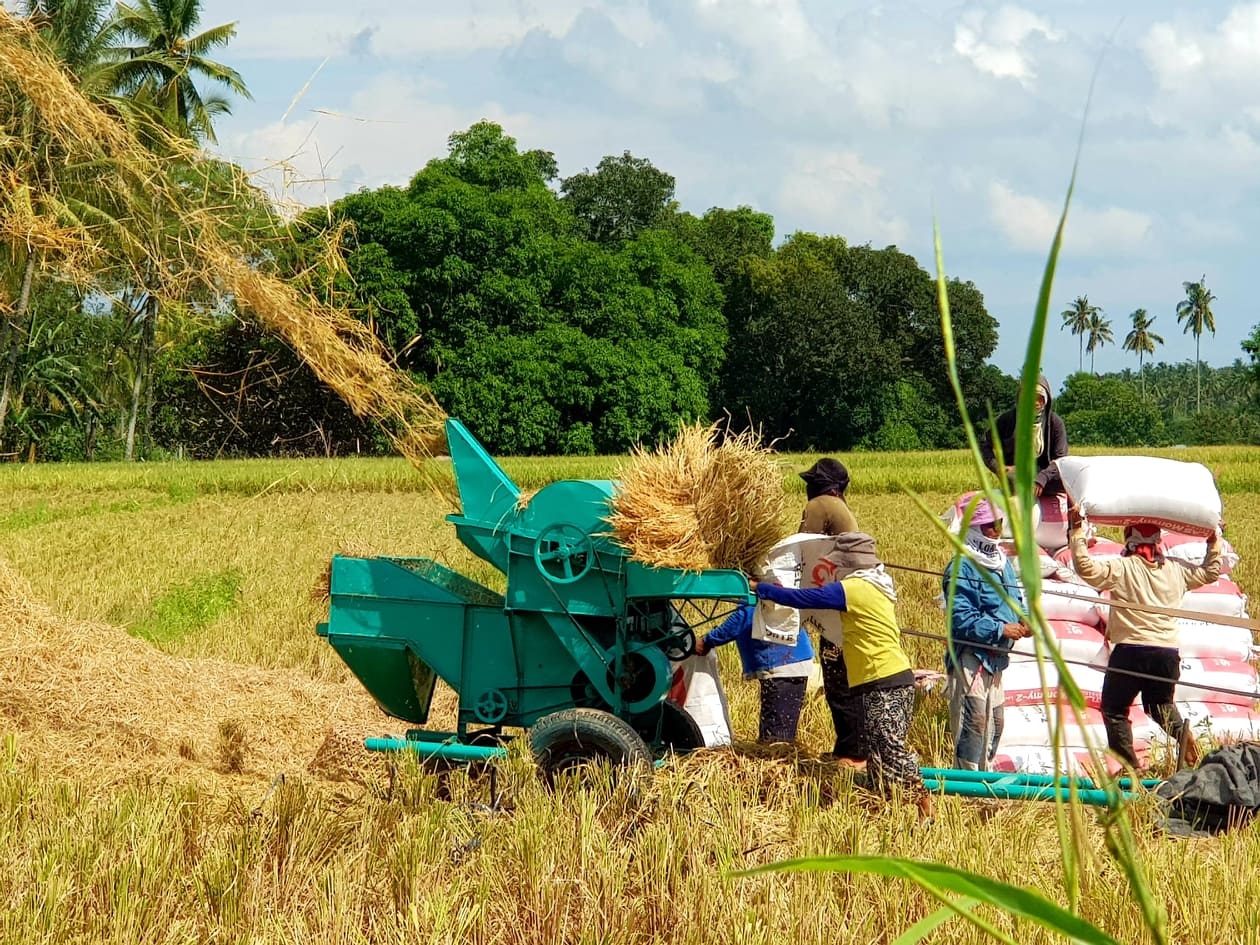
DAVAO CITY — — The Department of Agriculture (DA) has reported a significant drop in rice import arrivals this year, attributed to the ongoing local palay harvest and shifting market behavior influenced by earlier large-volume importations.
According to DA data, as of March 13, only 640,915 metric tons (MT) of imported rice had entered the country, a substantial decline compared to the 1.19 million MT recorded during the same period last year.
Only 933 of the 1,428 approved sanitary and phytosanitary import clearances (SPSICs) have been utilized, signaling a more measured approach by traders amid improved local production outlooks.
“This shows the market is adjusting,” said DA spokesperson Assistant Secretary Arnel de Mesa in a recent interview. “It reflects the massive volume of rice that came in last year and the expectation of a good harvest this season.”
De Mesa noted that the behavior of the rice import market has become more predictive, a sign of maturing trade practices and more accurate forecasts of domestic demand and supply. He also referenced insights from global agricultural economist Dr. Samarendu Mohanty, who praised the Philippines’ recent policy shifts for helping to stabilize international rice prices.
Mohanty, an Indian-American agricultural economist, cited the Philippines’ aggressive market reforms—such as setting a maximum suggested retail price (SRP) for imported rice, tightening enforcement against smuggling and hoarding, and enhancing market monitoring—as key factors contributing to improved price stability globally.
Amid reduced imports, the DA emphasized its ongoing support for local rice farmers. The National Food Authority (NFA) currently buys clean and dry palay at PHP24 per kilogram, and fresh and wet palay at PHP18 per kilogram—rates that aim to ensure fair compensation and bolster farmers’ incomes during the harvest season.
“We continue to prioritize local production. The lower import figures don’t reflect a supply shortage but rather a shift toward optimizing local resources,” de Mesa added.
As of December 31, 2024, the country had imported more than 4.8 million MT of rice, indicating a strong supply position going into 2025.
The DA reiterated its commitment to balancing imports with local production, ensuring food security while protecting the welfare of Filipino farmers.