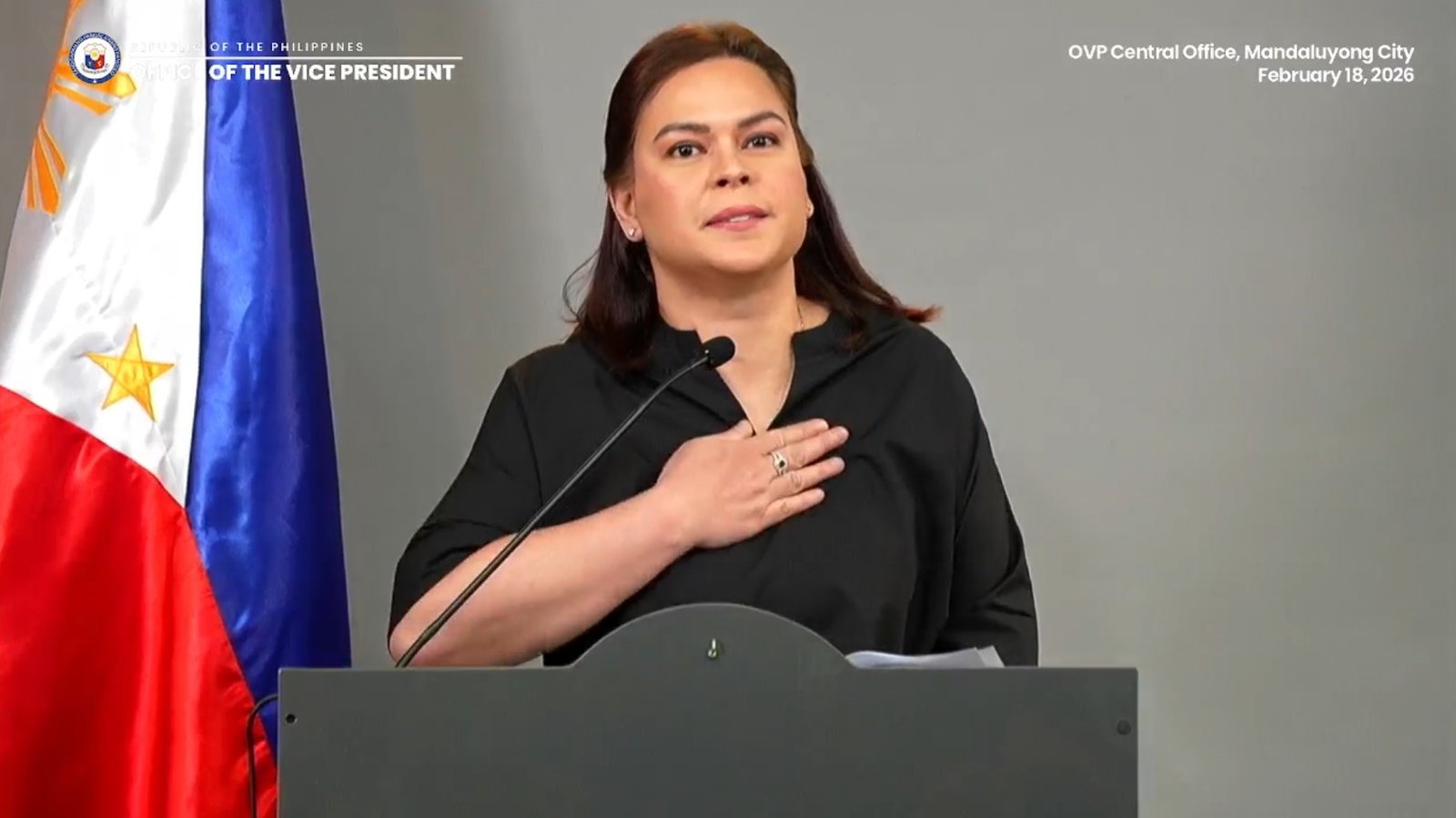
DAVAO CITY (February 18) — Clad in black, her hair draped over her shoulders, Vice President Sara Duterte opened her press conference with Proverbs 19:21: “Many are the plans in a person’s heart, but it is the Lord’s purpose that prevails.”
Moments later, she made it official: “I am Sara Duterte, and I am running for President of the Philippines.”
Her declaration formally launches her into the presidential race and signals that her homegrown regional political party, Hugpong ng Pagbagao, starts the ground work for the race.
While no formal coalition has been announced, questions loom over possible realignments among dominant political blocs and regional clans.
Pre-election surveys consistently place Duterte among the top presidential contenders. Recent polling data show sustained double-digit nationwide support, dominant numbers in Mindanao, and competitive but more fragmented backing in Luzon and the Visayas.
Analysts caution, however, that early survey strength often reflects name recall rather than firm electoral commitment. Whether Duterte’s numbers represent expandable momentum or a fixed political base remains uncertain.
Her candidacy also reopens debate over the legacy of her father, former President Rodrigo Duterte, whose administration continues to face international scrutiny over its war on drugs.
Supporters frame her run as continuity in leadership and executive experience. Critics argue it risks deepening political polarization and entrenching dynastic politics.
Beyond broad themes of service and leadership, Duterte has yet to outline detailed policy positions on inflation, foreign policy, and economic recovery — issues expected to dominate the campaign season.
As the race shifts from speculation to consolidation, Duterte’s entry reshapes the political landscape. The central question now: Can she expand beyond her established base — or will the contest harden along familiar political lines? Editha Z. Caduaya