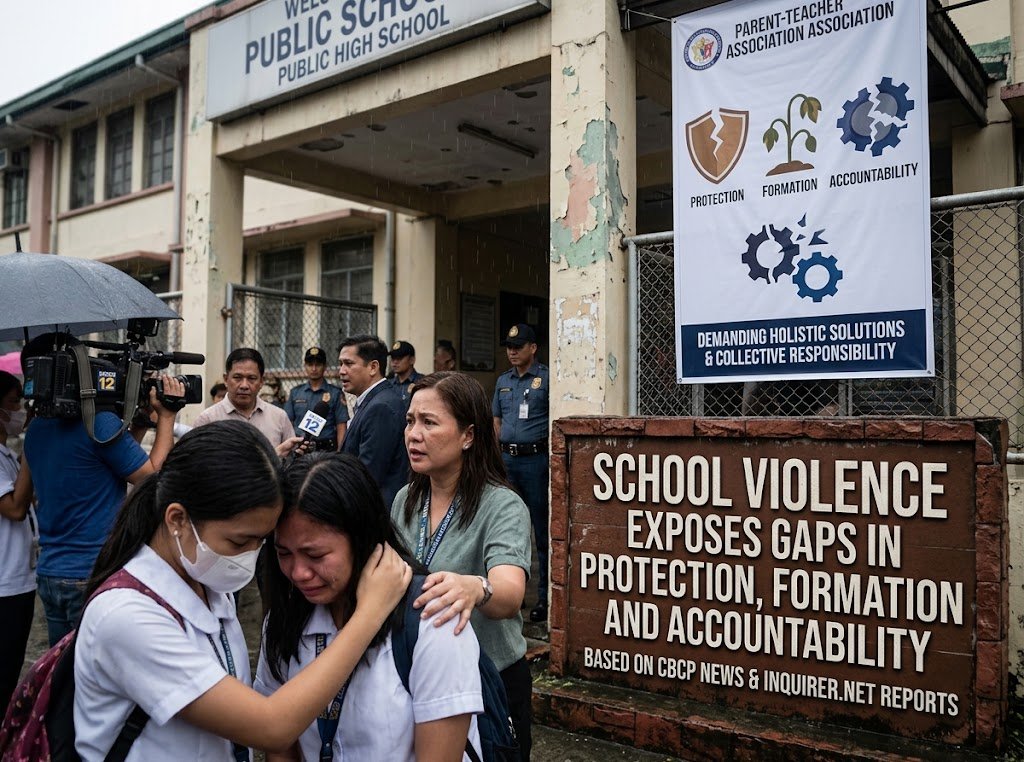
CAGAYAN DE ORO CITY (September 21) — When violence enters a school, the immediate questions are usually about security: Who brought the weapon? Who failed to see the warning signs? How could it have been prevented?
But the harder questions begin before the violence.
Was the learner struggling without support? Was bullying reported? Did the child have someone to turn to? Did the school have a functioning referral system? Were parents and teachers equipped to respond? And when warning signs emerged, did the institutions responsible for protecting children act?
Recent shootings, stabbings and other violent incidents involving learners have pushed these questions into public view, highlighting a problem that cannot be addressed by security measures alone.
Youth violence is complex. Research across criminology, psychology, public health and education points to interacting influences that can include family experiences, exposure to violence, peer relationships, digital environments, emotional distress, social conditions and the quality of support and formation available to young people.
That makes prevention a whole-of-society responsibility—involving schools, families, communities and government.
The law already puts protection at the center
The Philippines already has laws that recognize schools as places where children’s safety and well-being must be actively protected.
The Anti-Bullying Act of 2013 (Republic Act 10627) requires elementary and secondary schools to adopt policies addressing bullying and specifically covers physical acts, verbal or electronic expressions and conduct that causes or threatens physical or emotional harm or creates a hostile school environment.
This is significant because bullying and school conflict should not be treated simply as ordinary disciplinary problems when they involve threats, intimidation or harm.
The question for schools is therefore not only whether rules exist, but whether students can safely report problems, whether teachers and administrators recognize warning signs, and whether complaints trigger appropriate intervention.
Mental health cannot be an afterthought
The government has also begun strengthening the mental health infrastructure inside basic education.
Republic Act 12080, the Basic Education Mental Health and Well-Being Promotion Act, provides the framework for school-based mental health programs and services. Its implementing rules define school-based mental health services broadly, covering promotion, prevention, referral for treatment and aftercare.