
Senate ratifies ₱6.79-trillion 2026 budget—big boosts for education, health, agriculture, but questions linger

Date:

Share post:

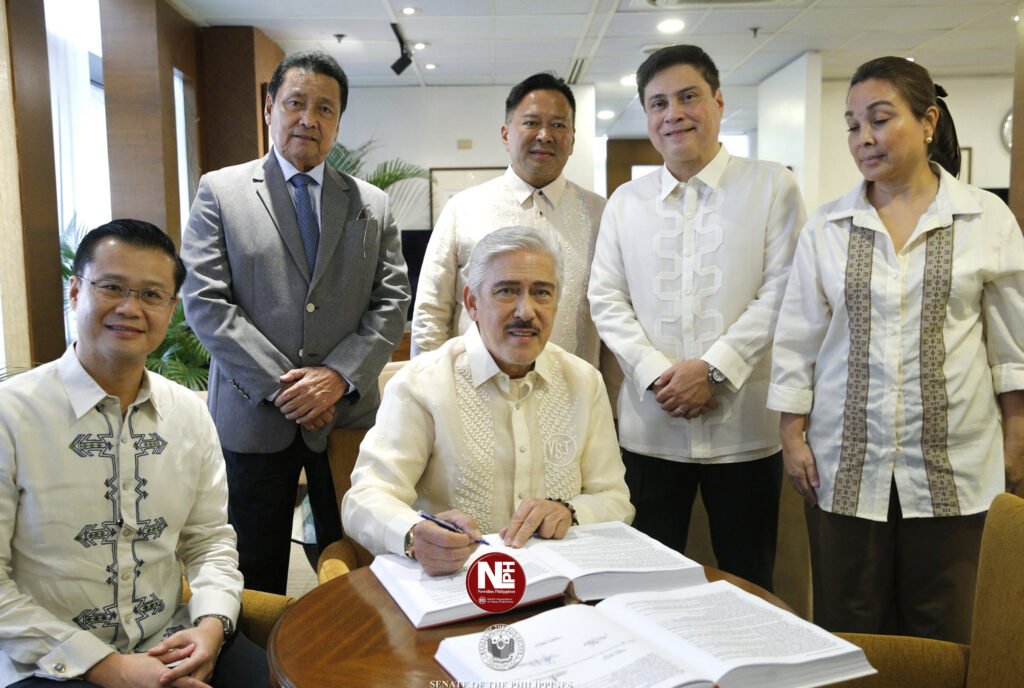
Photo courtesy: Senate of the Philippines

MANILA  (December 30) — The Senate has ratified the proposed ₱6.793-trillion national budget for 2026, touting large allocations for education, health, and agriculture as proof of a “human development–centered” spending plan.

But as lawmakers celebrate record figures, governance advocates warn that the real challenge lies not in how much is allocated—but in how effectively funds are spent and monitored, given long-standing issues of underspending, leakages, and uneven service delivery.

Senator Sherwin Gatchalian, chair of the Senate Committee on Finance, delivered the ratification speech for the bicameral conference committee report on House Bill No. 4058, saying the budget prioritizes sectors critical to long-term growth.

Education gets the biggest slice—again

Education remains the single largest item in the 2026 budget, with ₱1.35 trillion allocated—about 4.4 percent of GDP.

Gatchalian described the allocation as “historic,” citing plans to reduce classroom backlogs, expand the School-Based Feeding Program, and ensure the provision of textbooks.

However, education groups note that record budgets have not automatically translated into resolved shortages. Classroom congestion, teacher workload issues, and delayed procurement of learning materials have persisted despite years of high funding—raising concerns over absorptive capacity and execution bottlenecks at the Department of Education.

Health spending rises, but access gaps remain

The health sector’s proposed ₱447.6-billion budget includes ₱129.78 billion for the Philippine Health Insurance Corp., a 15-percent increase from the House version.

Lawmakers say the funding will strengthen Zero Balance Billing in Department of Health hospitals and support specialty medical centers.

Yet patient advocates caution that higher PhilHealth allocations do not automatically mean better coverage, pointing to past issues such as delayed reimbursements to hospitals, benefit package gaps, and uneven access in far-flung provinces.

Agriculture allocation highest in a decade—but will farmers feel it?

The proposed ₱214.39-billion agriculture budget is the sector’s biggest in more than ten years, aimed at boosting farm incomes and strengthening food security.

While the increase is widely welcomed, analysts stress that agriculture has long suffered from fragmented programs and slow project rollout, with small farmers often reporting minimal on-the-ground impact despite large national allocations.

Without stronger targeting, transparency in subsidy distribution, and support services beyond production—such as storage, transport, and market access—critics warn the budget could again fail to arrest rural poverty and rising food prices.

Safeguards promised, but oversight burden grows

Gatchalian said the bicameral conference committee built in safeguards to protect public funds, including livestreamed deliberations, public access to budget documents, and requirements for infrastructure projects to include station numbers and geographic coordinates for verification.

Transparency advocates say these measures are steps forward—but only if watchdog institutions, media, and civil society have the capacity and political space to actually use the data.

With a budget nearing ₱7 trillion, even small inefficiencies can translate into billions of pesos lost.

Approval clears path to Malacañang

The Senate’s ratification clears the 2026 General Appropriations Bill for transmittal to Malacañang for the signature of President Ferdinand R. Marcos Jr..

Once enacted, the spotlight will shift from speeches and spreadsheets to implementation—where past budgets have often stumbled.

The bottom line

The 2026 budget signals ambitious intent, especially for education, health, and agriculture. But Filipinos have heard similar promises before, often followed by slow spending, weak outcomes, and limited accountability.As the largest budget in Philippine history moves toward enactment, the question remains:
Will this be the year record funding finally delivers measurable improvements—or another case where scale overwhelms execution?

spot_img

Related articles

CCC cites youth as key partners in climate resilience in SOCCSKSARGEN

Photo courtesy: Climate Change Commission PH ISULAN, Sultan Kudarat (January 25) — The Climate Change Commission (CCC) highlighted the...

Shariff Aguak Mayor escapes death in ambush

SHARIFF AGUAK, Maguindanao del Sur — Shariff Aguak Mayor Datu Akmad B. Ampatuan Sr., al-Hadj narrowly escaped death...

4 bodies found in search for sunken Davao vessel

DAVAO CITY (January 24) — Four bodies believed to be from the sunken recreational vessel MBCA Amejara...

Ambassador Nina Cainglet Hails “Beneath the Badge” Award as a Triumph of Filipino Storytelling

DHAKA, Bangladesh (January 24) — The Philippine documentary Beneath the Badge (Sa Likod ng Tsapa), directed and produced...