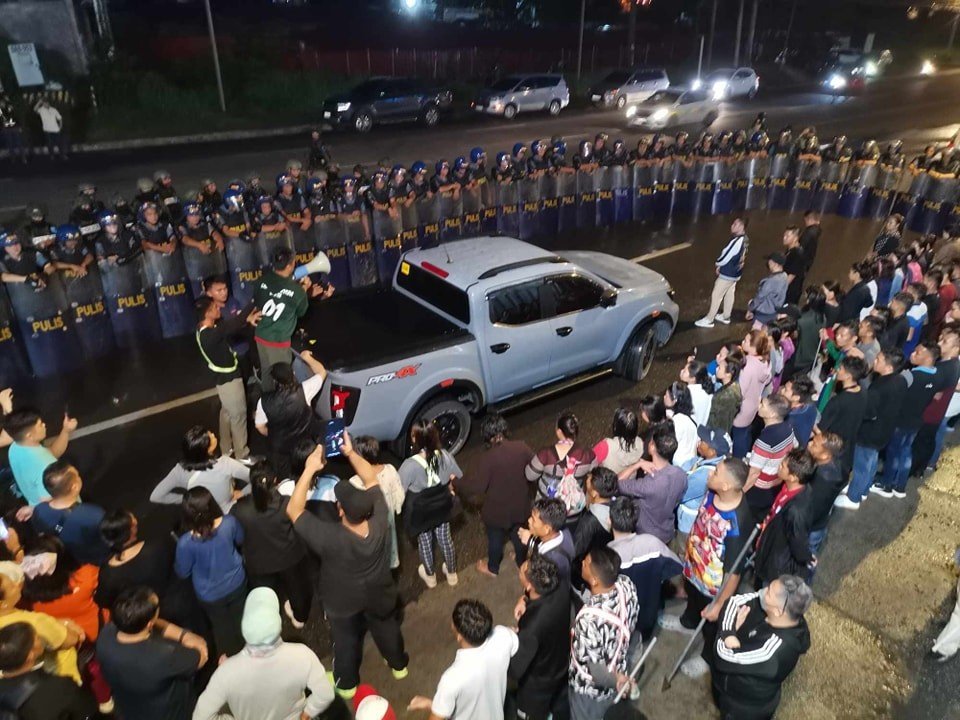
The protesting members were greeted with water cannons at the gate during the early morning attempt to enter the KOJC compound but later were allowed access even to his private hangar.-SMNI photo (file Photo)
DAVAO CITY (September 8) — A year ago, Apollo C. Quiboloy’s so-called “arrest” — or “voluntary surrender,” depending on which press release you believed — marked a turning point in Philippine politics. To the public, it was framed as justice finally catching up with the untouchable preacher.
In truth, it was the Marcos administration’s opening act in a calculated power play: dismantle the old alliances, humiliate yesterday’s kingmakers, and tighten control over every lever of influence.
The arrest of former President Rodrigo Duterte in March 11, 2025 was the climax of that same script. No one thought it possible. Duterte had once held the nation in a grip of fear and loyalty. But with Marcos Jr. in Malacañang, the tables turned.
The same justice system that once shielded Duterte became the blade that cut him down, not because the system was fixed, but because it had been retooled to serve a new master.
Enter General Nicolas Torre III, the man perceived as ambitious officer who delivered both Quiboloy and Duterte to the chopping block. For his trouble, he was rewarded with the PNP’s top post.
But the Marcoses have never been known for keeping their pawns alive for long. After 83 days, Torre was thrown into the Holding Area, not jailed, but humiliated, a stark reminder that loyalty to this administration is conditional and temporary.
Internationally, the Marcos administration has played its cards well. By allowing Duterte to face trial at the International Criminal Court, it sends a message to the global community: the Philippines can hold its own tyrants accountable.
By keeping Quiboloy behind bars while juggling U.S. extradition pressure, it flatters Washington, portraying Manila as a willing partner in the fight against human trafficking. These are not acts of moral courage; they are acts of political survival.
Every move is designed to curry favor abroad while consolidating dominance at home. And so, one year later, what are we left with? Quiboloy, once untouchable-awaiting trial in Manila.
Duterte, the man who once said “the ICC cannot touch me”, now facing that very court in The Hague.
Torre, the general who thought he was rising, reduced to a cautionary tale. And Marcos Jr. , quietly triumphant, having rid himself of his father’s enemies while rebranding himself abroad as a leader who delivers “justice.”
The KOJC saga was never just about crime, faith, or even justice. It was about power. It was about betrayal. It was about a dynasty settling scores while polishing its image on the world stage. Filipinos should be asking not whether justice was serve, because it wasn’t — but whether we have once again allowed ourselves to be spectators in a theater of political vengeance.
And to Marcos Jr., here lies history’s warning: every Philippine ruler who weaponized justice eventually became its victim. Power may shield you today, but tomorrow, it will be the very evidence against you.-Editha Z. Caduaya
Edith Z Caduaya studied Bachelor of Science in Development Communication at the University of Southern Mindanao.
The chairperson of Mindanao Independent Press Council (MIPC) Inc.