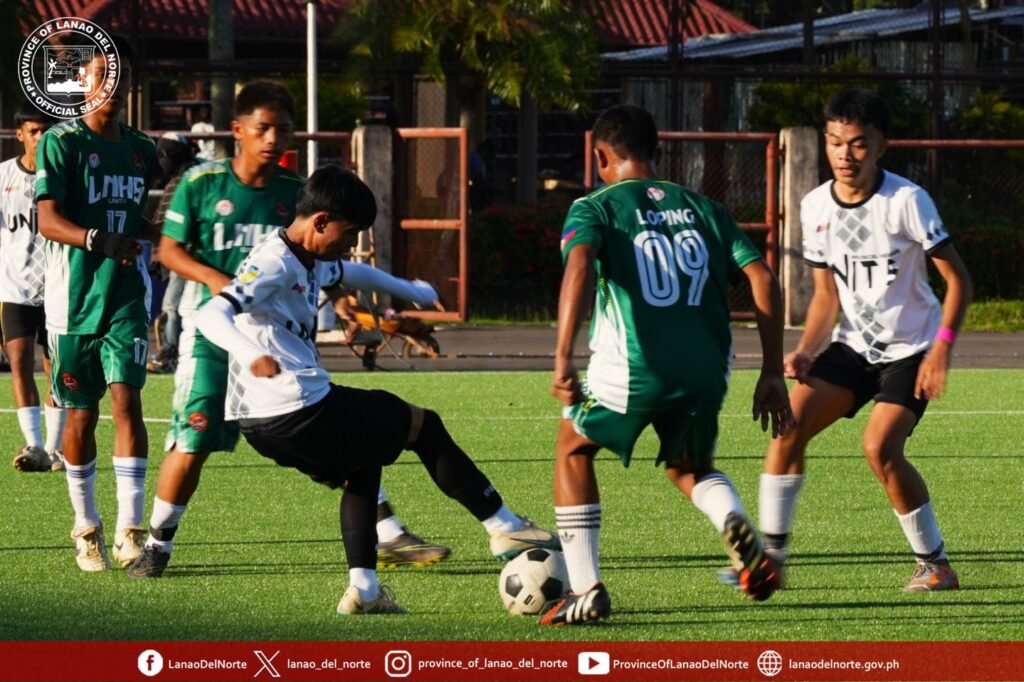
CAGAYAN DE ORO CITY (August 10) — THE inaugural Mindanao Youth Games is starting to look bigger than a regional sports meet.
With Timor-Leste set to become the first foreign delegation to compete in the five-day event in Lanao del Norte in March 2027, the games could give young Mindanao athletes their first chance to compete alongside athletes from another ASEAN country — while putting the province in the spotlight as a potential regional sports hub.
Timor-Leste will be the only foreign delegation invited to the inaugural games, following talks between Philippine Sports Commission (PSC) Chairperson John Patrick “Pato” Gregorio and Timor-Leste Ambassador Marciano Octavio Garcia Da Silva.
The event will bring together athletes aged 8 to 18 from Northern Mindanao, Zamboanga Peninsula, Davao Region, SOCCSKSARGEN, Caraga and the Bangsamoro Autonomous Region in Muslim Mindanao.
For many of these young athletes, the competition could be more than a chance to win medals. It could provide exposure to higher-level competition, new coaching approaches and athletes from outside the Philippines.
More than medals
Gregorio said Timor-Leste’s participation would help use sports as a platform for peace, development and stronger regional ties.
That goal carries particular weight in Mindanao, where sports programs have increasingly been used to bring young people together across geographic and cultural boundaries.
But the success of the games should not be measured solely by the number of delegations or medals won.
The bigger test is whether the event can create lasting opportunities for young athletes, particularly those from communities that have limited access to training facilities, coaches and competitive events.
The PSC and Timor-Leste are also working with the Department of Foreign Affairs on a broader sports cooperation agreement involving grassroots development, athlete and coach exchanges, technical training, and cooperation in football and arnis.
If sustained, those exchanges could prove more valuable than a single five-day competition.
Can Lanao del Norte become a sports hub?
The games will be held at the Mindanao Civic Center Sports Complex in Tubod, which has a FIFA-certified football field, an Olympic-size swimming pool and a World Athletics-certified athletics track.
The facilities give the province an advantage in attracting major sporting events.
Provincial officials are hoping the Mindanao Youth Games will also generate business for hotels, restaurants, transport operators, shops and other local enterprises as athletes, coaches, families and visitors arrive.
That economic potential is real, but hosting a major sporting event also requires continued investment.
Facilities must be maintained, local sports workers trained and transportation and accommodation systems prepared to handle increased demand.
The provincial government is also preparing a bid to host the 2028 Batang Pinoy Games, while the PSC has committed support for a proposed Regional Training Center at the Mindanao Civic Center and the expansion of grassroots sports programs.
From one event to a pipeline
The most important question may therefore be what happens after the athletes go home.
A successful Mindanao Youth Games could become a pipeline for identifying young athletes who can advance to national and international competition.
But talent identification must be matched with sustained training, scholarships, equipment and coaching support.
Otherwise, young athletes from poorer or remote communities could remain spectators to opportunities that are technically being held in their own region.
Timor-Leste’s participation adds an important regional dimension to the event. As ASEAN’s 11th full member since October 2025, its involvement also gives the games a chance to build people-to-people ties between two neighboring countries.
Da Silva described sports as a universal language that can promote culture, friendship and mutual respect.
For Mindanao, the challenge is to make that language speak beyond the playing field.
If the games lead to stronger grassroots programs, better access to facilities and sustained athlete exchanges, the March 2027 competition could leave a legacy far bigger than its medal tally.
The real victory for Lanao del Norte will be if young athletes continue to benefit long after the final whistle.