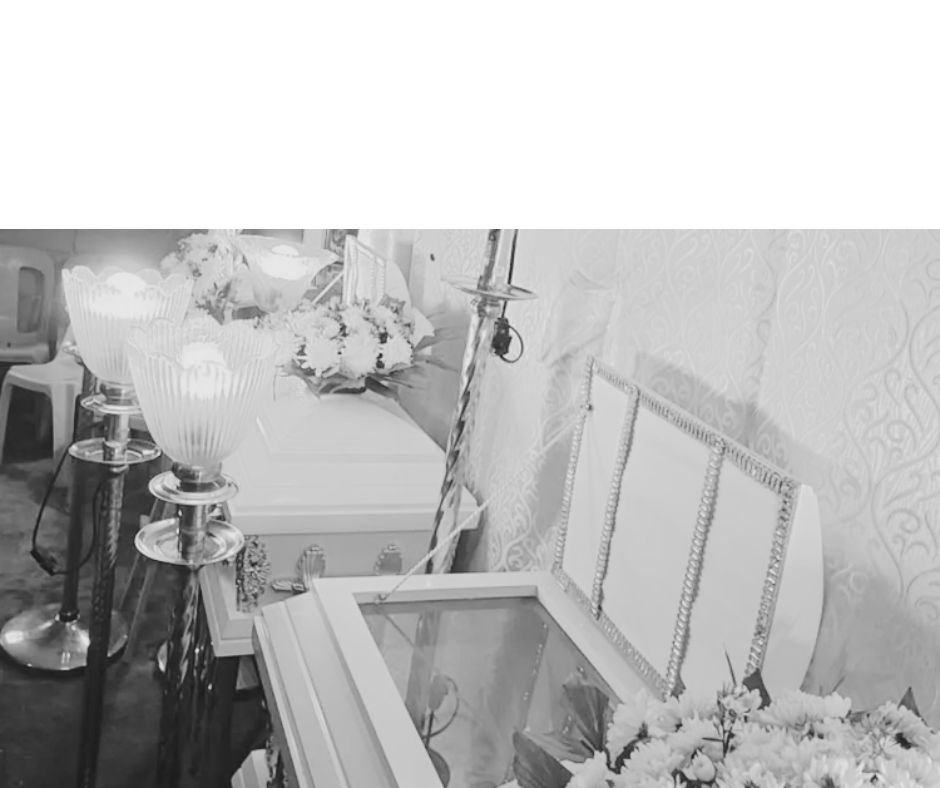
NABUNTURAN, Davao de Oro (February 20) — In Purok 5, Barangay Magsaysay, grief is no longer private. It spills into narrow roads, into sari-sari stores, into hushed conversations about a tragedy that many now fear was preventable.
On February 17, two children — a three-year-old boy and a seven-month-old girl — were allegedly killed by their 28-year-old mother. Police said the woman, identified as “Neneng,” stabbed her children before injuring herself. She is recovering at the Davao de Oro Provincial Hospital – Montevista while authorities from the Davao de Oro Provincial Police Office continue their investigation.
The immediate facts are clear. The deeper failures are not.
Poverty was not a secret
In an interview aired on One Mindanao through GMA Network, a relative recounted Neneng’s admission: the problems were “too much.” She reportedly said she had no more milk for her baby.
No milk. No money. No help.
Her partner was working in General Santos City. The couple had argued before he left. The mother was alone with two small children.
The question is not only why she did it. The harder question is: who knew she was drowning?
In many barangays, financial distress is visible. Neighbors know who is struggling. Health workers track pregnancies. Social welfare officers maintain lists of indigent families. Conditional cash transfer programs exist. Barangay health centers conduct regular visits for infants.
Yet somewhere between policy and practice, a mother reportedly reached a point where she believed death was the only solution.
Mental health law vs. mental health reality
The Philippines has a Mental Health Act intended to integrate mental health into primary care. On paper, rural communities should have access to basic psychosocial support and referrals.
But in reality, mental health services remain thin in provinces. Screening for postpartum depression is inconsistent. Barangay health workers are overburdened and often lack specialized training. Crisis hotlines are rarely known in remote communities.
If Neneng was spiraling — did anyone have the tools to recognize it?
If she asked for help — was there a system equipped to respond?
If she did not ask — was there proactive outreach to check on vulnerable mothers?
Criminal liability will be determined in court. Institutional accountability rarely is.
The silence around maternal distress
Maternal exhaustion is normalized. Financial panic is dismissed as “common hardship.” Emotional breakdowns are often labeled as weakness rather than warning signs.
When women say they cannot cope, they are frequently told to endure.
In low-income households, the burden is compounded by unstable income, food insecurity, and migration-driven family separation. A mechanic father working in another city is not unusual. Neither is a mother left to manage alone.
But social responsibility cannot end at sympathy.
Barangays are mandated to maintain violence against women and children (VAWC) desks. Social workers are tasked to intervene in high-risk households. Local government units manage health and welfare databases. National agencies allocate budgets for nutrition and family assistance.
Did these mechanisms identify this family as vulnerable?
If not, why not?
If yes, what follow-through occurred?
These are administrative questions — and they demand administrative answers.
Beyond outrage
Public reaction swings quickly: horror at the act, pity for the accused, prayers for the children.
What often fades is scrutiny.
The deaths in Nabunturan expose more than an individual collapse. They expose how poverty, stigma, and bureaucratic gaps can converge unnoticed until the outcome becomes irreversible.
If investigations focus solely on criminal charges without examining service delivery failures, the lesson will be lost.
Accountability must extend beyond one mother in a hospital bed.
It must include:
- The effectiveness of local poverty monitoring systems
- The availability and accessibility of maternal mental health services
- The responsiveness of barangay-level interventions
- The coordination between health, social welfare, and community leadership