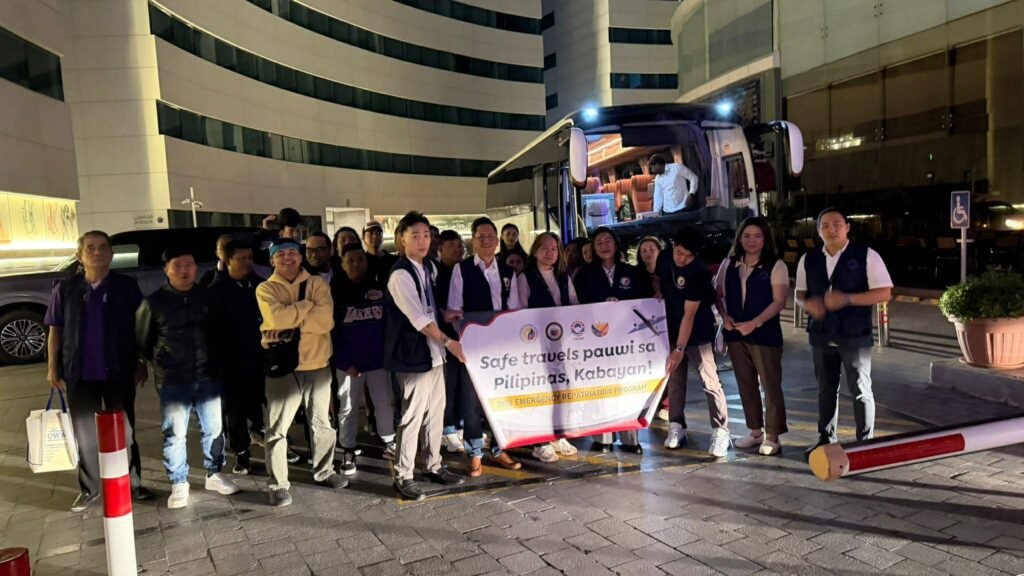
KORONADAL CITY, South Cotabato (April 7) — At least 102 Overseas Filipino Workers (OFWs) from the Soccsksargen region have been repatriated from the conflict-stricken Middle East, as the Philippine government scrambles to respond to the growing impact of escalating tensions abroad.
The returnees, flown in via chartered flights, came from across Region 12: 32 from South Cotabato, 30 from North Cotabato, 23 from Sarangani and General Santos City, 12 from Sultan Kudarat, and five from the Bangsamoro Autonomous Region in Muslim Mindanao.
The repatriation, led by the Department of Migrant Workers (DMW) Region 12, underscores the mounting risks faced by Filipino laborers in volatile regions—many of whom left the country due to limited local employment opportunities.
DMW Region 12 OIC-Regional Director Samsudin Lintongan assured returning workers of continued government support, emphasizing that assistance will extend beyond their arrival.
“Para po sa mga naapektuhan ng sigalot sa Middle East, lagi niyo pong tatandaan na andito po ang regional office para alalayan kayo,” Lintongan said, reaffirming the agency’s commitment to displaced migrants.
Upon arrival, the OFWs received immediate aid, including temporary shelter, food, medical care, psychosocial services, financial assistance, and transportation—interventions meant to cushion the abrupt transition from overseas work to uncertain prospects at home.
But beyond emergency response, the challenge now shifts to reintegration.
The DMW said returning workers may access livelihood and recovery programs in coordination with key agencies such as the Department of Health (DOH), Department of Social Welfare and Development (DSWD), Technical Education and Skills Development Authority (TESDA), and Department of Trade and Industry (DTI).
However, the sudden influx of displaced workers raises concerns about whether existing reintegration programs can absorb returnees at scale—particularly as global instability continues to threaten Filipino workers across multiple regions.
The DMW continues to accept repatriation requests from OFWs and their families, signaling that more returns may follow as the Middle East crisis unfolds.