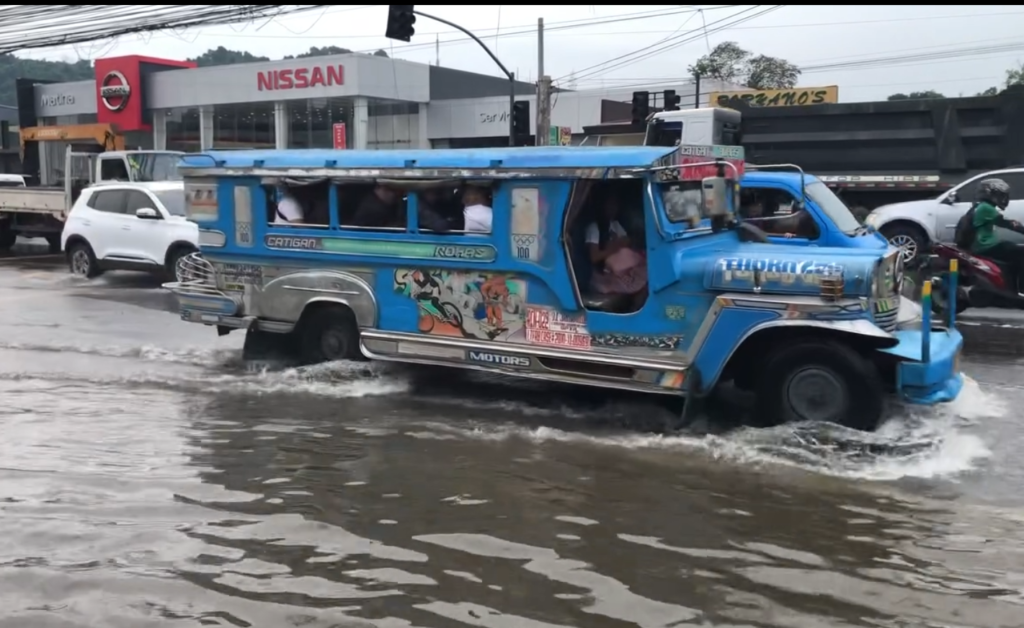
In Davao City, seven barangays were affected by flooding: Barangays 7-A, 32-D, Bucana, Ma-a, Matina Aplaya, Matina Crossing, and Talomo Proper.-Newsline Photo
DAVAO CITY — The national highway in Sta. Cruz, Davao del Sur, was transformed into a river as floodwaters surged along the roadway, halting traffic and creating significant congestion. High tide exacerbated the situation by preventing rainwater from draining into the sea.
In Davao City, seven barangays were affected by flooding: Barangays 7-A, 32-D, Bucana, Ma-a, Matina Aplaya, Matina Crossing, and Talomo Proper. In some areas, such as the McArthur Highway corner Tulip Drive in Matina, floodwaters remained visible until noon on Thursday.
Lyndon Ancajas, head of the Administration and Training Division of the Davao City Disaster Risk Reduction and Management Office, reported that no residents were displaced despite the flooding.
Many residents in affected areas, particularly in Purok 13 Bugac in Barangay Ma-a, Lanzona Subdivision in Matina Aplaya, and Purok 59 in NHA Bangkal, chose not to evacuate as the waters receded quickly.
The flooding at Tulip Drive, where water levels reached above knee height, was attributed to a drainage system that has yet to connect to the coastal area. Paul Bermejo, head of the Ancillary Services Unit, stated, “The floodwaters have no way out. The waters will subside, but it will take time. Tomorrow, they should be gone.”
Ryan, a local videographer, reported being stranded along McArthur Highway for three hours due to knee-high water preventing his motorbike from operating. “There are over a dozen motorbikes stranded near my area and others from the opposite side,” he noted.
Barangay Captain Pacito Junior of Ma-a mentioned, “The floodwaters rose swiftly after the rain began, and the waterways overflowed, only receding around 2 AM.”
As of Thursday morning, Ancajas confirmed that several areas remained flooded, and local authorities continue to monitor the situation. Efforts are underway to address drainage issues and improve flood response measures in the affected communities.