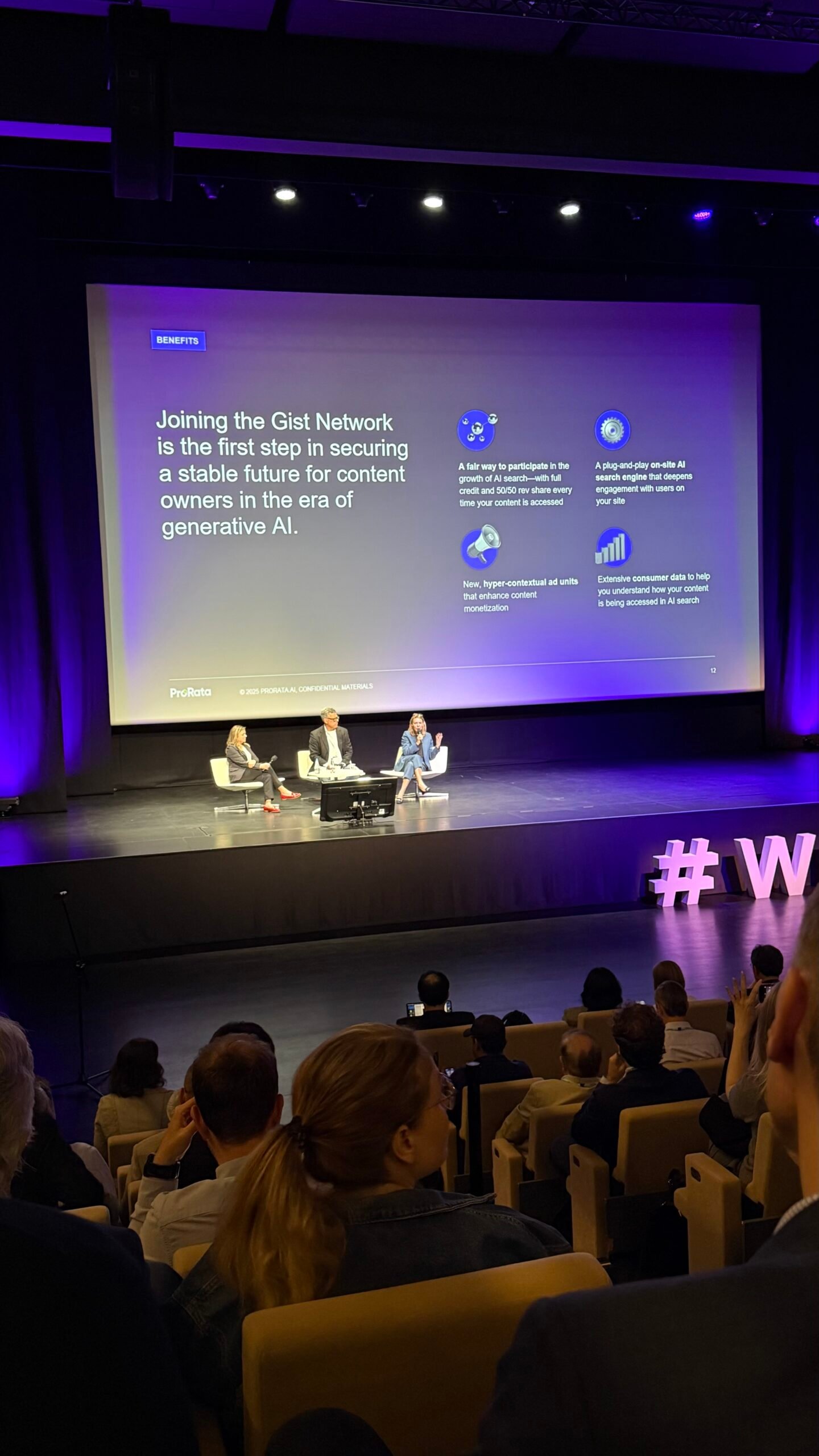
KRAKOW, POLAND (May 5)——Artificial Intelligence is reshaping how news is gathered, written, and shared and it’s happening fast. As more newsrooms turn to AI tools to stay competitive, developers are stepping in with new business models designed to help media organizations become faster, smarter, and more relevant to their audiences.
At the center of this transformation is the growing use of English-language AI models, which now dominate content creation across platforms and publishers worldwide.
These trends were a major focus at the recent World News Media Congress, a three-day event where journalists, tech experts, and media leaders explored how AI can serve journalism—not replace it.
One of the standout voices was Lucky Gunasekara, co-founder of U.S.-based Miso.AI, who spoke passionately about the need for strong ethical standards in the AI space.
“We get huge offers to build tools that secretly collect people’s email addresses,” Gunasekara said. “But we refuse—because it’s a violation of privacy and it’s just plain wrong.”
He explained that Miso.AI has systems in place to detect when their content is being reused and monetized by other agencies, reinforcing the need for transparency and fairness.
Annalies Jansen, Chief Strategy Officer at ProRata.ai, added a key reminder: “Data is personal, even when content feels public.”
As AI becomes a bigger part of journalism, the message is clear: Innovation is essential—but so is integrity. For newsrooms to thrive in this new era, they must embrace technology without losing sight of the human values that define good journalism.