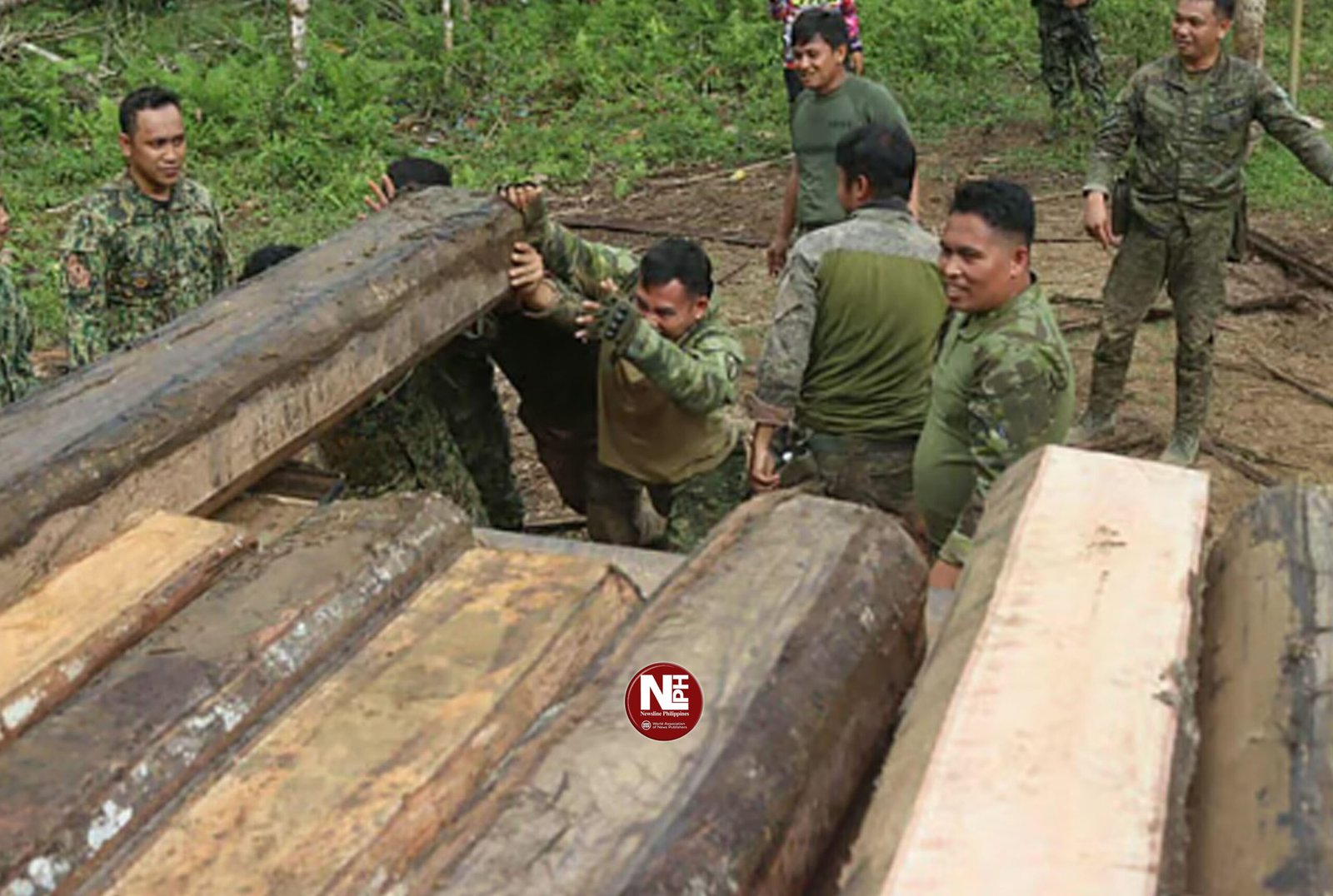
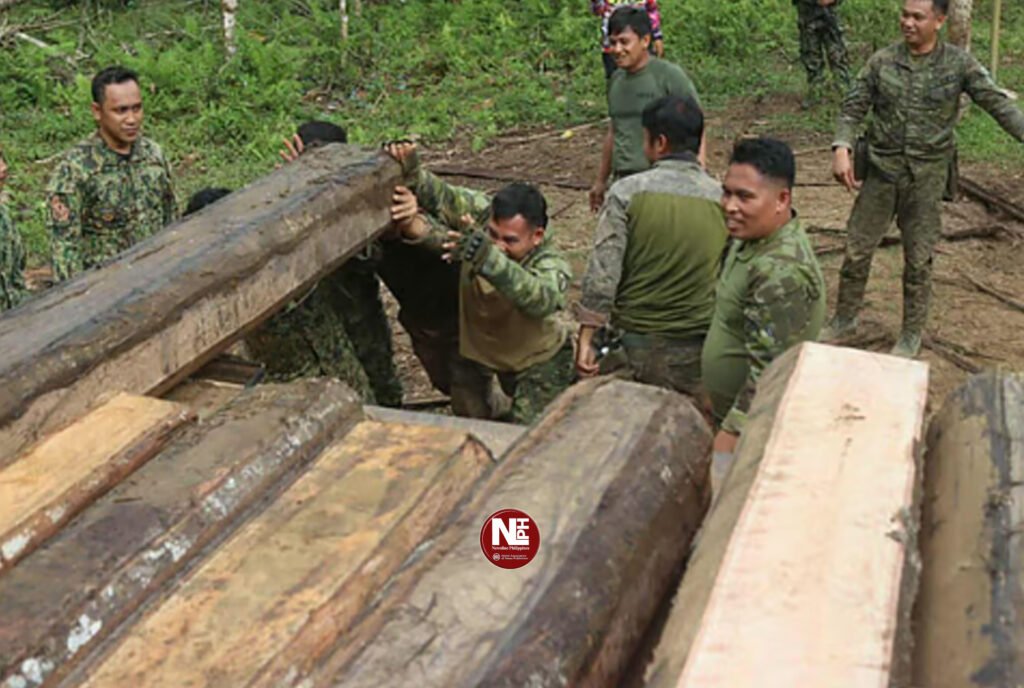
ZAMBOANGA CITY(January 12) — Authorities have seized several illegally cut lauan logs in the Sampinit Complex, a former bastion of the Abu Sayyaf Group in Basilan, spotlighting ongoing efforts to protect remaining forests and promote peace and sustainable development in a region long marked by conflict and environmental degradation.
From militant refuge to focus of peace and conservation
The Sampinit Complex straddles the tri-boundary of Lamitan City and the towns of Sumisip and Maluso. For decades, the dense forests and rugged terrain of this complex served as one of the Abu Sayyaf’s most notorious hideouts. Scores of hostages were held there, and violent episodes—including the 2000 kidnapping of Fr. Rhoel Gallardo and others—took place with impunity during the height of the conflict.
As security forces gradually dismantled the group’s hold over Basilan through sustained military campaigns and community engagement in recent years, the security situation improved markedly. Development projects such as the Basilan Transcentral Road and intensified patrols have helped open up previously inaccessible forest areas, signaling a dramatic shift from “no-go” zones to areas where peace and economic activities can take hold.
Local leaders and the military have also turned attention to environmental restoration and sustainable use of the once embattled complex. Plans have been discussed to transform parts of the Sampinit area into eco-tourism and agroforestry zones, highlighting its natural beauty and biodiversity while offering alternative livelihoods for communities previously affected by conflict.
Environmental stakes: forest loss in Basilan and the Philippines
The latest seizure of lauan logs comes against a backdrop of broader forest decline nationwide. The Philippines has seen a dramatic drop in forest cover over the decades.
From about 17.8 million hectares in the early 20th century, forest area has shrunk significantly and today accounts for an estimated just over 7 million hectares—around 24% of the country’s land area.
Subnational data shows that Basilan province itself has experienced notable tree cover loss, with satellite-based assessments indicating several thousand hectares of forest reduction over the last two decades—reflecting pressures from logging, agricultural conversion, and other human activities.
Deforestation in the Philippines has broader consequences: the loss of tree cover contributes to carbon emissions, undermines watershed protection, and increases vulnerability to floods, landslides, and other climate-related hazards that can disproportionately affect rural communities.
Government and local action
The anti-illegal logging operation was part of the largest enforcement effort under the provincial government’s “Sagip Kalikasan” (Save Nature) campaign, launched via Executive Order No. 19, Series of 2025. The initiative aims to safeguard Basilan’s forests, rivers, and coastal ecosystems while creating sustainable livelihood opportunities through agroforestry, ecotourism, and other green economy projects.
Basilan Governor Mujiv Hataman lauded operatives’ swiftness in dismantling illegal logging operations and warned would-be loggers that enforcement will be strengthened. “The livelihood of countless Basileños depends on a protected and healthy natural ecosystem,” he said, underscoring the link between environmental conservation and community welfare.
Investigations are ongoing to identify those responsible for the illegally cut logs and to file appropriate charges. The operation was led by the 32nd Infantry Battalion together with the Sumisip Municipal Police Station and the Community Environment and Natural Resources Office–Maluso.