MANILA(January 15) — The Japanese government has extended a ¥858-million (around P326 million) grant to the Bangsamoro Autonomous Region in Muslim Mindanao (BARMM) to strengthen birth registration for unregistered children and families, particularly displaced Sama Bajau communities and former combatants.
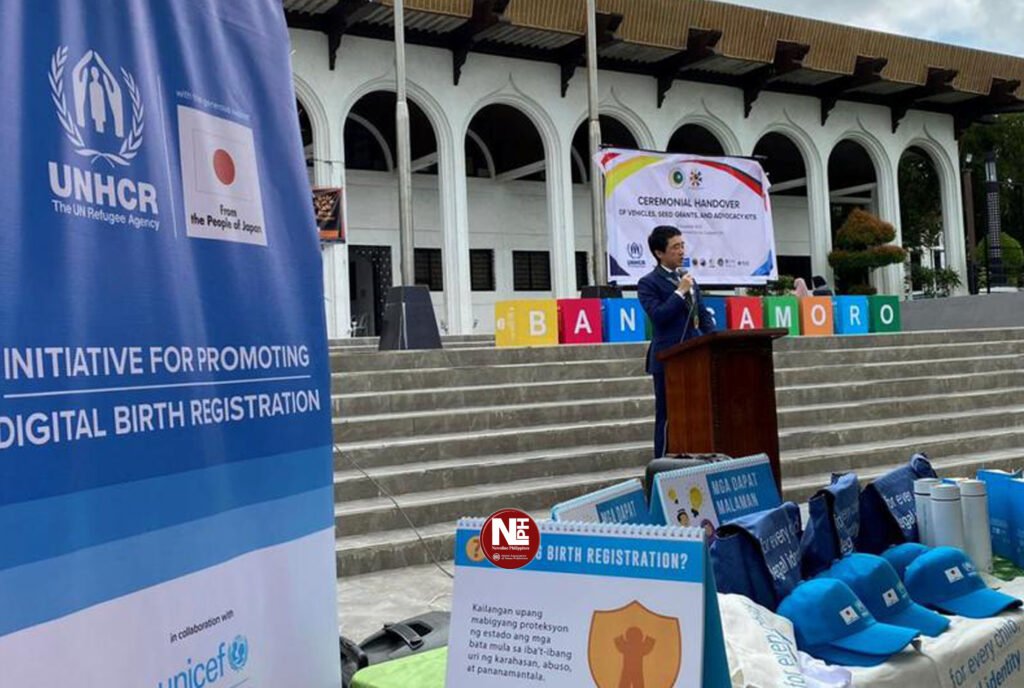
The handover ceremony was attended by Japanese Minister for Economic Affairs Yokota Naobumi, local BARMM officials, representatives from the Justice Department, and UNICEF.
“Japan remains committed that no individual, including children, is left behind on the journey toward peace and progress in the Bangsamoro region. This starts with birth registration,” Yokota said.
The project, to be implemented by the United Nations High Commissioner for Refugees (UNHCR), is expected to directly benefit around 130,000 unregistered individuals, with an estimated 800,000 more indirectly benefiting over the next decade.
As part of the initiative, Japan also handed over seven mobile birth registration caravan vehicles and advocacy kits to youth advocates in Lanao del Sur on December 5, 2025, to make registration services more accessible in vulnerable and conflict-affected areas. The kits are intended to speed up information dissemination on the importance of birth registration in the province.
Japan has also pledged continued support for digital birth registration across BARMM and Sulu, aiming to bring registration services closer to communities that face geographic or conflict-related barriers.
Earlier this year, Japanese Ambassador to the Philippines Endo Kazuya attended handover ceremonies in Davao City and BARMM, providing computer servers, vehicles, and advocacy materials to help streamline and expand birth registration services.
Ambassador Endo highlighted that the initiative promotes human security that accommodates the region’s diverse populations, while UNHCR Philippines Head Maria Ermina Valdeavilla-Gallardo emphasized the importance of ensuring that “no one is left without a nationality and without a legal identity.”
This grant reinforces ongoing efforts to provide vulnerable Bangsamoro communities with access to legal identity, a crucial step toward social inclusion, protection, and access to public services.