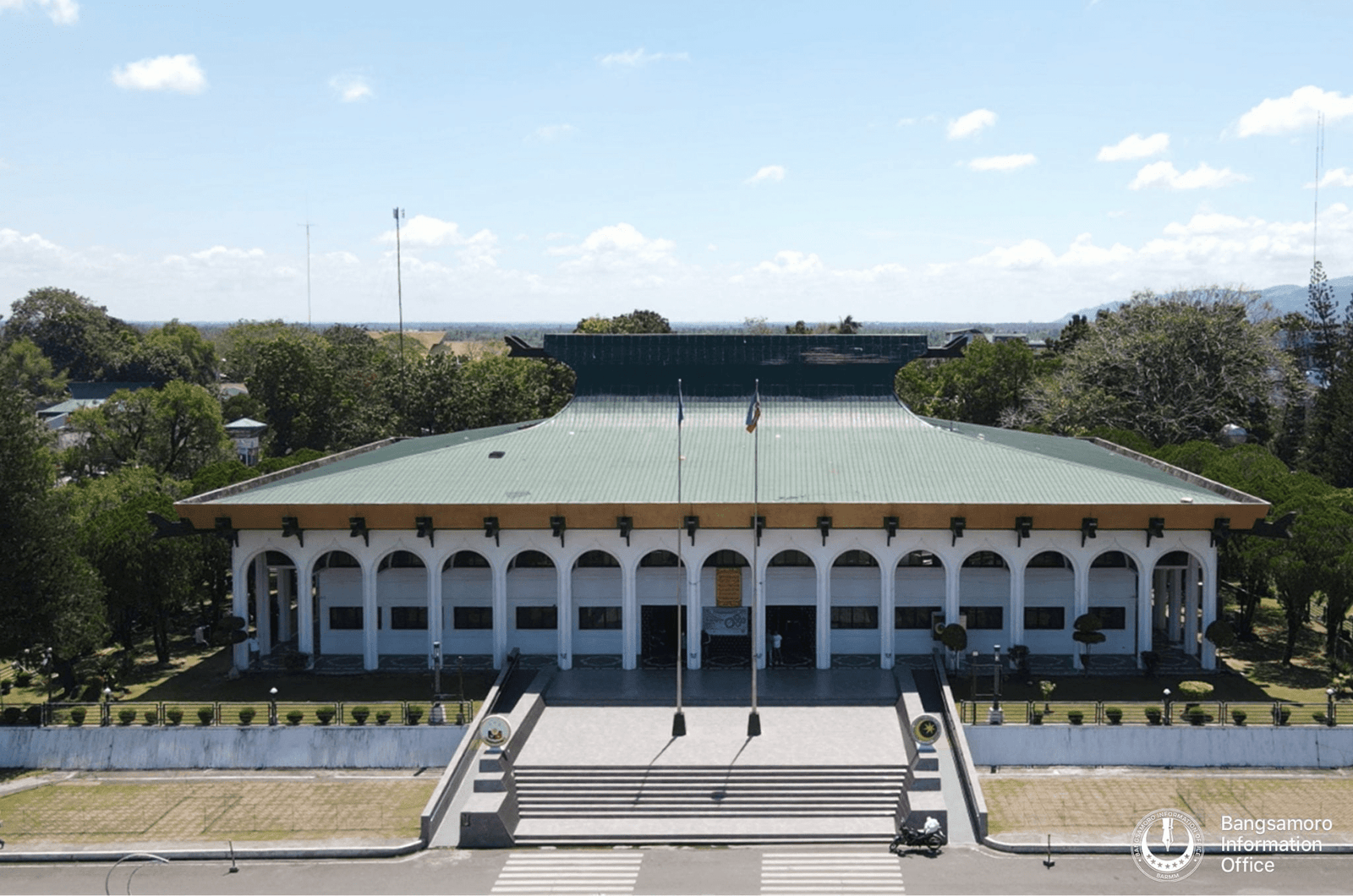
The Office of the Chief Minister (OCM) building in Cotabato City. (Marhom Ibrahim/BIO)
The Office of the Chief Minister (OCM) building in Cotabato City. (Marhom Ibrahim/BIO)
COTABATO CITY(February 19) — Authorities in the Bangsamoro Autonomous Region in Muslim Mindanao (BARMM) have put systems in place for the observance of Ramadan, joining the globally synchronized moon-sighting Tuesday to determine the start of Islam’s holiest month.
The Dar’ul Ifta’ of BARMM deployed trained technical teams equipped with modern instruments to monitor the crescent moon. According to Bangsamoro Mufti Abdulrauf Guialani, fasting will begin once the moon is sighted; otherwise, observance moves to the following day.
Adjusted work hours
Through an advisory from the Office of the Chief Minister, BARMM offices will adopt a 7:30 a.m. to 3:30 p.m. work schedule without lunch break during Ramadan — a long-standing arrangement recognized by the Civil Service Commission. Regular hours resume after the fasting month.
Trade and spiritual life
Interim Chief Minister Abduraof Macacua opened this year’s Ramadan trade fair at the regional government center, featuring 60 micro, small, and medium enterprises from across the Bangsamoro region.
Facilitated by the Ministry of Trade, Investment and Tourism (MTIT), past editions reportedly drew around 100,000 visitors and generated multimillion-peso sales.
Macacua described the blending of spiritual renewal and economic activity as essential to building “strong foundations of meaningful autonomy” in the region.
In preparation for the influx of worshippers, the regional government also refurbished the Blue Mosque inside the BARMM compound. Macacua earlier visited a mosque in Barangay Amas, Kidapawan City, where he donated air-conditioning units, underscoring what he called the administration’s push for “moral governance.”
Meaning of Ramadan
Ramadan, one of the five pillars of Islam, mandates fasting from dawn to dusk — abstaining from food, drink, and other physical needs, as well as refraining from harmful speech and actions. Exemptions apply to the sick, travelers, pregnant or breastfeeding women, and others with valid conditions, who may compensate through alternative religious obligations.
For the Bangsamoro region, Ramadan is both a sacred season of discipline and reflection — and a visible expression of how faith, public service, and local enterprise intersect in daily life.