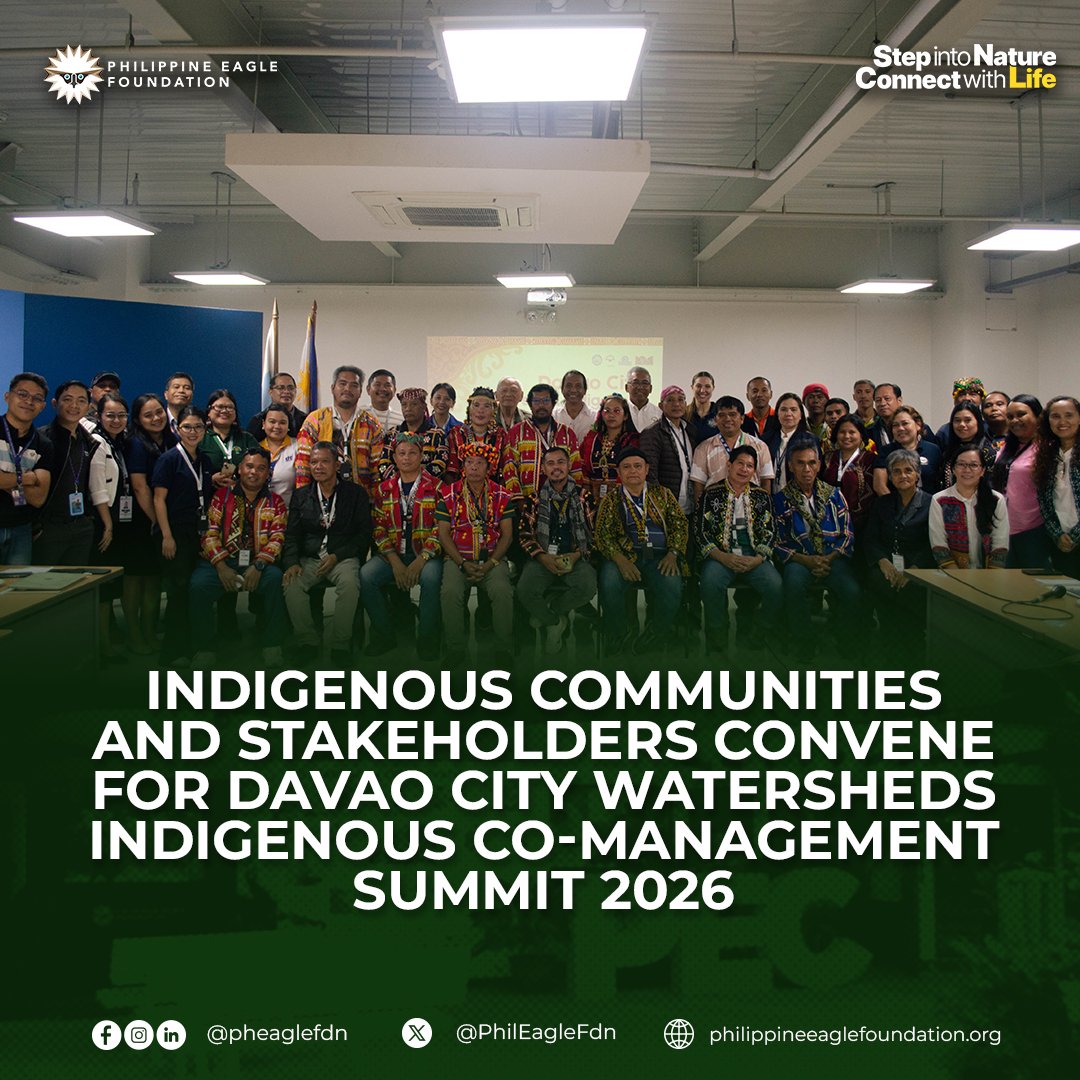
DAVAO CITY (March 4) — As Davao’s water demand rises and climate risks intensify, Indigenous leaders are demanding more than consultation — they want co-control.
At a February 24 summit on watershed governance, the Philippine Eagle Foundation and Ateneo de Davao University brought together tribal elders, policymakers, utilities, and civil society groups to push for stronger Indigenous co-management of the city’s critical upland forests.
The message from the uplands was blunt: Davao’s watersheds are ancestral domains, not just water infrastructure.
Beyond token participation
Indigenous Political Structures representing the Obu-Manuvu, Bagobo-Klata, Bagobo-Tagabawa (Toril and Sibulan), Matigsalug, and Ata communities called for genuine decision-making authority in protecting and restoring forest areas that supply water to the city.
Through Ateneo’s Mindanawon Initiatives for Cultural Dialogue and the Ateneo Public Interest and Legal Advocacy (APILA), the summit framed co-management as a matter of rights — not charity.
For these communities, watershed protection is inseparable from cultural survival. For the city, it is about water security, flood mitigation, and climate resilience.
Conservation meets governance
The Philippine Eagle Foundation, known for its biodiversity work, reinforced that habitat restoration in upland forests directly impacts endangered species protection and downstream water stability.
Participants agreed that safeguarding watersheds is not just an environmental issue but an economic and public safety concern. Forest degradation can mean contaminated water, stronger flooding, and higher disaster costs for urban communities.
The real challenge: power sharing
While government agencies and stakeholders expressed alignment and support, advocates stressed that summits and statements are not enough.
The real shift will come only if Indigenous governance systems are formally recognized in policy frameworks, backed by sustained funding, and embedded in long-term watershed management plans.
As development pressures creep closer to Davao’s uplands, the debate is sharpening: Will watershed protection remain centralized, or will ancestral stewards finally have equal footing in managing the city’s most vital resource?
In the fight for water security, Indigenous leaders are making one thing clear — shared responsibility must mean shared power.