MANILA (March 11) — A new government initiative promising to expand employment opportunities for Filipino women is drawing cautious support from advocates, who say the program must confront deeper structural issues such as unpaid care work, job insecurity, and low wages.
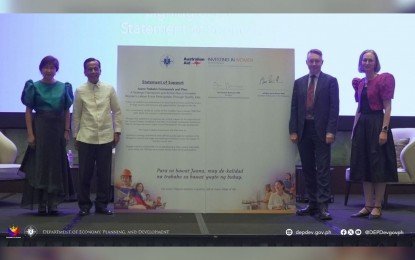
The Department of Economy, Planning, and Development (DEPDev), together with the Australian government-supported Investing in Women program, launched the “Juana Trabaho” initiative on Tuesday to increase women’s participation in the labor force through a strategic framework focused on improving access to quality jobs.
Officials say the program will promote flexible work arrangements and craft policies that address barriers preventing women from entering or staying in the workforce.
But labor and women’s rights advocates warn that without structural reforms, the initiative risks becoming another policy framework that fails to significantly change women’s economic realities.
Despite economic growth, women’s participation in the workforce remains significantly lower than that of men. The latest Labor Force Survey shows that the female labor force participation rate declined to 53.7 percent in 2025, down from 54.7 percent in 2024, reflecting persistent barriers.
DEPDev Secretary Arsenio Balisacan said boosting women’s employment is a key goal of the government’s Trabaho Para sa Bayan Plan, which aims to raise female labor force participation to 59 percent by 2034.
Yet women’s groups say participation figures alone do not capture the quality of jobs available to women.
Many Filipino women workers are concentrated in informal, low-paying, or precarious sectors, including domestic work, retail, and care-related services—jobs that often lack social protection, job security, and adequate wages.
Advocates also highlight the unpaid care burden carried by women in Filipino households, which limits their economic opportunities.
Women perform the majority of unpaid labor—childcare, elder care, and household management—tasks that remain largely invisible in economic planning but directly affect women’s ability to work full-time or pursue higher-paying careers.
Without expanded public childcare services, stronger parental leave protections, and labor safeguards for flexible or part-time workers, advocates say policies promoting “flexible work” could unintentionally reinforce gender inequality.
Some feminist economists argue that the Philippines needs a stronger “care economy” policy framework, including investments in childcare infrastructure, community-based elder care, and decent wages for care workers.
The Juana Trabaho initiative is also tied to the Australia–Philippines Development Partnership Plan (2024–2029), which prioritizes gender-inclusive economic growth.
Australian Ambassador Marc Innes-Brown said expanding women’s economic participation is essential for inclusive development.
Still, women’s organizations emphasize that true economic empowerment requires more than access to jobs.
It requires decent wages, social protection, and public policies that recognize the unpaid labor that continues to shape the lives of millions of Filipino women.
For advocates, the challenge now is ensuring that “Juana Trabaho” becomes more than a policy blueprint—and instead delivers concrete reforms that transform women’s working conditions in the Philippines.