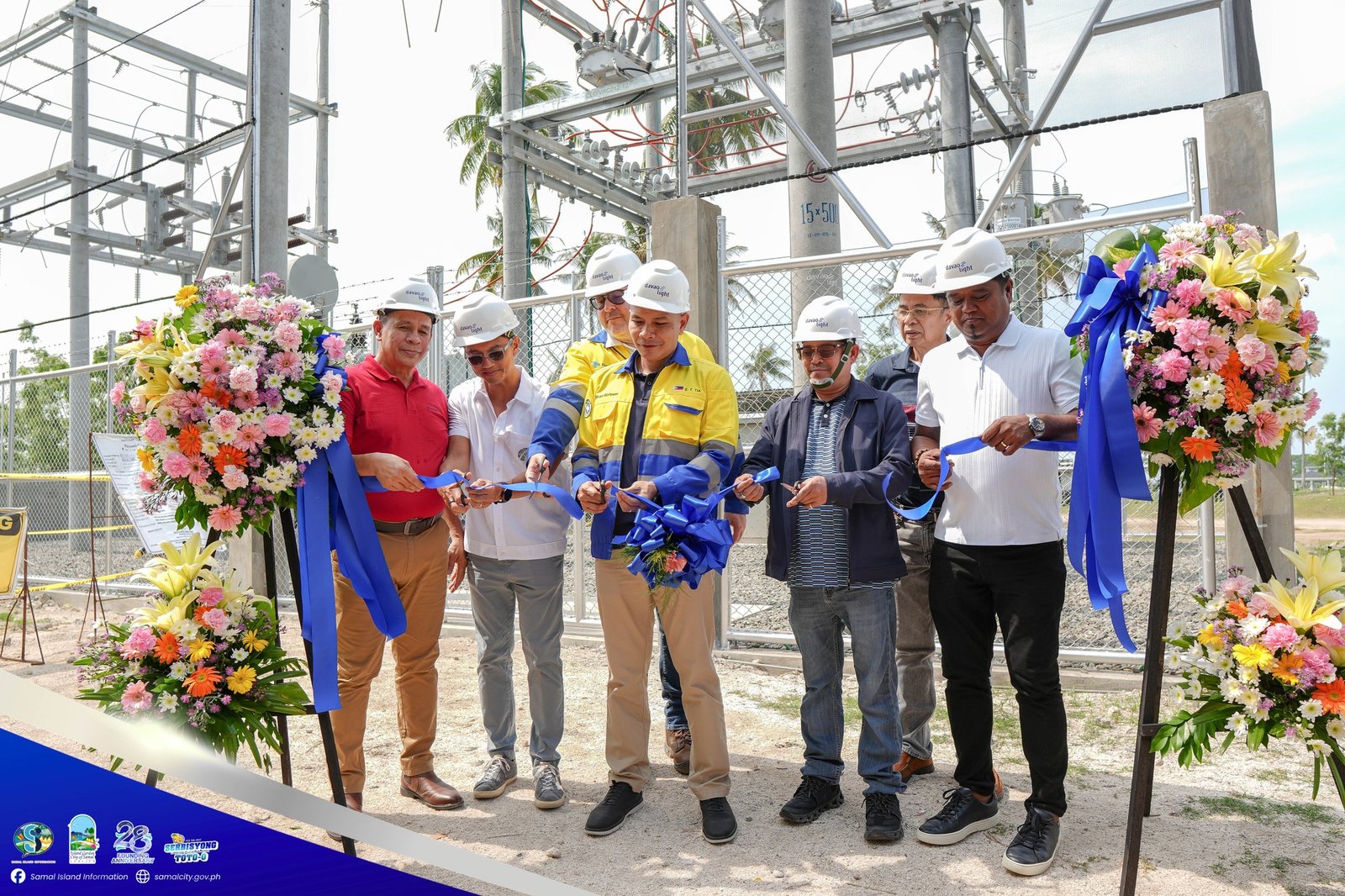
ISLAND GARDEN CITY OF SAMAL, Davao del Norte(April 20) — A new submarine cable linking Samal Island to the mainland grid promises long-term energy security, but also raises a familiar development question: whether infrastructure is keeping pace with actual demand—or moving ahead of it.
The project, implemented by Davao Light and Power Company under Aboitiz Power Corporation, connects the island to the Davao City grid through a 1.25-kilometer, 69-kilovolt submarine cable across the Pakiputan Strait. It is designed to deliver up to 50 megawatts (MW) of power once fully energized.
That capacity significantly exceeds Samal’s current peak demand of around 12 MW—more than four times higher—prompting questions on whether the upgrade is responding to existing needs or anticipating future growth that has yet to materialize at scale.
Company officials said testing will follow the inauguration, with full energization expected within one to two weeks. They described the project as a reliability upgrade intended to support tourism expansion, commercial development, and future infrastructure projects.
“This is more than enough,” said DLPC president and COO Enriczar Tia, noting that several resorts still rely on generator sets and that demand is expected to rise.
The timing of the project is also tied to long-term development plans, including the Samal Island–Davao Connector Bridge scheduled for completion in 2028, which is expected to significantly increase mobility, investment, and electricity demand.
Governor Edwin Jubahib welcomed the project, calling it a long-awaited solution to persistent power reliability issues that have constrained investor interest, particularly in the island’s tourism sector.
“The long wait is over,” he said, framing the project as a catalyst for hotel and commercial expansion.
But while officials highlight future readiness, Samal’s current consumption profile tells a more cautious story. Peak demand remains relatively low and heavily seasonal, driven by tourism cycles rather than steady industrial or residential growth. This raises concerns about utilization efficiency and whether excess capacity could remain underused in the short to medium term.
Energy planners often face this trade-off: building ahead of demand to avoid future shortages, or risking overcapacity that can affect cost recovery and pricing structures if growth does not materialize as projected.
In Mindanao’s expanding island economies, similar infrastructure-led bets have become increasingly common—where transmission upgrades and interconnections are justified by anticipated investment rather than existing load requirements.
As Samal transitions away from generator-dependent supply toward full grid integration, the key policy test is no longer just access to electricity, but alignment: ensuring that supply expansion matches real economic uptake, not just projected growth curves.
In that sense, the submarine cable is both a technical milestone and a planning question—whether infrastructure is enabling demand, or running ahead of it.