New Roads, New Routes, New Growth: Dinagat Transport Plan Opens Doors for Tourism and Farming

Date:

Share post:

Photo: Nilo P. Demerey Jr.

BUTUAN CITY (April 21) — In a province where distance and limited transport have long slowed progress, Dinagat Islands is betting on something simple but transformative: better routes.

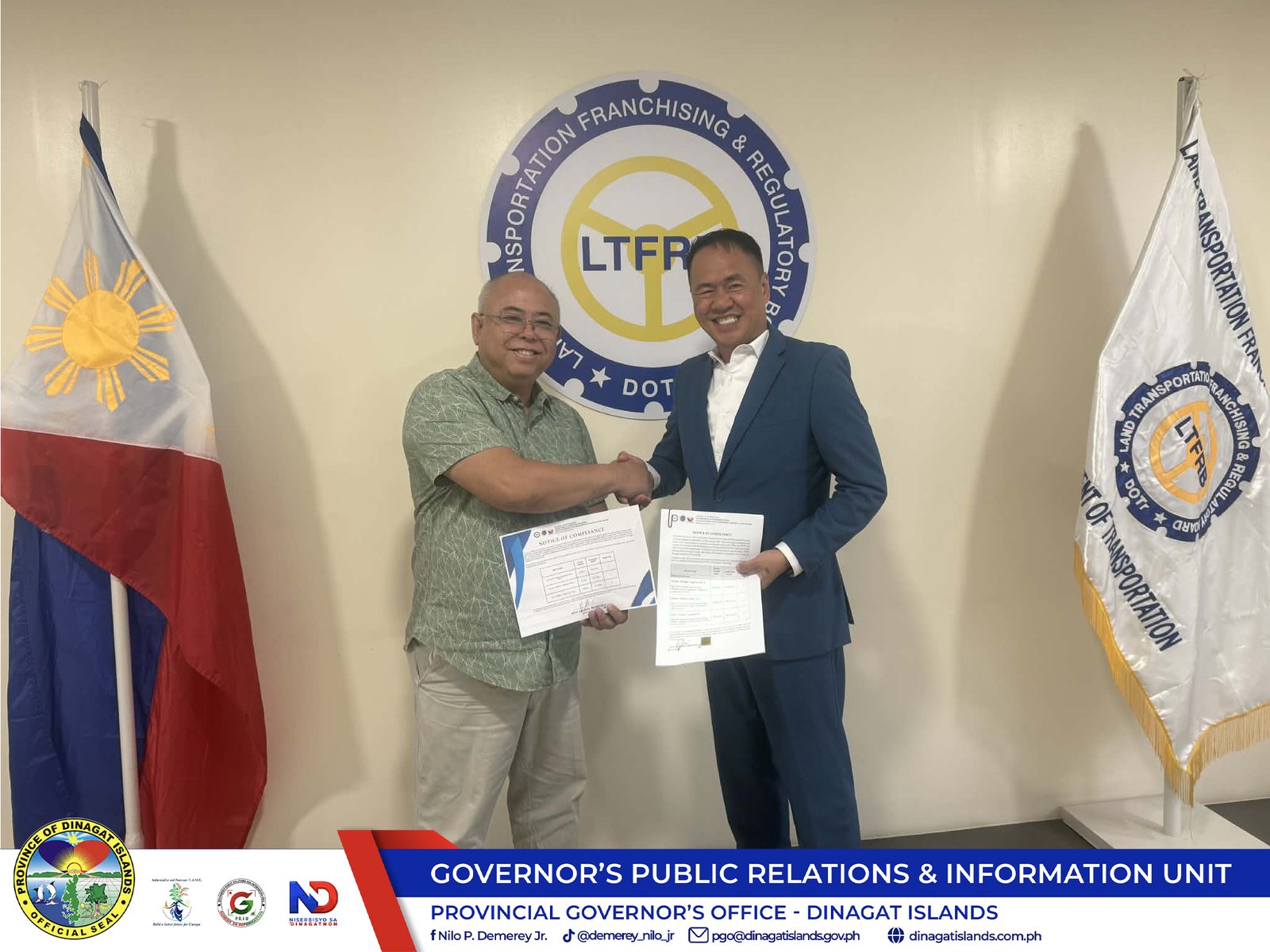
Governor Nilo Demerey Jr. received the green light from the Land Transportation Franchising and Regulatory Board on April 20, marking a key step in a plan first submitted in late 2025.

“These new routes will boost economic activities in the province,” Demerey said, pointing to agriculture, fisheries, and tourism as the biggest beneficiaries.

For locals, that boost could be felt in everyday ways: shorter travel times, easier market access, and more visitors reaching once-remote destinations.

Among the newly approved routes are:

  • San Jose to Cagdianao (20.69 km), with nine PUJ units
  • San Jose to Basilisa (42.36 km), with nine PUJ units
  • Libjo–Tubajon–Loreto (29.56 km), with seven PUJ units

Together, these routes form a transport backbone connecting key towns and coastal areas—many of them gateways to Dinagat’s pristine beaches and emerging eco-tourism sites.

For farmers and fisherfolk, the impact could be immediate. Faster and more reliable transport means products can reach markets fresher, reducing losses and increasing income potential.

For tourism, the effect is just as critical. Access has long been one of Dinagat’s biggest 

challenges; even the most beautiful destinations struggle without reliable ways to get there. With the new routes, the province’s natural attractions may finally become more reachable to both local and visiting travelers.

LTFRB Chairperson Teofilo “Vigor” Mendoza II has directed the provincial board to formalize the plan through an ordinance, paving the way for full implementation.

The LPTRP will remain in effect for five years, with adjustments expected as demand grows and travel patterns evolve.

For Dinagat Islands, the message is clear: development doesn’t always start with big infrastructure—it can begin with the routes that connect people, livelihoods, and opportunity.

spot_img

Related articles

Back Home, Back on Track: NorMin Reintegration Fair Gives OFWs a Second Start

CAGAYAN DE ORO CITY  (April 21) — After years of working abroad, many overseas Filipino workers (OFWs) return...

One Hour Instead of 19: Davao–Manado Flights Poised to Reopen Trade Gateway

DAVAO CITY  (April 21) — What used to take nearly a full day of flights, layovers, and even...

Behind Bars, Beyond Limits: Cotabato PDLs Graduate, Rewrite Their Futures

COTABATO CITY  (April 21) — Inside the concrete walls of the North Cotabato District Jail, where routines are...

Island Neighbors, Shared Futures: Gov. Generoso Eyes Cross-Border Partnership with Indonesia

DAVAO CITY  (April 21) — Just 80 to 100 kilometers of open sea separate Davao Oriental’s coastal town...