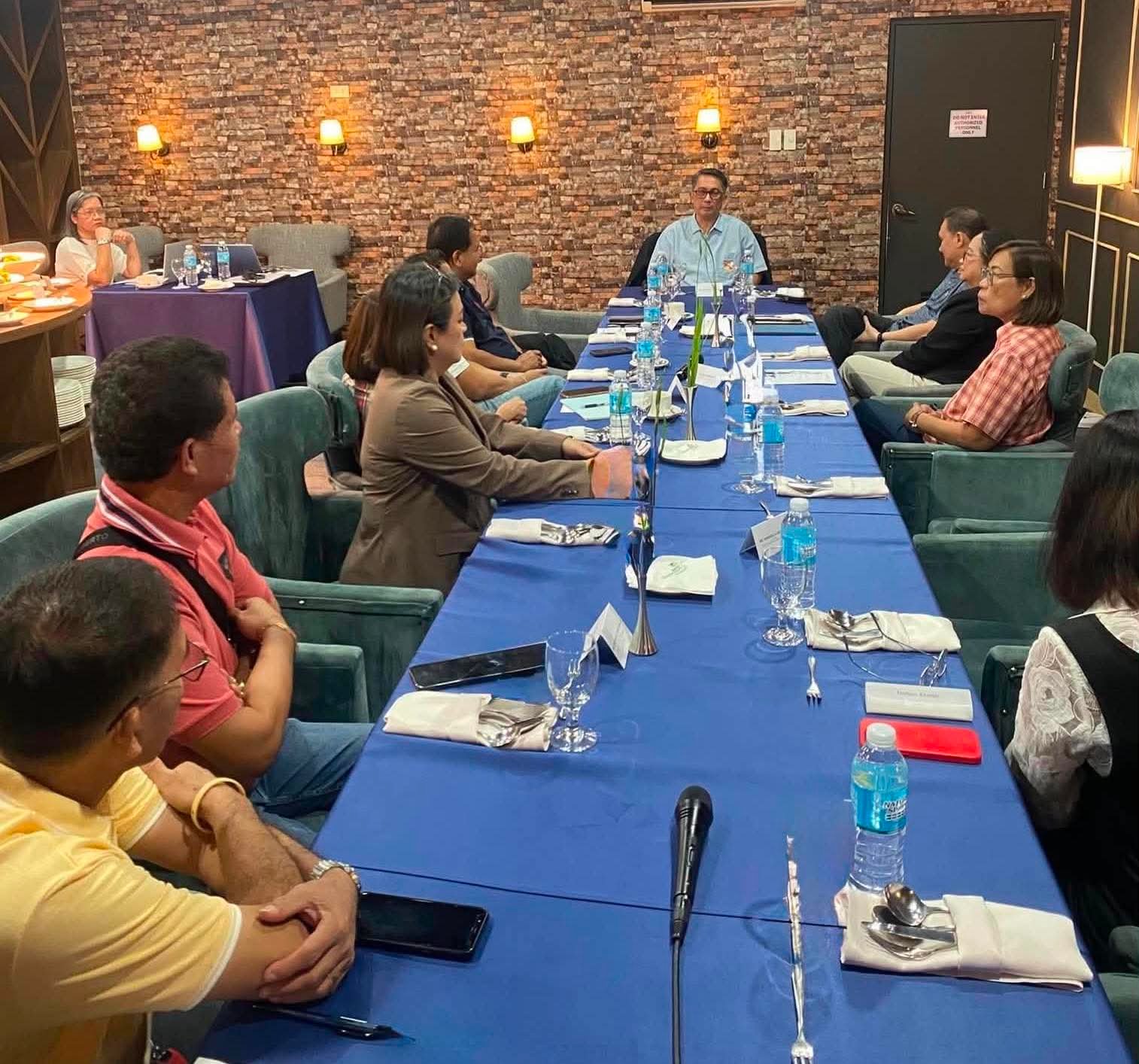
GENERAL SANTOS CITY — Business leaders in General Santos City have raised growing concerns over persistent power instability and the financial condition of local electric cooperatives, warning that recurring outages and uncertainty in the energy sector could undermine investor confidence and economic growth in one of Mindanao’s key commercial hubs.
The concerns surfaced during the Mindanao Business Sector Dialogue led by Leo Tereso Magno, where members of the business community pressed the Mindanao Development Authority to address long-standing infrastructure and energy issues affecting the region.
According to the General Santos City Chamber of Commerce and Industry, Inc., business leaders raised several critical concerns during the dialogue, including the need to modernize ports, address recurring electricity supply problems, accelerate major infrastructure projects, and respond to continuing challenges confronting the fishing industry.
But among the issues raised, the power situation emerged as one of the most pressing concerns.
In an earlier statement, Chamber President Miguel Rene Dominguez warned that the reported financial losses of SOCOTECO II, coupled with recurring brownouts, continue to create uncertainty among investors and local businesses already struggling with rising operational costs.
“So takot rin ang mga negosyante ngayon na baka one day, tagilid ang patakbo, lahat tayo maapektuhan. Ang pinakamahal na kuryente iyong walang kuryente,” Dominguez said.
The statement reflects broader anxieties in parts of Mindanao where unreliable power supply has long remained a recurring obstacle to industrial expansion, business continuity, and investor confidence.
General Santos City, considered the tuna capital of the Philippines and a major gateway for trade and exports in southern Mindanao, relies heavily on stable electricity supply to sustain its fish processing plants, cold storage facilities, manufacturing operations, and port activities.
Even short power interruptions can significantly disrupt production chains, affect preservation systems in the fishing industry, and increase operational expenses for businesses dependent on continuous refrigeration and processing operations.
Mindanao’s power sector has historically faced recurring supply vulnerabilities stemming from aging infrastructure, dependence on baseload plants, transmission limitations, and periodic disruptions in power generation facilities.
Although the island’s overall power situation has improved compared to the severe rotating brownouts experienced more than a decade ago, local business groups say instability and concerns over distribution management continue to affect investor sentiment in several growth areas.
The issue becomes even more sensitive as Mindanao positions itself as an emerging investment destination under the government’s regional economic expansion programs.
“The dialogue forms part of MinDA’s continuing efforts to strengthen government–industry collaboration, identify opportunities in priority sectors, and promote Mindanao as a competitive and inclusive investment destination,” the Chamber said.
Secretary Magno has been pushing for stronger public-private coordination across Mindanao as the government seeks to accelerate infrastructure development, improve connectivity, and attract more investments into the island-region.
However, business leaders emphasized that infrastructure ambitions could be undermined if recurring energy concerns remain unresolved.
For many investors, the business community said, reliable electricity remains among the most important indicators of long-term economic stability.
Because for industries dependent on uninterrupted operations, the costliest electricity is not expensive power, but no power at all.