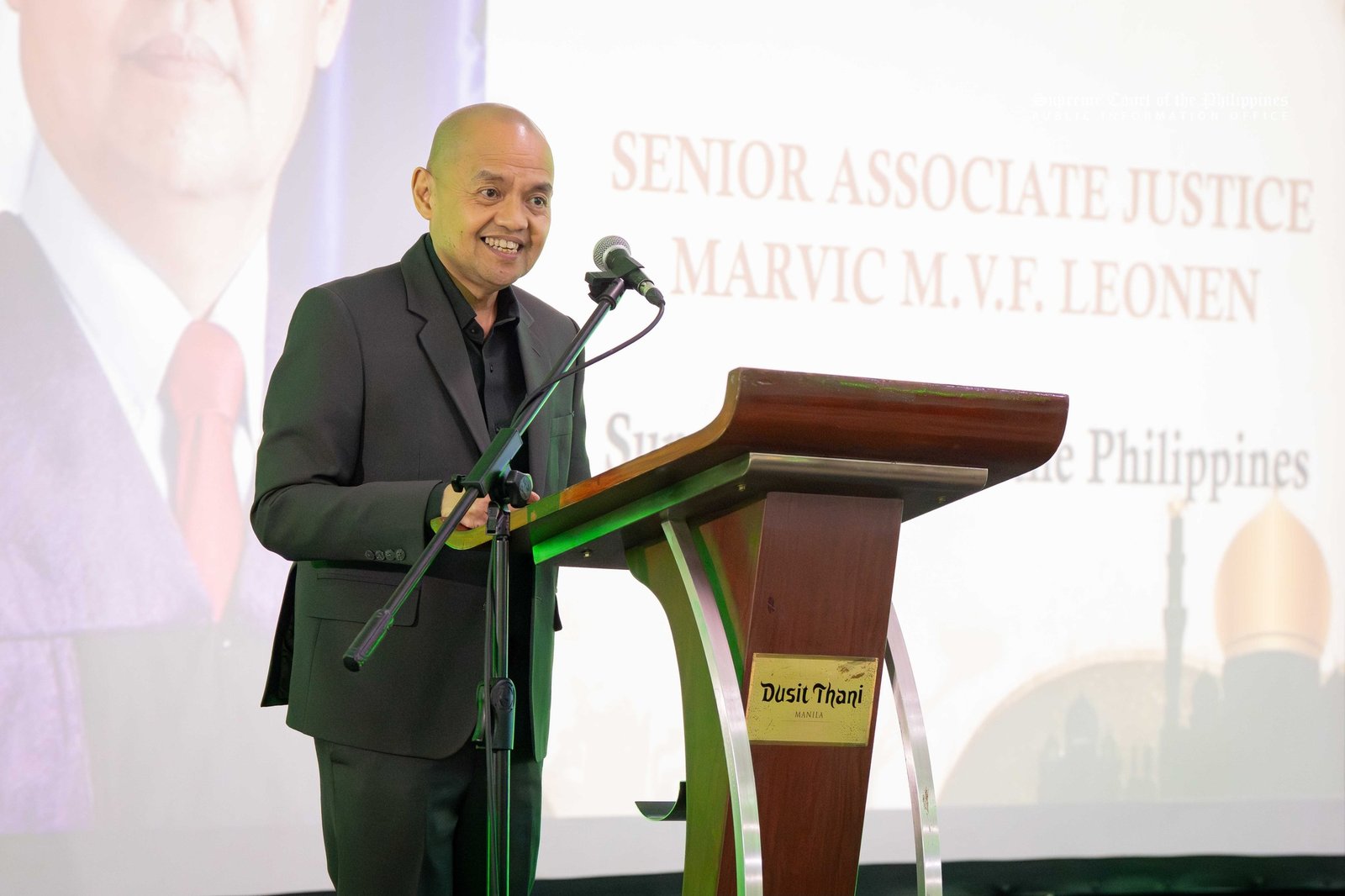
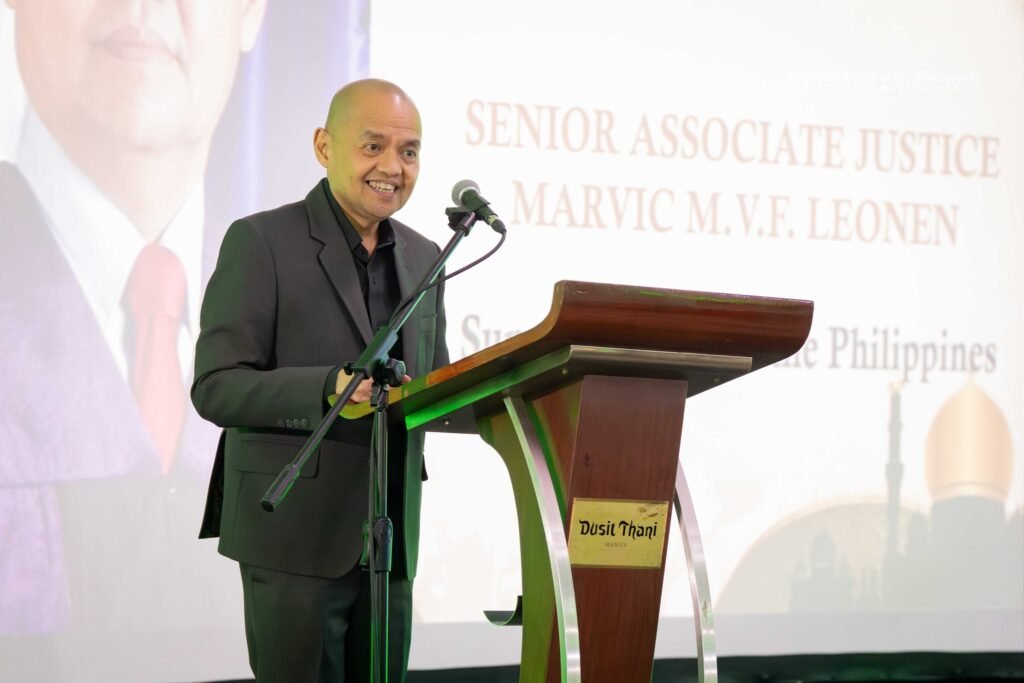
MARAWI CITY (May 27) — Marvic Leonen is pushing for a stronger and more inclusive Shari’a justice system, warning that Muslim communities continue to face gaps in legal access as vacancies persist in Shari’a courts across the country.
Addressing 73 newly minted lawyers during the Purplehood and New Lawyers Testimonial at Mindanao State University College of Law on May 24, Leonen said the country must move beyond treating Shari’a law as a legal side note and fully integrate it into judicial reform and national legal practice.
“The law in this country is shaped by four legal traditions that co-exist within our national legal architecture,” Leonen said, citing indigenous customary law, civil law, common law, and Shari’a law.
His remarks come amid continuing efforts by the Supreme Court to modernize the country’s Shari’a justice framework under the Strategic Plan for Judicial Innovations 2022–2027.
Leonen said reforms now under review include strengthening Shari’a courts, expanding legal education for Muslim practitioners, and revamping the special Shari’a bar examinations now administered directly by the Supreme Court instead of the National Commission on Muslim Filipinos.
“Shari’a law is so important that the Supreme Court took over the administration of the special Shari’a bar exam,” he said.
The magistrate acknowledged longstanding shortages in Shari’a judges and counselors, particularly in Muslim Mindanao, where many court positions remain unfilled.
“We are undertaking efforts to train Muslim judges and develop a stronger pool of Muslim lawyers who are likewise Shari’a counselors,” Leonen said, adding that the initiative aims to address persistent vacancies in Shari’a Circuit Courts, District Courts, and the Shari’a High Court.
In a significant move, Leonen announced that the first national convention of Shari’a counselors under the Supreme Court will be held in September at the Mindanao State University — a symbolic recognition of Marawi’s central role in Islamic legal education in the country.
The convention is expected to organize Shari’a practitioners nationwide and open pathways for their fuller integration into the Integrated Bar of the Philippines.
Leonen also revealed that the Egyptian government has expressed willingness to support specialized training for Shari’a judges, lawyers, and academics through scholarship and exchange programs.
“We have just completed a training needs analysis that will guide the proposed modules and training tiers,” he said.
For many in the audience, Leonen’s message carried broader implications beyond legal reform — positioning Shari’a justice as part of the national conversation on inclusion, representation, and equitable governance.
“Justice systems become stronger when they recognize the lived realities, histories, and traditions of the communities they serve,” Leonen stressed.
The ceremony honored the 73 passers of the September 2025 Bar Examinations — the largest batch of new lawyers ever produced by the MSU main campus since the establishment of its law school.