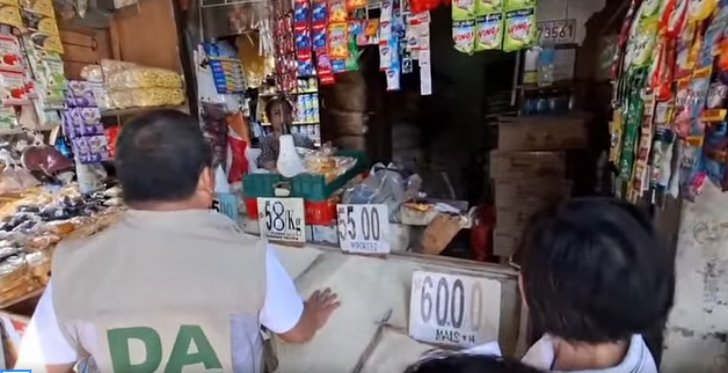
DAVAO CITY (June 2) — Barely hours after the government imposed a nationwide PHP50-per-kilo ceiling on imported rice, authorities in Davao City encountered a familiar challenge: the gap between policy directives and market realities.
A joint inspection team led by the Department of Agriculture in the Davao Region (DA-11) swept through Bankerohan Public Market on Monday to enforce Executive Order No. 118, which temporarily caps the retail price of imported regular and well-milled rice at PHP50 per kilogram.
The order, signed by President Ferdinand Marcos Jr., seeks to ease the burden of rising food costs by mandating a 30-day ceiling on imported rice prices, subject to review by the National Price Coordinating Council.
Initial inspections revealed mixed compliance among traders. While some retailers had adjusted prices to the mandated range of PHP49 to PHP50 per kilo, others continued selling above the cap, exceeding the ceiling by as much as PHP2 to PHP3 per kilogram.
Vendors pointed to higher acquisition costs and thin profit margins, raising questions about how quickly market players can absorb the price adjustment without incurring losses.
For DA-11 Regional Director Macario Gonzaga, the issue extends beyond market stalls and points to actors higher up the supply chain.
“We are appealing to retailers, wholesalers, and especially importers because they are the root source. Price originates from them, so they must adjust and follow the mandate issued by the President,” Gonzaga said.
The enforcement drive brought together personnel from the DA, Department of Trade and Industry, Philippine National Police, and Bureau of Plant Industry, signaling a whole-of-government approach to ensuring compliance.
Yet the operation also underscored the difficulties of regulating food prices in a market where costs fluctuate across multiple layers of distribution. Authorities acknowledged concerns that some traders may temporarily lower prices during inspections only to restore higher rates once monitoring teams leave.
To counter this, Gonzaga announced a shift from scheduled inspections to daily random spot checks. Traders found violating the price ceiling may face notices and be required to explain their pricing practices before authorities.
The government argues that stricter enforcement is necessary to make lower rice prices felt by consumers. Critics, however, warn that price controls can prove difficult to sustain if wholesale costs remain high and supply chain actors are unable—or unwilling—to absorb reduced margins.
As monitoring teams intensify inspections in the coming weeks, the success of the rice price cap may ultimately depend not only on enforcement at public markets but also on whether importers and wholesalers comply with the policy’s intent.
For consumers struggling with the rising cost of living, the outcome will determine whether the promised PHP50 rice becomes a lasting reality or merely a temporary figure displayed on market price tags.