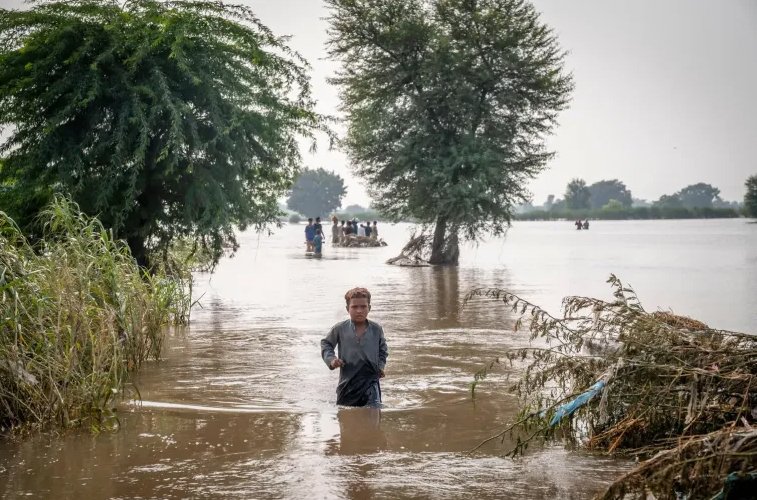
MANILA (June 22) — A child misses school because floodwaters have cut off the only road to the village.
Another struggles to sleep through weeks of extreme heat.
A family loses its crops after a prolonged drought, leaving parents unsure where the next meal will come from.
Across the world, these are no longer isolated experiences.
According to a new report released by UNICEF, nearly 1.1 billion children—almost half of the world’s child population—are now exposed to at least three overlapping climate and environmental threats that endanger their health, education, safety, and future.
The findings, contained in UNICEF’s Children’s Climate Risk Report 2026, paint a troubling picture of childhood in an increasingly warming world.
“The lives of children continue to be upended by the impact of heatwaves, wildfires, droughts, and floods,” UNICEF Executive Director Catherine Russell said.
“Half of the world’s children are now living with at least three overlapping climate threats shaping their daily lives.”
Children on the Frontlines
The report found that almost every child on the planet is exposed to at least one climate hazard.
Many face several at once.
These include droughts, floods, tropical storms, wildfires, extreme heat, heatwaves, and other environmental threats that are becoming more frequent and severe as global temperatures rise.
More than four million children worldwide are exposed to as many as six overlapping climate hazards.
The most common combination is drought, extreme heat, and heatwaves, affecting nearly 300 million children.
For children, climate change is not simply an environmental issue.
It affects whether they can attend school, access healthcare, drink safe water, eat nutritious food, and live free from harm.
The Hidden Cost for Children
Climate disasters often hit children hardest.
When floods destroy homes, schools may close for weeks or months.
When drought affects crops, families may struggle to afford food, increasing the risk of malnutrition.
Extreme heat can affect children’s physical health, concentration, and ability to learn.
In communities already facing poverty, conflict, or weak public services, climate shocks can push vulnerable families even deeper into crisis.
The report highlights that climate risks are not determined solely by weather events.
A child’s ability to cope also depends on access to healthcare, education, clean water, sanitation, and social protection.
Children living in fragile and low-income countries often face the greatest danger because they experience both climate shocks and limited access to basic services.
Asia Among the Most Vulnerable
Several countries in Asia are among the most heavily affected.
Children in Bangladesh, Myanmar, and Pakistan face some of the highest levels of exposure to multiple climate hazards worldwide.
These countries experience a dangerous combination of flooding, extreme heat, drought, and powerful storms that disrupt communities and essential services.
The findings carry important lessons for countries such as the Philippines, which regularly experiences typhoons, flooding, drought, and extreme heat.
Children in disaster-prone communities often endure repeated disruptions to schooling, healthcare, livelihoods, and family stability.
More Than Storms and Floods
The report also examined climate-sensitive threats such as air pollution and malaria.
Air pollution now affects nearly every child globally.
Meanwhile, about one billion children live in areas where malaria remains a significant risk.
These environmental dangers can compound existing vulnerabilities, especially among poor households with limited access to healthcare.
A Child Rights Issue
UNICEF emphasizes that climate change is not only an environmental challenge but also a child rights issue.
Every child has the right to health, education, protection, and development.
When climate disasters destroy schools, contaminate water sources, damage health facilities, or force families from their homes, those rights are placed at risk.
The organization is urging governments to strengthen climate adaptation measures, invest in resilient schools and health systems, reduce greenhouse gas emissions, and ensure children’s voices are included in climate decision-making.
Building a Safer Future
Despite the challenges, UNICEF says solutions are available.
Investments in disaster preparedness, climate-resilient infrastructure, social protection, and child-focused public services can help communities better withstand climate shocks.
The organization also calls for greater investment in climate education so children and young people can actively participate in shaping solutions.
” When we strengthen health and education systems, and improve infrastructure with children in mind, we protect them from today’s climate threats and help secure their future,” Russell said.
For millions of children around the world, climate change is no longer a distant threat.
It is shaping where they live, how they learn, what they eat, and whether they can thrive.
And as climate impacts intensify, experts warn that protecting children must become central to every climate action plan—not only for their future, but for the future of communities everywhere.