
Most Schools Reopen After Deadly Mindanao Quake, but Worst-Hit Areas Remain Closed

Date:

Share post:

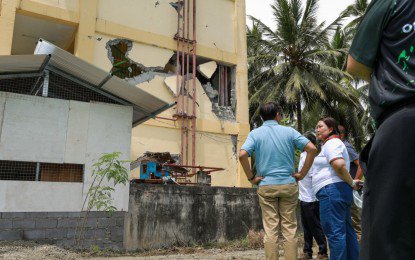
DAVAO CITY (June 22)  — Nearly two weeks after a powerful earthquake struck southern Mindanao, most public schools have resumed classes, but thousands of students in the hardest-hit communities remain out of school as authorities continue to assess damaged buildings and ensure campuses are safe.

The Department of Education (DepEd) has allowed the reopening of schools in most affected areas of Region XII, but classes in General Santos City and Sarangani Province remain suspended pending the completion of structural inspections.

The magnitude 7.8 earthquake struck off the coast of Sarangani on June 8, the opening day of the new school year for millions of Filipino students. The disaster claimed at least 78 lives and damaged thousands of classrooms across southern Mindanao.

“The Department of Education has cleared public schools in most affected areas of Region XII to resume operations following the June 8 Sarangani earthquake, while continuing safety inspections, learning continuity measures, and mental health and psychosocial support services for affected learners, teachers, and school personnel,” DepEd said in a statement.

Thousands of Students Still Affected

Schools in Cotabato, Kidapawan, Koronadal, Tacurong, and Sultan Kudarat resumed classes on June 15 after local assessments determined that learning could safely continue.

However, General Santos City and Sarangani remain under what DepEd calls “Hinto” status, meaning all academic activities remain suspended until local authorities declare conditions safe.

Under the department’s post-disaster response system, areas categorized as “Hayo” may resume classes once the safety and readiness of learners, teachers, and school personnel have been established.

As of June 16, DepEd reported that 6,748 schools had resumed classes across the wider region, while 2,342 schools remained closed.

Extensive Damage to School Facilities

The earthquake left widespread destruction across the education sector.

DepEd data show that 142,821 learners and 7,406 teaching and non-teaching personnel were affected by the disaster.

A total of 1,396 schools reported damaged classrooms.

Among the affected facilities:

  • 1,950 classrooms were totally destroyed;
  • 2,098 classrooms sustained major damage; and
  • 6,065 classrooms suffered minor damage.

To determine whether schools can safely reopen, inspections are being conducted jointly by the Department of Public Works and Highways, local government engineers, and disaster management officials.

Education authorities estimate that at least P352 million will be needed for debris clearing, clean-up operations, and emergency repairs.

Learning Continues Amid Recovery

Recognizing that repairs could take months in some areas, DepEd plans to establish 109 temporary learning continuity spaces to ensure children can continue their education while damaged classrooms are rehabilitated.

The department is also addressing the emotional impact of the disaster on students and educators.

As of June 16, Region XII had 671 support workers and 2,972 personnel trained in psychosocial first aid available to assist learners, teachers, and school staff coping with trauma and stress caused by the earthquake.

Education Secretary Sonny Angara stressed that safety remains the top priority.

“Gusto nating makabalik ang mga bata sa pag-aaral, pero hindi natin puwedeng madaliin kung hindi pa ligtas ang classroom o kung hindi pa handa ang learners at teachers,” Angara said.

(“We want children back in school, but we cannot rush the process if classrooms are not yet safe or if learners and teachers are not yet ready.”)

Beyond Reopening Classrooms

Education advocates note that recovery involves more than repairing buildings.

For many children, schools provide stability, social support, and a sense of normalcy after disasters. Ensuring that students can safely return to learning environments while receiving emotional and psychological support is considered critical to long-term recovery.

As rebuilding efforts continue, thousands of families in the worst-affected communities remain in temporary shelters or damaged homes, while students wait for the day they can safely return to their classrooms.

For now, education officials say reopening decisions will continue to be guided by one principle: no child should return to school until it is safe to do so.

RIZAL MEMORIAL COLLEGEspot_img

Related articles

ICC Sets Ground Rules for Duterte Crimes Against Humanity Trial

MANILA (June 22)  — Judges of the International Criminal Court (ICC) have issued detailed guidelines governing the conduct...

Health Officials Push Wider Access to HIV Services Amid Fight Against Stigma

CAGAYAN DE ORO CITY (June 22)  — Health officials in Northern Mindanao are calling for the establishment of...

Climate Crisis Now Threatens Nearly Half of the World’s Children, UNICEF Warns

MANILA (June 22)  --- A child misses school because floodwaters have cut off the only road to the...

Bangsamoro Parliament Probes Alleged P4.9-B Unreverted Funds, Unpaid GSIS Contributions in Education Ministry

COTABATO CITY (June 22) — A Bangsamoro Parliament investigation has uncovered what lawmakers described as an unauthorized bank...