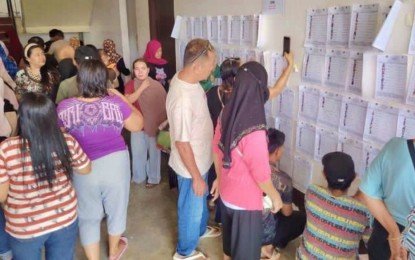
COTABATO CITY (June 30) — The Bangsamoro’s preparations for its first-ever regular parliamentary elections cleared a major milestone after the Commission on Elections (Comelec) declared last week’s mock polls a success, boosting confidence in the automated voting system that millions of voters will use on Sept. 14.
Comelec Chairperson George Garcia said Monday that the June 27 simulation exercises demonstrated that the automated election system worked smoothly in test areas across Cotabato City, Sultan Kudarat, Maguindanao del Norte, and Bongao, Tawi-Tawi.
“Our transmission of data was perfect and without interruption,” Garcia said, noting that participants found the voting process simple and easy to follow.
Election watchdogs, including the National Movement for Free Elections (Namfrel) and the Institute for Autonomy and Governance, echoed the Comelec’s assessment, saying the mock polls proceeded smoothly.
The Bangsamoro Parliament Elections Monitoring Center reported that 500 registered voters participated in the simulation, with 50 voters assigned to each clustered precinct to test the entire voting and transmission process.
For participants like Abdull Tolondatu of Barangay Kalanganan in Cotabato City, the exercise offered a first glimpse of how the historic elections will unfold.
“We are satisfied. We’re happy to see the faces of our candidates on the official ballot. The process is not complicated; it’s simple,” Tolondatu said after casting his mock vote.
Garcia said election returns were transmitted within minutes to the Comelec’s central servers, as well as to accredited recipients, including the dominant majority and minority parties, media organizations, the Parish Pastoral Council for Responsible Voting (PPCRV), and Namfrel.
The successful simulation comes as the Bangsamoro region prepares for a landmark democratic exercise on Sept. 14, when voters will elect members of the regional Parliament for the first time through regular parliamentary elections.
More than 2.39 million registered voters across the Bangsamoro are expected to cast their ballots in 1,186 voting centers serving 2,185 barangays.
Voters will choose 32 parliamentary district representatives, 40 party-list members, and eight sectoral representatives, who will help shape the region’s laws and governance in the years ahead.
The elections, however, remain subject to pending petitions before the Supreme Court questioning the validity of regional laws governing the parliamentary polls. Unless the high court orders otherwise, the Sept. 14 elections will proceed using the automated election system tested during the mock exercises.
For many Bangsamoro residents, the successful trial is more than a technical achievement—it is a crucial step toward ensuring that the region’s first regular parliamentary elections are credible, orderly, and reflective of the people’s mandate.