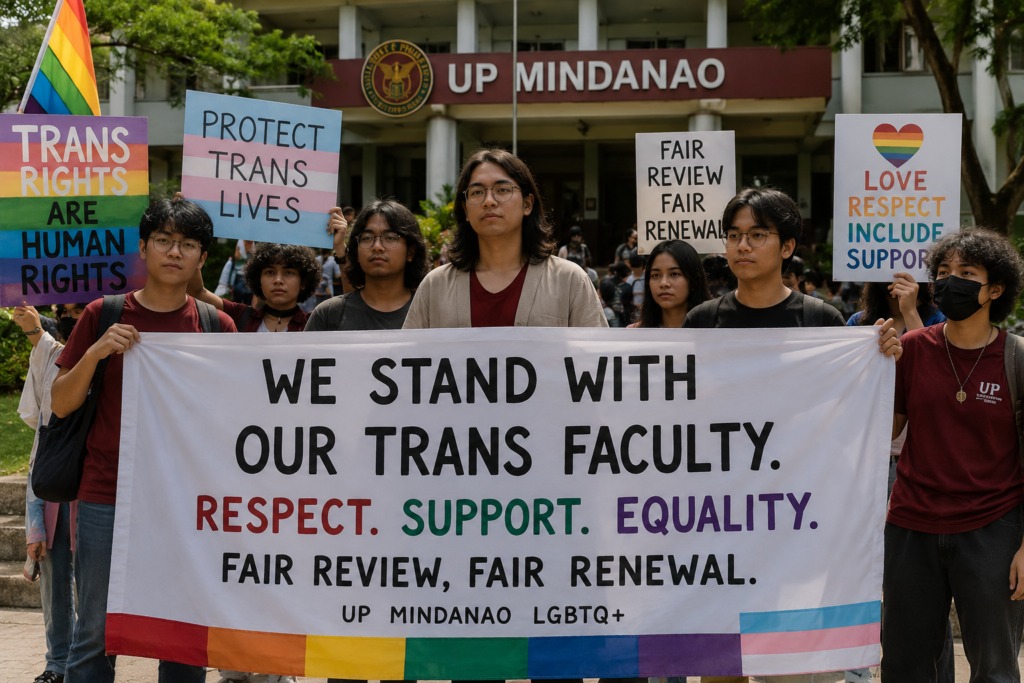
DAVAO CITY(July 2) — A student organization at the University of the Philippines Mindanao is urging the university administration to address what it describes as the prolonged harassment and discrimination allegedly experienced by a transgender faculty member, saying the case raises broader concerns about inclusion, academic freedom, and equal treatment in higher education.
In a public statement, UP Mindanao Mentefuwaley, an LGBTQIA+ student organization, expressed its full support for anthropology instructor Malaya Lapiña, claiming she has faced months of intimidation, administrative obstacles, and transphobic treatment within her department.
The organization said the alleged incidents began in September 2025 and have affected both Lapiña’s professional career and mental well-being.
According to the group, Lapiña’s application for graduate studies and requests related to her faculty renewal were repeatedly delayed or rejected for what it described as inconsistent and unfounded reasons. The organization also alleged that her research on queer and transgender anthropology had been questioned despite being a recognized field within the discipline.
The statement further claimed that the department did not endorse Lapiña’s application for a paid study leave, preventing her from pursuing a Master’s degree in Gender Studies at the University of Otago in New Zealand.
Student group cites teaching record
Mentefuwaley argued that the decisions against Lapiña do not reflect her academic performance.
The organization said she consistently received student evaluation scores above 4.5, among the highest in both her department and college, and had produced eight academic publications and seven creative works during her four years at UP Mindanao—output it said exceeded that of many other non-tenured faculty members.
Beyond employment concerns, the group alleged that Lapiña has repeatedly experienced transphobic behavior, including the intentional use of her former name and incorrect pronouns in official documents.
It described these actions as forms of harassment that undermine the dignity of transgender faculty members.
More than one faculty member’s story
For Mentefuwaley, the issue extends beyond a single employment dispute.
The organization said Lapiña’s experience reflects the challenges that many LGBTQIA+ Filipinos continue to face in workplaces and educational institutions, despite growing public awareness of gender diversity and inclusion.
“If a highly qualified and dedicated transgender educator can allegedly experience intimidation and discrimination within an academic institution, what message does that send to queer and transgender students who hope to pursue careers in higher education?” the organization asked.
The group said the case has heightened concerns among LGBTQIA+ students that competence and dedication alone may not be enough to overcome prejudice.
Calls for transparency
Mentefuwaley called on the UP Mindanao administration to resolve Lapiña’s grievance “with honesty, urgency, and transparency” and to evaluate the renewal of her teaching contract based on her qualifications, publications, and teaching performance rather than personal bias.
The organization also linked its appeal to ongoing student calls for stronger faculty support, regularization of exemplary educators, and a more collegial academic environment.
“Our universities should be places where diversity is respected and academic excellence is nurtured,” the organization said. “They should never become spaces where members of gender minorities feel unsafe or excluded.”
Lapiña, whose message was quoted in the statement, vowed to continue advocating for the rights and inclusion of transgender people in academia.
As of the organization’s statement, UP Mindanao had not publicly responded to the allegations. The university has yet to issue an official statement addressing the claims raised by Mentefuwaley.
The case has sparked discussion within the university community about institutional accountability, workplace inclusion, and the importance of ensuring that all faculty members—regardless of gender identity—are treated with fairness, dignity, and respect.