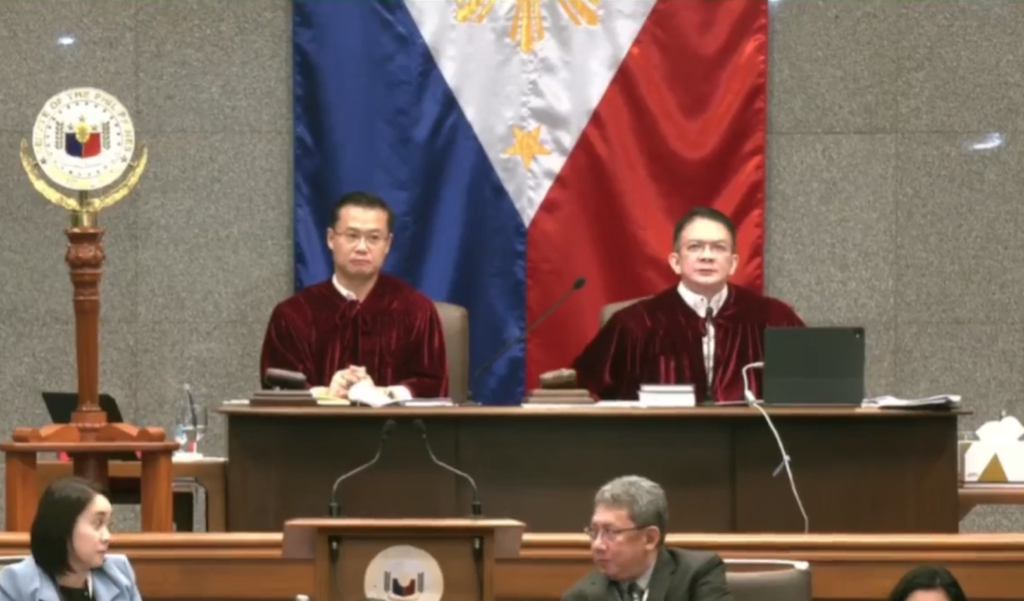
MANILA(July 8) — Before prosecutors could present a single piece of evidence against Vice President Sara Duterte, the Senate found itself confronting a different question—who has the constitutional authority to preside over her impeachment trial?
The issue erupted on the opening day of the proceedings after senators voted 12-8 to elect Senate President Francis “Chiz” Escudero as presiding officer, despite objections that the 1987 Constitution already defines who should lead an impeachment court.
The dispute is more than procedural. It has become the first major constitutional test of a trial expected to stretch over three months and shape the country’s political landscape.
What the Constitution clearly says—and what it doesn’t
The Constitution is explicit in only one situation.
Article XI, Section 3(6) provides that when the President of the Philippines is on trial, the Chief Justice of the Supreme Court shall preside over the impeachment court, although without a vote.
It says nothing about who should preside when the accused is the vice president, an ombudsman, a constitutional commissioner, or a Supreme Court justice.
That silence became the center of Monday’s debate.
Sen. Alan Peter Cayetano, joined by Sen. Pia Cayetano, argued that the Senate should not simply elect a presiding officer without first resolving whether the Constitution already assigns that role.
The Senate majority disagreed.
Instead, senator-judges voted to elect Escudero, effectively allowing the trial to proceed while leaving constitutional questions unresolved.
A constitutional gap—or Senate discretion?
Legal experts are divided over whether the Constitution’s silence creates uncertainty or grants the Senate broad discretion.
Ateneo de Manila University law professor Evecar Cruz-Ferrer said constitutional interpretation should look beyond the text when no express provision exists.
She said the records of the 1986 Constitutional Commission may help explain what the framers intended regarding impeachment trials involving officials other than the president.
Cruz-Ferrer also noted that even if questions later arise over the choice of presiding officer, that alone would not necessarily invalidate the impeachment proceedings.
University of the Philippines College of Law professor Mike Tiu reached a different conclusion.
He argued that because the Constitution expressly identifies only one instance requiring the Chief Justice to preside, the omission in all other impeachment cases appears deliberate rather than accidental.
Under that reading, the authority remains with the Senate, which is empowered under Article XI, Section 3(8) to promulgate its own impeachment rules.
The competing interpretations underscore a constitutional provision that has rarely been tested because the Philippines has had only a handful of impeachment trials since 1987.
Why the issue matters
To some observers, the dispute may seem like a technicality.
But constitutional lawyers note that procedural legitimacy is critical in impeachment because the process is both judicial and political.
Every ruling—from recognizing motions to admitting evidence and maintaining order during trial—passes through the presiding officer.
Questions over who properly occupies that role could become recurring flashpoints as the proceedings move forward, particularly if the Senate’s decisions are later scrutinized in public debate or before the Supreme Court.
The trial now moves to the evidence
With the presiding officer issue settled for now, the impeachment court turns to the charges against Duterte.
The prosecution has allotted 92 trial days, beginning with allegations involving an alleged assassination plot, grave threats, and inciting to sedition.
The court will then hear accusations involving the alleged misuse of confidential funds, alleged bribery and corruption during Duterte’s tenure as Education secretary, and allegations concerning unexplained wealth, Statements of Assets, Liabilities and Net Worth (SALNs), and continued business interests.
Whether the Senate’s decision on Escudero becomes a lasting constitutional precedent—or merely the opening procedural battle in a historic impeachment trial—may ultimately depend not only on the evidence presented but also on how the country’s highest courts, legal scholars, and the public interpret the Constitution’s silence.