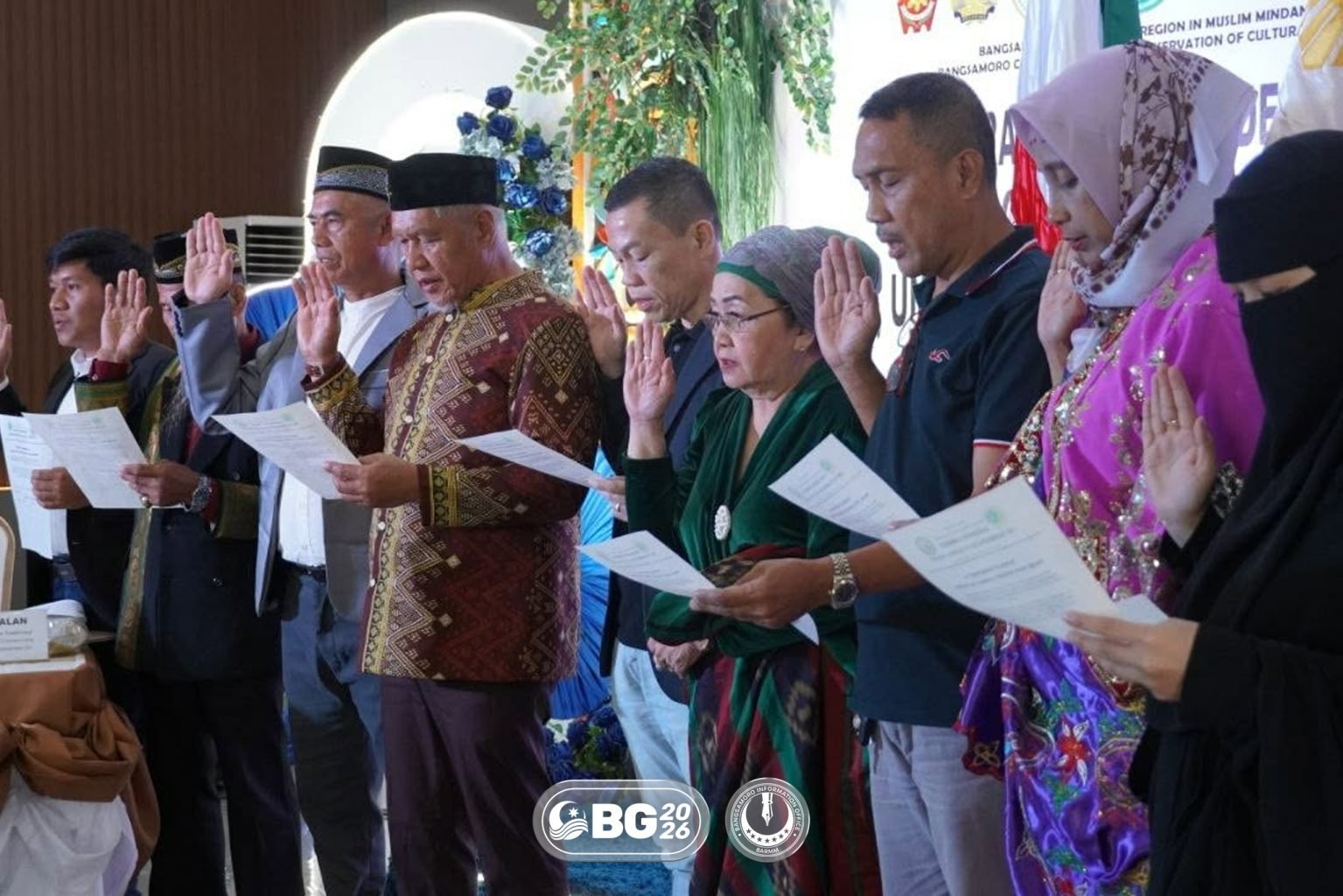
Traditional leaders’ sector from the Bangsamoro Autonomous Region in Muslim Mindanao (BARMM) pledge their commitment during the Traditional Leaders’ Covenant for Peaceful and Credible 1st BARMM Parliamentary Elections on July 16, 2026, in Cotabato City. (Comenei Ali/BIO)
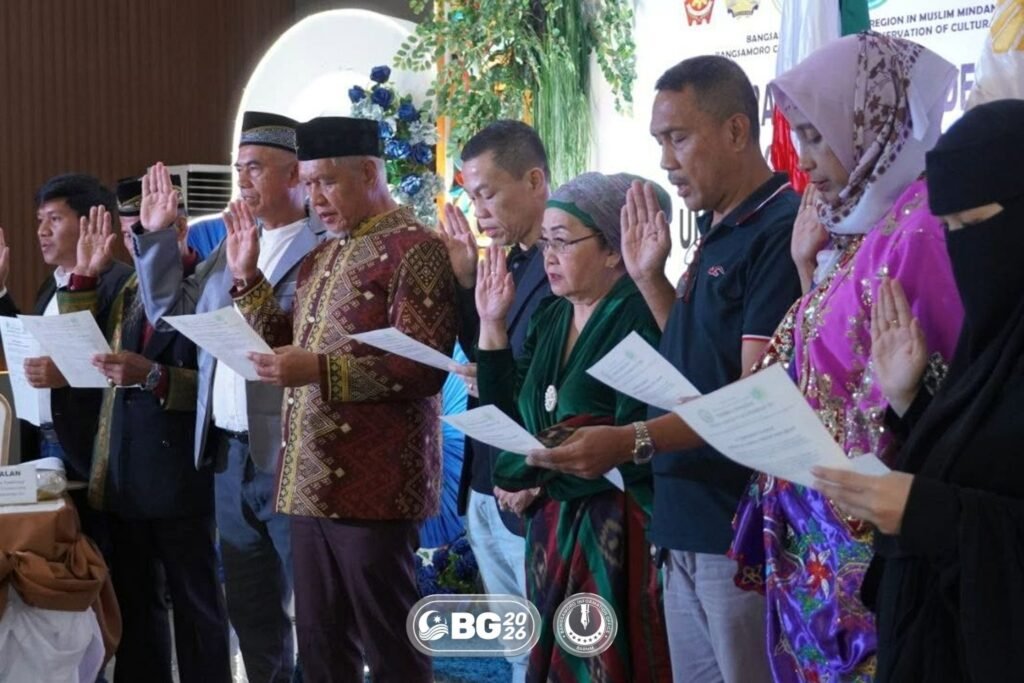
Traditional leaders’ sector from the Bangsamoro Autonomous Region in Muslim Mindanao (BARMM) pledge their commitment during the Traditional Leaders’ Covenant for Peaceful and Credible 1st BARMM Parliamentary Elections on July 16, 2026, in Cotabato City. (Comenei Ali/BIO)
COTABATO CITY (July 22) — With the Bangsamoro Autonomous Region in Muslim Mindanao (BARMM) heading toward its first parliamentary elections on Sept. 14, traditional leaders across the region are making a promise to their communities: help keep the elections peaceful, fair and credible.
The pledge was sealed through a peace covenant signed July 16 during a gathering of traditional leaders, election officials, security forces and other stakeholders in Cotabato City.
Spearheaded by the Bangsamoro Commission for the Preservation of Cultural Heritage (BCPCH), the gathering sought to strengthen cooperation in protecting the integrity of the region’s first parliamentary elections.
“This gathering is more than a preparation for the elections. It is a reaffirmation of the values that have sustained the Bangsamoro people through generations: peace, unity, justice, freedom, homeland, integrity, and responsibility,” BCPCH Chairperson Robert Alonto said.
Voices of peace in the communities
For generations, sultans, datus and other traditional leaders have served as trusted voices in Bangsamoro communities, helping settle disputes, build consensus and maintain social order.
Alonto said their role goes beyond preserving customs and traditions.
Guided by customary laws and the Islamic principle of maslahah, or the common good, traditional leaders have helped resolve conflicts, uphold justice and protect the welfare of their communities long before modern government institutions took shape.
“Our traditional leaders are far more than keepers of rituals and traditions. They safeguard the history, identity, dignity, customs, languages, indigenous systems of governance, and collective memory of the Bangsamoro people,” he said.
Naida Akkalan, chairperson of the Committee on Traditional Institutions, Indigenous Cultural Communities and Settler Communities and commissioner for Basilan, said traditional leaders have a continuing responsibility to help preserve peace from the community level upward.
“It is our duty to strengthen dialogues, uphold justice, protect the dignity of every community, and ensure that future generations inherit a Bangsamoro founded on peace and mutual respect,” Akkalan said.
From self-determination to self-governance
For Alonto, the role of traditional leaders in the upcoming elections also carries a deeper historical meaning.
He recalled the 1924 gathering of Moro sultans, datus and panglimas in Zamboanga City, where they declared before the American colonial government that they were one Moro nation.
Known as the Zamboanga Declaration of 1924, the historic assembly is remembered as part of the Bangsamoro people’s long journey of asserting their identity and right to self-determination.
That journey eventually found expression in decades of peace negotiations and the creation of the BARMM.
Now, traditional leaders are preparing to help shape the region’s future through democratic institutions.
Under Bangsamoro Autonomy Act No. 35, or the Bangsamoro Electoral Code, traditional leaders are among the sectors guaranteed representation in the Bangsamoro Parliament, along with women, youth, settler communities and non-Moro Indigenous Peoples.
The parliamentary system will combine party, district and sectoral representatives. Traditional Leaders Organizations must obtain accreditation from the Commission on Elections (Comelec) to participate in the parliamentary elections.
The ballot, not the bullet
Alonto urged traditional leaders to use their influence to encourage communities to reject violence, intimidation, misinformation and disinformation and to respect the will of voters.
“Peace without fairness is incomplete, and democracy without integrity cannot endure. The ballot cannot coexist with the bullet,” he said.
The gathering ended with an oath-taking ceremony and the signing of the peace covenant.
Through the covenant, the traditional leaders pledged to reject violence and intimidation, respect democratic processes and lawful election results, promote peaceful political engagement and uphold electoral integrity throughout the election period.
For the Bangsamoro communities, the message is clear: the region’s first parliamentary elections should not only mark a new chapter in governance but also demonstrate that political differences can be settled through dialogue, and that the people’s voice—not violence—must determine the future of the Bangsamoro.