MARAWI CITY (August 6) — Rice assistance can still reach Bangsamoro communities during the election period, but the Commission on Elections (COMELEC) is drawing a hard line: government aid must not become a campaign tool.
The warning came as the campaign period for the Bangsamoro Autonomous Region in Muslim Mindanao’s (BARMM) first parliamentary elections opened on July 30, activating the election ban on the distribution of social services and public works under the Omnibus Election Code.
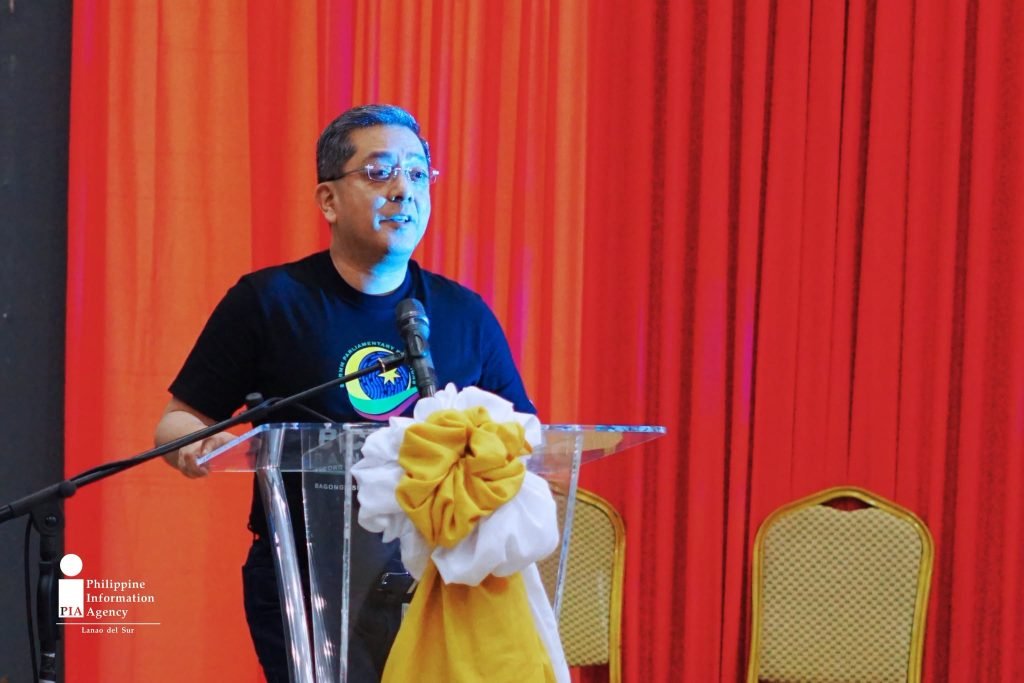
COMELEC Chair George Erwin M. Garcia said government-funded rice assistance, including programs supported by the Local Government Support Fund (LGSF), may continue—but only after the implementing agency or local government unit secures an exemption from the poll body and follows strict conditions.
The issue is particularly sensitive in BARMM, where government assistance can carry significant political weight in communities facing persistent poverty, food insecurity and recurring disasters.
Garcia acknowledged that aid cannot simply stop because of the elections, particularly in areas recently hit by flooding and other calamities.
“Essential government assistance should continue,” Garcia said, pointing to the exemption granted to the Department of Social Welfare and Development (DSWD) that allows it to continue distributing assistance nationwide.
But COMELEC’s exemption is not a free pass for politicians.
Garcia urged candidates and political parties to stay away from the distribution of government assistance covered by exemptions, warning that their presence could create the impression that public resources are being used to promote candidates.
“Ang pakiusap po lang natin ay marespeto sana ang mga kondisyong inilagay namin. During the distribution, hindi naman siguro masama na wala kayo [candidates] diyan. Para lang po hindi masabing pinopolitika ang distribution,” Garcia said.
A poverty issue with electoral consequences
The stakes are high in BARMM, where many families rely heavily on government assistance to cope with food and livelihood insecurity.
That makes rice distribution more than a routine social protection activity during an election season. In poor communities, the delivery of food assistance can become highly visible—and politically valuable—particularly when voters associate the aid with individual politicians rather than the government program that financed it.
The election rules are therefore designed to address a difficult contradiction: government cannot abandon vulnerable families during an election, but neither can public assistance be allowed to become an instrument for winning votes.
COMELEC said exemptions are intended to balance these competing concerns, allowing essential services to continue while imposing safeguards against political intervention.
The poll body has not, however, said that the mere distribution of rice is prohibited. Rather, the implementing agency must first obtain the required exemption and comply with the conditions attached to it.
That distinction matters for local governments and agencies planning assistance in communities affected by floods and other emergencies.
The real test is who gets credit
The bigger challenge may be enforcement.
A rice pack may be purchased with public funds, transported by government personnel and distributed under a government program—but the political optics can change quickly when a candidate appears at the site, hands out the assistance or uses the activity to claim credit.
COMELEC’s warning against candidate participation is therefore aimed at the point where social protection can blur into electioneering.
Garcia said the conditions are meant to ensure that government assistance reaches its intended beneficiaries while protecting the integrity of the electoral process.
For BARMM, the issue carries added significance as voters prepare to elect members of the region’s first parliamentary government.
The election period will test not only COMELEC’s ability to enforce campaign restrictions but also the capacity of government agencies and local officials to keep public services functioning without allowing politicians to appropriate the political credit.
The question is no longer whether rice can be distributed during the campaign. It can, with an exemption. The harder question is whether voters can receive that assistance without being made to feel that they owe their vote to whoever happens to be standing beside the rice sacks.