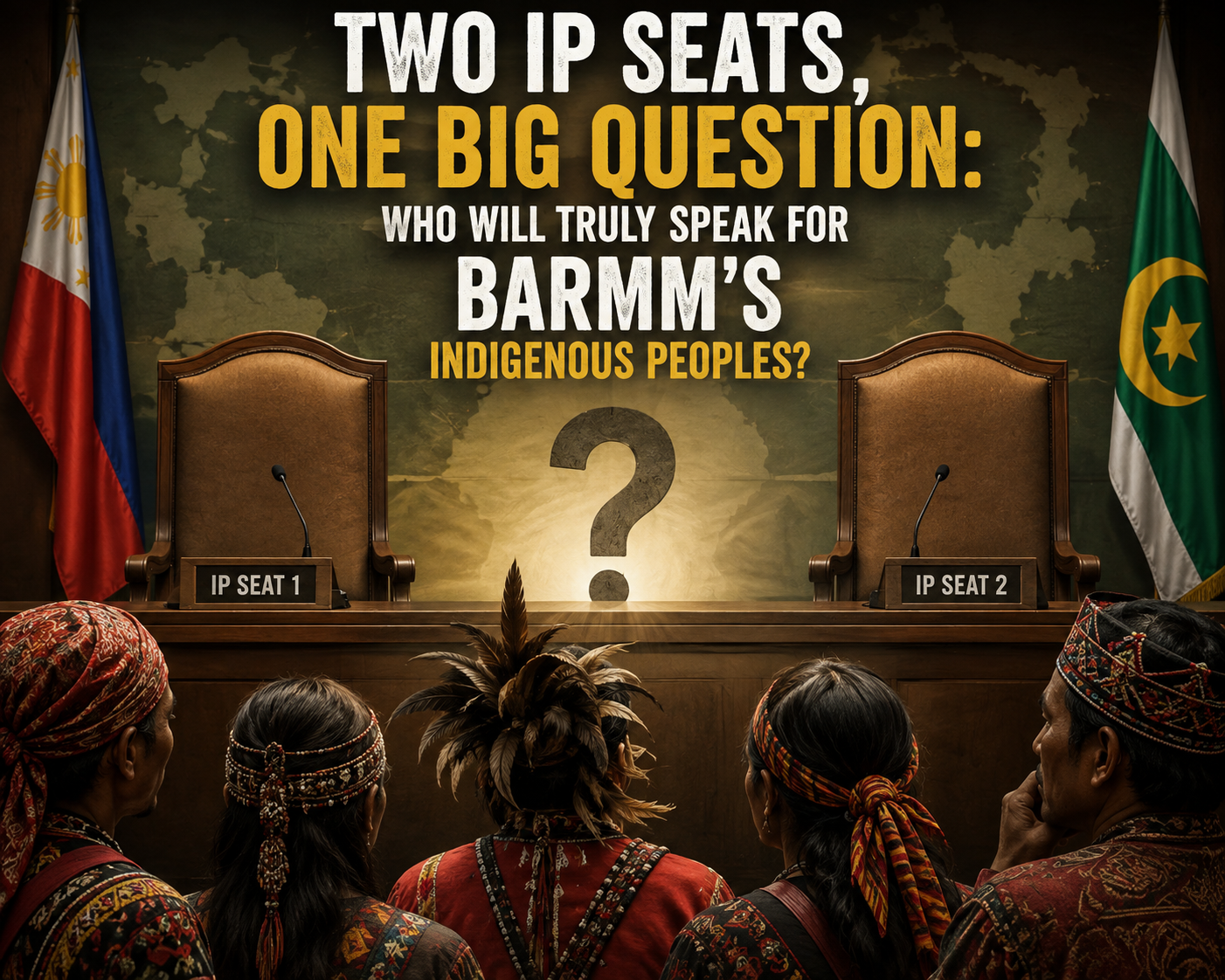
COTABATO CITY(August 10) — TWO seats in the Bangsamoro parliament are reserved for non-Moro indigenous peoples, but as tribal leaders prepare to select their nominees, a bigger question is emerging: Will the people chosen truly represent the concerns of communities living in ancestral domains?
At least six non-Muslim indigenous groups in the Bangsamoro region are preparing to meet in an inter-tribal selection process to identify two nominees for the 80-member parliament.
Unlike the other parliamentary seats, the IP representatives will not be elected through the regular Commission on Elections process. Their names will instead come from a community-led nomination process and will be announced on election day, Sept. 14.
The arrangement gives indigenous communities a unique opportunity to choose their own representatives. But it also puts considerable weight on the selection process itself — and on whether tribal leaders can identify nominees with the independence, experience and community support needed to speak for diverse IP groups.
More than a seat at the table
For communities in ancestral domains, representation is not simply about having someone occupy a parliamentary seat.
It is about whether that representative can push issues that often compete with larger political and economic interests: ancestral-domain protection, land rights, access to basic services, livelihood opportunities, cultural preservation and meaningful participation in decisions affecting indigenous territories.
Three incumbent Bangsamoro lawmakers — Ishak Mastura, Naguib Sinarimbo and regional Health Minister Kadil Sinolinding Jr. — have urged IP leaders to carefully assess whom they will nominate.
They said the parliament can provide indigenous communities with a venue to make recommendations and propose programs for their ancestral domains.
But representation can only be meaningful if those voices are actually heard — and if the nominees remain accountable to the communities that selected them.
Who gets to speak for whom?
The challenge is complicated by the diversity of indigenous communities across BARMM.
At least six non-Muslim indigenous groups are expected to participate in the inter-tribal selection. Their communities have different histories, territories, cultures and priorities.
That raises a practical question: Can two parliamentarians adequately carry the concerns of all these communities?
The answer may depend less on the number of seats than on the mechanisms the IP representatives establish with the communities they represent.
Regular consultations, transparent reporting and direct engagement with tribal councils could help prevent the two seats from becoming symbolic positions with little connection to communities on the ground.
Lanao del Sur Gov. Mamintal Adiong Jr. has emphasized that indigenous peoples should have a strong voice in crafting laws needed to promote peace and sustainable development in ancestral domains.
He also pointed to the historical presence of non-Muslim indigenous communities in Mindanao long before the arrival of Islam in the region.
That history makes representation a question not only of political inclusion but also of recognition.
Higaonon example
In Lanao del Sur, Higaonon leaders have already begun the process.
The tribe held an assembly on June 27 in Wao to discuss possible nominees who could represent indigenous peoples in the Bangsamoro parliament.
Their experience illustrates the importance of grassroots participation in a process that could determine who speaks for thousands of indigenous residents.
But the selection should not end with the announcement of two names.
For communities in remote ancestral domains, representation will matter most when parliamentary decisions translate into concrete improvements — from access to health and education to protection of land and cultural rights.
A test for Bangsamoro inclusion
The Sept. 14 parliamentary elections will be the first of their kind in BARMM, covering Maguindanao del Sur, Maguindanao del Norte, Lanao del Sur, Basilan and Tawi-Tawi, along with Lamitan, Marawi and Cotabato cities.
The two IP seats are a distinct feature of the Bangsamoro political system, intended to ensure that non-Moro indigenous peoples are not left outside the region’s emerging political institutions.
But reserved seats alone do not guarantee meaningful representation.
The real test will come after the election — when the nominees have to turn community concerns into legislation, defend ancestral-domain interests and remain answerable to the people who entrusted them with their voice.
For BARMM’s indigenous peoples, therefore, the most important question is not simply who gets the two seats.
It is what those two seats will do once they get there.