BUTUAN CITY (August 14) — More Caraga women are using modern family planning, but the numbers also point to a continuing challenge: access to information, services and informed choices remains critical in a region where fertility and teenage childbearing are still relatively high.
About 52.9 percent of married women aged 15 to 49 in Caraga were using modern family planning methods in 2025, up from 47.8 percent in 2022 and 46.8 percent in 2017, according to the Commission on Population and Development (CPD).
The increase is encouraging.
But it also means nearly half of married women in the same age group were not using a modern method—a gap that underscores why family planning information and services remain important.
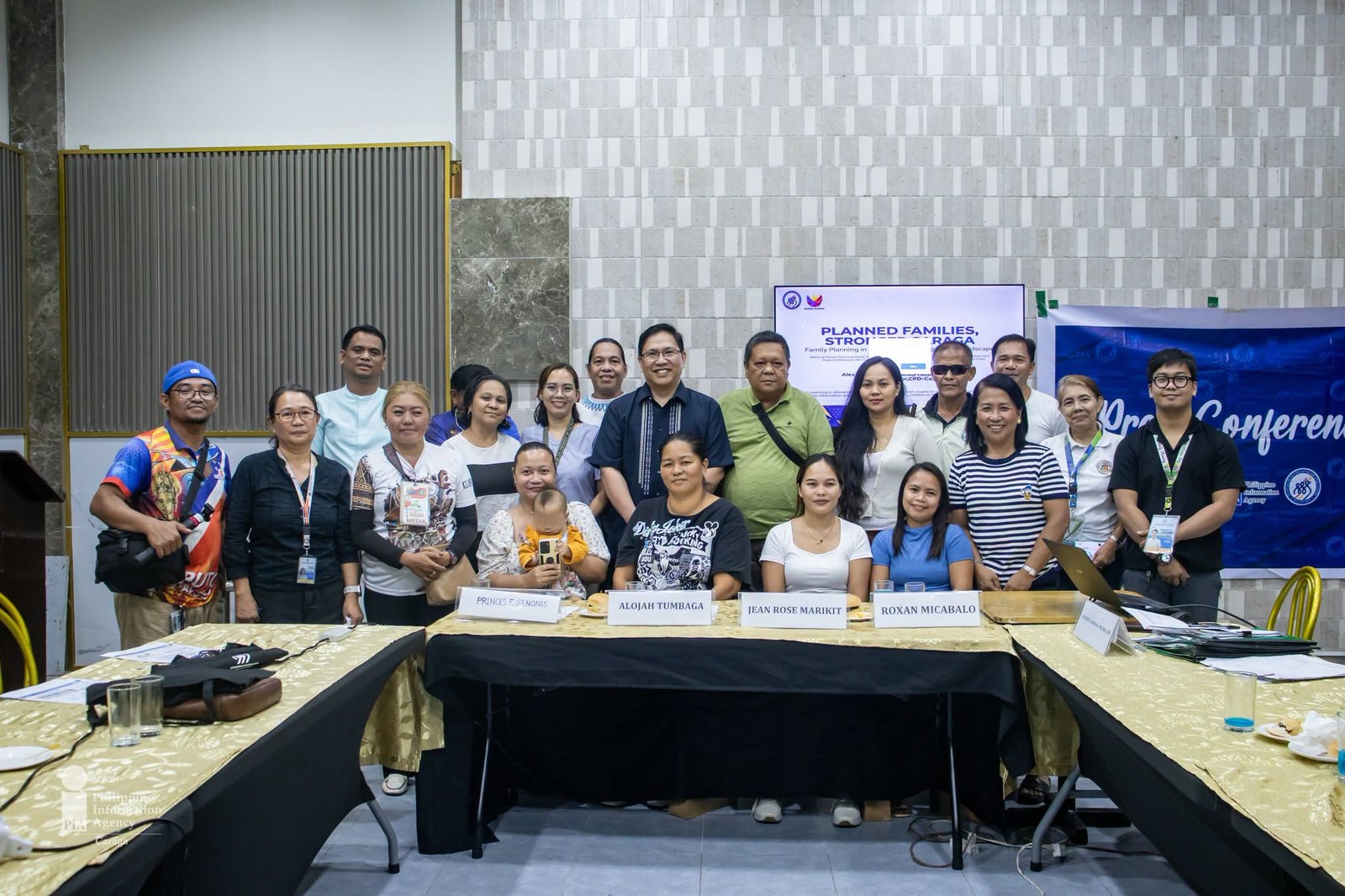
CPD-13 Regional Director Alexander Makinano presented the figures Thursday during a press conference marking the 2026 National Family Planning Month.
“Family planning is about choice, health, and development,” Makinano said.
The challenge is ensuring that “choice” is meaningful—particularly for women and couples who may face financial, geographic or informational barriers to reproductive health services.
The numbers tell two stories
The region’s overall figures show progress, but they also reveal that modern family planning has not reached everyone.
Among all women aged 15 to 49, only 32.2 percent were using a modern family planning method in 2025, while 39.5 percent were using any family planning method.
The most commonly reported modern method was the pill at 15 percent, followed by implants at 5 percent and female sterilization at 3.6 percent.
These figures matter because family planning is not only about preventing unintended pregnancies. It can allow couples to space pregnancies, protect maternal health and make decisions based on their capacity to provide for their children.
For low-income families, the decision can have consequences for food, education, healthcare and household finances.
A mother’s story puts the statistics in perspective
For Roxan Micabalo, 35, of Buenavista, Agusan del Norte, family planning is closely tied to her experience growing up poor.
One of 10 children, Micabalo said her father worked as a trisikad driver. Only two of the siblings completed college because the others had to work to help the family survive.
“I experienced a very difficult life,” she said.
Micabalo and her husband decided to plan their own family.
She initially used pills after their first child before shifting to an implant. The couple now has one child and plans to have another when they are ready.
Her experience highlights why reproductive health information must reach families before difficult choices become crises.
Another mother, 24-year-old Jean Rose Marikit, said she has had no problems using an implant and currently has one child.
“With the difficult situation we are facing, family planning is a must for couples,” she said.
Fertility is falling—but not fast enough to close the gap
Caraga’s fertility rate has declined dramatically over the long term, from 4.9 children per woman in 1993 to 2.2 in 2025.
Yet the region’s fertility rate remains above the national rate of 1.7.
That difference is significant.
It suggests that while reproductive behavior is changing, Caraga still has a different demographic reality from the country as a whole—and local programs cannot simply rely on national averages.
The decline in teenage childbearing is another positive development.
The proportion of teenage women who had begun childbearing dropped from 8.2 percent in 2017 to 6.9 percent in 2022 and 5.6 percent in 2025.
But even at 5.6 percent, thousands of young women may still enter motherhood while they are themselves at an early stage of education, employment and economic independence.
A growing population still needs services
Caraga’s population reached 2.865 million in 2024, up from about 2.80 million in 2020 and 2.6 million in 2015.
The region recorded an annual population growth rate of 0.51 percent between 2020 and 2024, according to CPD.
Population growth, combined with continuing fertility and teenage pregnancy concerns, means demand for reproductive health information and services will not disappear.
This is where information campaigns become crucial.
Knowing that family planning exists is not enough. Women and couples need understandable, evidence-based information about available methods, their benefits and possible side effects, where services are available and how to make decisions appropriate to their circumstances.
They also need services that are accessible, affordable and respectful of their choices.
The real test is reaching the remaining 47 percent
CPD said it continues to work with local government units to expand family planning information drives in the region.
The progress is clear: modern contraceptive use among married women has risen by 6.1 percentage points since 2017.
But the remaining gap is just as important.
If 52.9 percent are using modern methods, 47.1 percent are not.
That figure should not automatically be interpreted as unmet need—some women may be pregnant, seeking pregnancy, unable to use certain methods, or relying on other choices. But it does show why the work cannot stop at celebrating the increase.
The next challenge is reaching those who remain underserved with accurate information, voluntary choices and reliable services.
For Caraga families like Micabalo’s, family planning is ultimately about having enough resources to give children opportunities their parents may not have had.
The statistics show progress.
They also show why the conversation must continue—because behind every percentage point is a woman, a couple, a pregnancy and a family’s future.