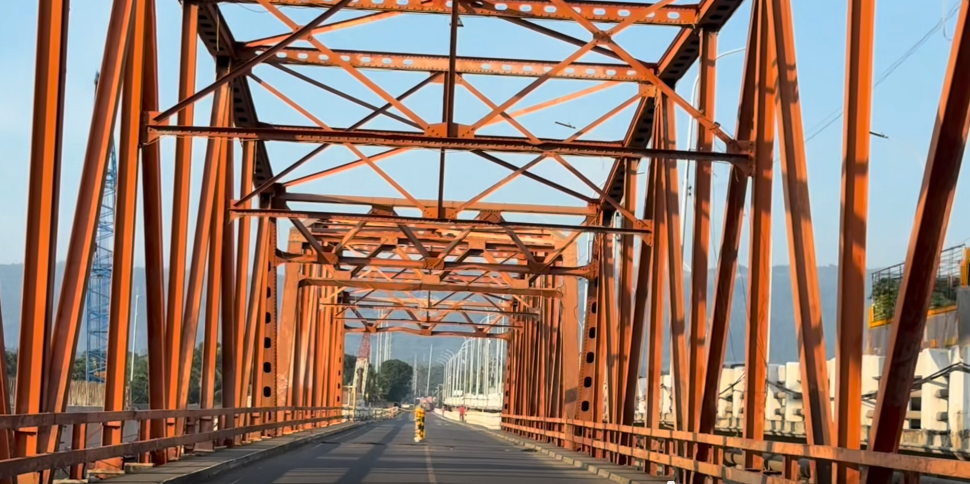
DPWH chief wants faster replacement of aging Tagoloan, Odiongan bridges
Photo: DPWH
MISAMIS ORIENTAL (August 28) — Every day, motorists and commuters cross the aging Tagoloan and Odiongan bridges carrying people, goods and traffic across Misamis Oriental.
But the bridges they depend on are already showing their age—and the government has yet to fully fund their replacements.
Public Works and Highways Secretary Vince Dizon expressed disappointment after learning that the proposed replacement projects for the two bridges remain short of full funding despite concerns over their deteriorating condition.
Dizon inspected the bridges earlier this week with Misamis Oriental lawmakers Bambi Emano and Karen Lagbas, looking into both the condition of the structures and the progress of their replacement.
The inspection underscored a problem that communities cannot afford to ignore: the bridges are aging, traffic is growing, but the permanent solution is still waiting for funding.
Dizon described the bridges as rusting and heavily battered. With large volumes of vehicles and commuters using them, their condition has become a public safety concern.
“These are not just old bridges,” the situation suggests. They are critical links in the daily lives of communities and businesses that depend on them to move people, food, farm products and other goods.
A major bridge disruption could quickly become a major transportation problem.
President Ferdinand Marcos Jr. has ordered the Department of Public Works and Highways (DPWH) to speed up the construction of stronger replacement bridges, Dizon said.
The President also directed the agency to build additional bridges in strategic areas to help ease traffic congestion in Butuan, Cagayan de Oro and Iligan.
For Northern Mindanao, the orders point to a larger infrastructure challenge.
Roads and bridges built years ago are now carrying heavier traffic as cities expand and trade between provinces increases. Maintaining old structures may keep them operating temporarily, but it does not solve the underlying problem of aging infrastructure.
That is why Dizon has pushed for long-term infrastructure solutions instead of depending mainly on repairs.
The immediate hurdle, however, is funding.
The DPWH is expected to work with lawmakers and other government agencies to secure the money needed to replace the Misamis Oriental bridges and accelerate construction.
For residents, the concern is straightforward.
They should not have to wait for a bridge to fail before its replacement becomes urgent.
Every trip across an aging bridge carries the same expectation: that the structure will remain safe until motorists reach the other side.
The government now has the inspection results, the presidential directive and the proposed replacement projects.
What communities are waiting for is the funding—and the construction that follows.
Because when it comes to bridges carrying thousands of people every day, “not yet fully funded” should not become another way of saying “not yet urgent.”