DAVAO CITY (September 1) — More than 1,000 coconut seedlings were planted across the Davao Region on August 28, but for the region’s hundreds of thousands of coconut farmers and farm workers, the bigger challenge goes beyond putting new trees in the ground: ensuring that coconut production provides a stable and decent livelihood.
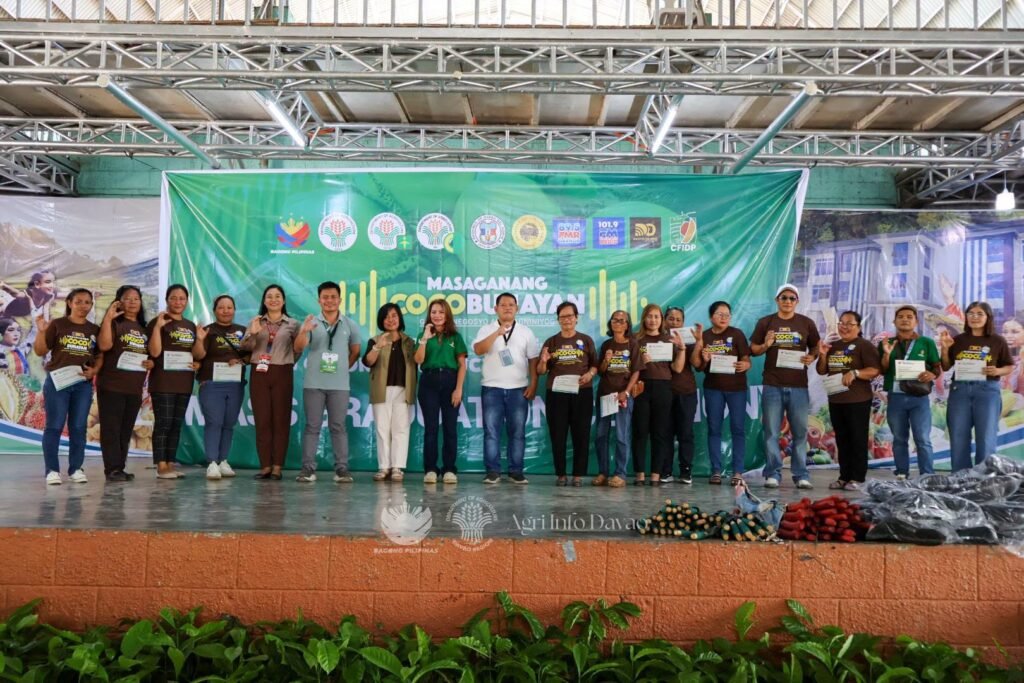
More than 500 participants joined synchronized planting activities at seven sites in the region as part of the 40th National Coconut Week, with the Philippine Coconut Authority (PCA) leading the initiative.
A total of 959 dwarf coconut seedlings, including Catigan and Tacunan varieties, and 300 hybrid seedlings were planted in Davao de Oro, Davao Oriental, Davao del Sur and Davao City.
The activity supports the national government’s goal of planting 100 million coconut trees by 2028 under the Coconut Farmers and Industry Development Plan (CFIDP).
The scale of the planting target comes as Davao continues to dominate the country’s coconut industry.
Preliminary data from the Philippine Statistics Authority showed that the Philippines produced 14.5 million metric tons of coconut with husk in 2025. Of this, the Davao Region accounted for 1.9 million MT, or 13.7 percent of national production, making it the country’s top coconut-producing region.
But high production does not necessarily translate into high incomes for coconut farmers.
Coconut farmers remain vulnerable to fluctuating prices, rising production costs, aging trees, extreme weather and limited access to processing and higher-value markets. For many producers, the sale of raw coconut remains the main source of income, leaving them exposed to movements in farmgate prices and the demands of traders and consolidators.
This makes the government’s tree-planting drive only one part of a much larger challenge.
New seedlings will take years before they become productive. In the meantime, farmers need support for rehabilitating aging plantations, improving yields, accessing affordable farm inputs and technology, and developing alternative sources of income while newly planted trees mature.
The PCA-Davao Research Center in Bago Oshiro, Davao City, served as the region’s main planting site. Simultaneous activities were also conducted in Mabini, Davao de Oro; Lupon, Davao Oriental; Digos City and Hagonoy, Davao del Sur; and Toril and Marilog districts in Davao City.
According to PCA-Davao Research Center updates, the BAYANIyugan simultaneous planting activity was spearheaded by the PCA-Davao Region and PCA-Davao Research Center, led by PCA Davao Regional Manager III and Acting DRC Department Manager II Juvy Alayon.
The initiative brought together local government units, coconut farmers, community organizations, law enforcement units, private companies and government agencies, including the Maritime Industry Authority-Davao, National Commission on Indigenous Peoples-Davao, Bureau of Plant Industry-Davao and Department of Agriculture-Davao.
The government’s 100-million-tree target could help replenish the country’s coconut resource base, particularly as many existing coconut trees are already old and less productive.
But the success of the program should ultimately be measured not only by the number of seedlings planted and surviving, but by whether those trees eventually produce higher yields and better incomes for the farmers who care for them.
For Davao, the country’s leading coconut-producing region, the challenge is clear: turn the region’s production advantage into a livelihood advantage for coconut farmers.
Planting more trees may secure the future of the industry. Ensuring that coconut farmers can earn fairly from those trees is what will determine whether that future is sustainable.