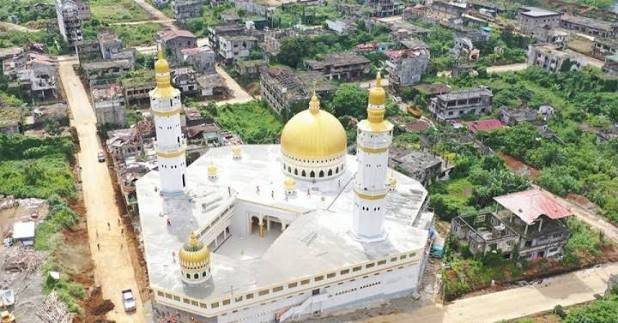
MARAWI CITY(October 6) — Nearly nine years after the Marawi siege, residents are still waiting for one of the most basic promises of recovery: reliable water.
“When will the water flow?” Lanao del Sur Rep. Zia Alonto Adiong asked as he questioned the continuing delay in projects meant to restore the city’s water and sanitation system.
For families rebuilding their lives after the 2017 war, Adiong said rehabilitation cannot stop at rebuilding houses, roads and other structures.
“The rehabilitation of Marawi was never simply about rebuilding structures alone. It was about restoring lives. It was about giving displaced families the opportunity to return home with dignity,” he said.
Yet despite years of government funding and project implementation, a fully functioning water system remains unfinished.
Adiong said the Local Water Utilities Administration (LWUA) received at least P296.24 million in funding releases beginning in 2017 for water supply and sanitation projects in Marawi, including facilities serving transitional shelter sites in Barangay Sagonsongan.
The projects were supposed to be completed in 2025, but the deadline was later moved to May 2026.
That deadline has also passed.
Adiong said LWUA’s project status reports showed that while several components of the Marawi Recovery, Rehabilitation and Reconstruction program had been started, critical facilities needed for a functioning water and sanitation system remained incomplete.
The delay is especially difficult to explain for residents who have already endured years of displacement and disruption following the siege.
“How many more deadlines must pass before the people of Marawi finally receive water?” Adiong asked.
He also questioned why LWUA has been able to complete projects in other areas while Marawi continues to wait despite the release of substantial public funds.
“The people of my city deserve more than LWUA’s promises. They deserve results. They deserve water,” he said.
For Marawi residents, the issue is no longer simply about another delayed government project. It is about whether nearly a decade of rehabilitation has delivered the basic services needed for families to rebuild their lives.
“For almost nine years, we are still waiting,” Adiong said.