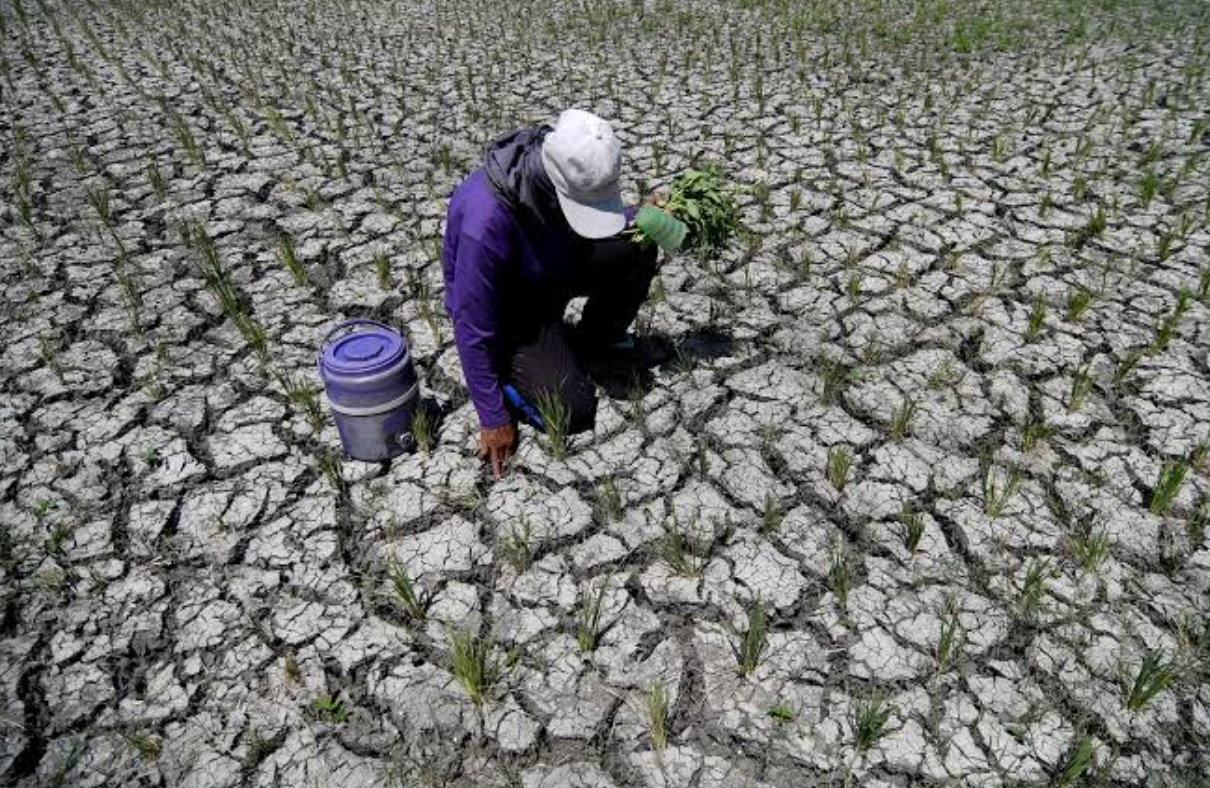
MANILA (October 8) — AT least 24 cities and municipalities in Mindanao are among the 106 cities and municipalities nationwide placed under a state of calamity due to El Niño, as prolonged dry conditions continue to affect farmers, families and local economies.
The National Disaster Risk Reduction and Management Council (NDRRMC) said Wednesday that 23 affected cities and municipalities are in Caraga, while one is in Soccsksargen, bringing Mindanao’s total to 24.
The remaining 82 cities and municipalities under a state of calamity are outside Mindanao: 66 in Cagayan Valley, 12 in Bicol Region and four in Calabarzon.
Across the country, El Niño has so far affected 428,687 individuals, or 115,246 families, according to the NDRRMC.
Caraga is among the regions bearing a significant share of the impact, with 23 cities and municipalities under a state of calamity. In Soccsksargen, the affected area covers one locality among South Cotabato, Cotabato, Sultan Kudarat, Sarangani and General Santos City.
The NDRRMC said the government has provided P45.49 million in assistance to 34,649 families, equivalent to 73.74 percent of the families identified as needing assistance.
The dry spell is also taking a heavy toll on agriculture.
The Department of Agriculture reported in its first El Niño bulletin issued Sept. 26 that 223,214 farmers in 14 regionshad been affected, with agricultural damage reaching P6.87 billion.
For Mindanao, the continuing drought threatens communities whose livelihoods depend heavily on farming, particularly as water shortages and declining agricultural production could compound income and food-security pressures.
The Philippine Atmospheric, Geophysical and Astronomical Services Administration (PAGASA) said El Niño could reach a very strong state by the end of 2026 and persist through the first half of 2027.
PAGASA also warned Wednesday that more areas are expected to experience drought from October 2026 through March 2027.
The longer dry period raises the risk that more Mindanao communities could move from experiencing agricultural losses to facing wider problems involving water availability, household incomes and local food supplies.
With the drought outlook extending into early 2027, local governments and national agencies face growing pressure to sustain assistance while preparing longer-term measures for farmers and communities likely to remain exposed to prolonged water and livelihood stress.