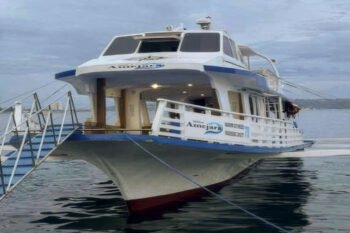
DAVAO CITY (February 19) — The sea has gone quiet, but the questions have not.
After 30 days of search grids, aerial sweeps, and coastal monitoring in the Davao Gulf, the Philippine Coast Guard–Coast Guard District Southeastern Mindanao (CGDSEM) ended active operations for the missing MBCA Amejara on Feb. 18.
One survivor was rescued. Six bodies were recovered. Nine people remain missing.
What investigators revealed next reframed the tragedy.
The Maritime Casualty Investigation (MCI) panel has recommended filing multiple homicide charges against the vessel’s owner, Ace Ryan Cortez, and Captain Patrocinio Genita — pointing to what authorities described as a chain of preventable violations.
Not an accident, but a sequence
According to CGDSEM commander Commodore Philipps Soria, the motor banca left Sta. Ana Wharf on Jan. 19 without Coast Guard clearance. Personnel had reportedly denied departure and advised the crew to secure a special permit from the Maritime Industry Authority (MARINA). The warning, investigators said, was ignored.
The probe also found that the vessel had undergone structural modifications, including the addition of an upper deck fitted with heavy electrical equipment — changes that may have altered its center of gravity.
Before departure, additional fuel reserves, scuba tanks, fishing gear, and liquor were reportedly loaded onboard. The lone survivor told investigators that passengers — and some crew — consumed alcohol during the voyage.
When the boat encountered rough waters near Cape San Agustin, it allegedly attempted to reverse course. It never made it back.
Investigators further cited discrepancies in the Master’s Declaration of Safe Departure (MDSD), describing entries as “fraudulent.” While the documents listed Governor Generoso as the destination, authorities said the intended route was “Passig de Byuda,” beyond Philippine territorial waters.
“The decision made by the captain and the owner to navigate while carrying the lives of their passengers constitutes a series of violations of safety regulations,” Soria said.
Beyond condolences
The Coast Guard has recommended criminal charges for reckless imprudence resulting in multiple homicide, alongside civil and administrative liabilities.
But for coastal communities where small vessels are routine lifelines, the case raises broader concerns: How did a boat allegedly denied clearance manage to leave port? Were inspections verified? Are monitoring systems strong enough to intercept unauthorized departures?
The end of search operations closes one chapter. The accountability process opens another.
For the nine still missing, justice now depends not on tides — but on whether enforcement failures are confronted as urgently as the waves that swallowed the Amejara.