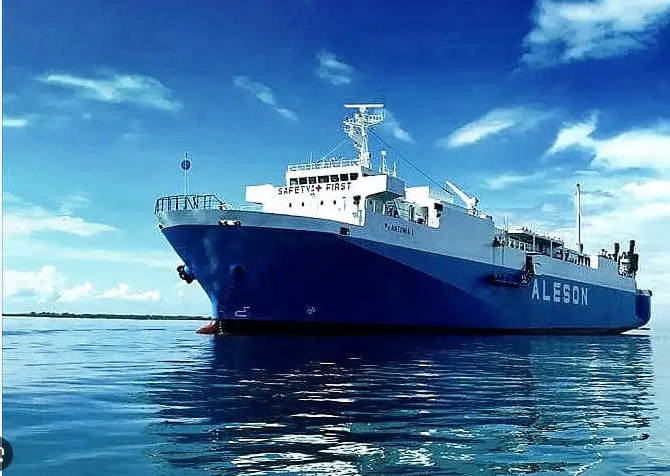
Kota Kinabako, Malaysia (August 16) — Maritine authorities has authorized the resumption of passenger operations by Aleson Shipping Lines, Inc. restoring sea travel linking islands across Western Mindanao, but a separate and urgent humanitarian operation remains uncertain: the planned repatriation of hundreds of Filipinos detained in Sabah, Malaysia.
Aleson resumed passenger sailings on August 14, nearly seven months after the Department of Transportation (DOTr) grounded its passenger fleet following the sinking of M/V Trisha Kerstin 3 off Basilan on January 26.
The company has again restored passenger services linking Zamboanga City with Isabela and Lamitan in Basilan, as well as services to Bongao, Tawi-Tawi. The return of the vessels is expected to ease the movement of residents, workers, traders and other passengers who depend heavily on sea transport between Zamboanga and the island provinces.
The resumption followed safety inspections and compliance checks by maritime authorities after the DOTr lifted its suspension order.
The grounding was imposed after the M/V Trisha Kerstin 3, operated by Aleson, sank while sailing from Zamboanga City to Jolo, Sulu. The disaster prompted the government to order a comprehensive safety audit of Aleson’s vessels and crew. At the time, DOTr officials said Aleson had been involved in 32 maritime incidents since 2019, prompting heightened scrutiny of the company’s safety record.
Initial government findings later identified possible overcapacity and overloading as among the potential causes of the sinking, while authorities also reported safety deficiencies and ordered administrative and possible criminal proceedings involving responsible parties.
The Sabah problem
While Aleson’s return to domestic routes has been welcomed by communities in Western Mindanao, another group of Filipinos is waiting for the company’s vessels—or another suitably cleared ship—to restore a different lifeline.
A total of 5,495 Filipino detainees in Sabah are reportedly awaiting repatriation, according to an August 6 letter from the Sabah State Immigration Department cited by Philippine sources. The letter reportedly states that an initial 800 Filipinos are scheduled to leave Sandakan for Zamboanga on August 22.
The Sabah authorities reportedly consider the repatriation urgent because of overcrowding in detention facilities.
The problem is that the planned vessel, identified in the Sabah notification as M/V Antonia 1, is associated with Aleson Shipping Lines—the same company whose passenger fleet was grounded after the Basilan ferry disaster.
Aleson’s own website currently lists Sandakan-Zamboanga as one of its international routes and identifies the M/V Antonia for that service, while also listing M/V Antonia 1 among the company’s RoRo passenger vessels. The exact vessel to be used for the August 22 repatriation therefore remains a matter that should be confirmed by Philippine maritime authorities and the shipping operator.
Reports from Sabah say the Filipino detainees scheduled for repatriation have completed their legal processes and have been issued the necessary travel documents.
But the major challenge remain, how they can be transported safely and lawfully from Sabah to the Philippines.
Philippine authorities face a delicate balance.
On one hand, Malaysia is seeking the return of thousands of Filipinos, and Sabah’s detention facilities are reportedly becoming overcrowded.
On the other hand, the Philippines cannot simply authorize a passenger vessel to sail without first establishing that it meets maritime safety requirements.
The principle is particularly important following the Trisha Kerstin 3 disaster, which exposed serious concerns about maritime safety and regulatory oversight.
A Philippine government decision to grant a special exemption without completing the required safety inspections could undermine the very safety standards imposed after the tragedy.
A humanitarian issue meets a maritime safety issue
The situation has therefore created an unusual dilemma.
The Philippines needs to facilitate the repatriation of its citizens, but the government must also ensure that the vessel carrying hundreds of people is seaworthy and fully compliant with Philippine maritime regulations.
One possible solution is to clear the intended vessel if it passes all inspections.
Another is to authorize another qualified commercial vessel.
Government authorities could also explore the use of a government vessel, subject to legal, operational and safety requirements.
A recent Philippine commentary on the issue said the Philippine government should find a “safe and lawful way” to bring the detainees home, noting that Malaysia is pressing for repatriation because of overcrowding while Philippine maritime authorities must ensure that any vessel used is seaworthy.
Aleson’s resumed domestic operations could nevertheless be an important development for Western Mindanao.
The company historically served several routes connecting Zamboanga with Basilan, Sulu, Tawi-Tawi and other destinations. Its current published schedules show daily services between Zamboanga and Isabela and Lamitan, while its website continues to list Sandakan-Zamboanga as an international route.
For communities in the island provinces, the restoration of regular ferry services means easier access to markets, schools, hospitals, government offices and employment.
But the resumption also places renewed attention on whether the lessons from the Trisha Kerstin 3 tragedy have resulted in stronger and more consistent maritime safety enforcement.
The January disaster led the DOTr to order the grounding of Aleson’s entire passenger fleet and to direct the Maritime Industry Authority (MARINA) and the Philippine Coast Guard (PCG) to conduct safety audits of the company’s vessels and crew.
For the 800 Filipinos reportedly scheduled to leave Sandakan on August 22, the coming days are critical.
Their documentation is reportedly in order. Sabah authorities have prepared for their departure. But the sailing remains dependent on whether the vessel intended for the operation receives the necessary Philippine maritime clearances—or whether another vessel is approved.
For the thousands still waiting in Sabah, the issue is no longer simply about transportation.
It is about bringing Filipino citizens home without compromising the maritime safety standards put in place after one of the country’s most serious recent ferry disasters.
As Aleson resumes domestic operations, the government now faces a parallel test: how to balance the urgent humanitarian need to repatriate thousands of Filipinos with its responsibility to ensure that the ship carrying them home is safe.-With report fromMalaysia correspondent Nikko Fabbian