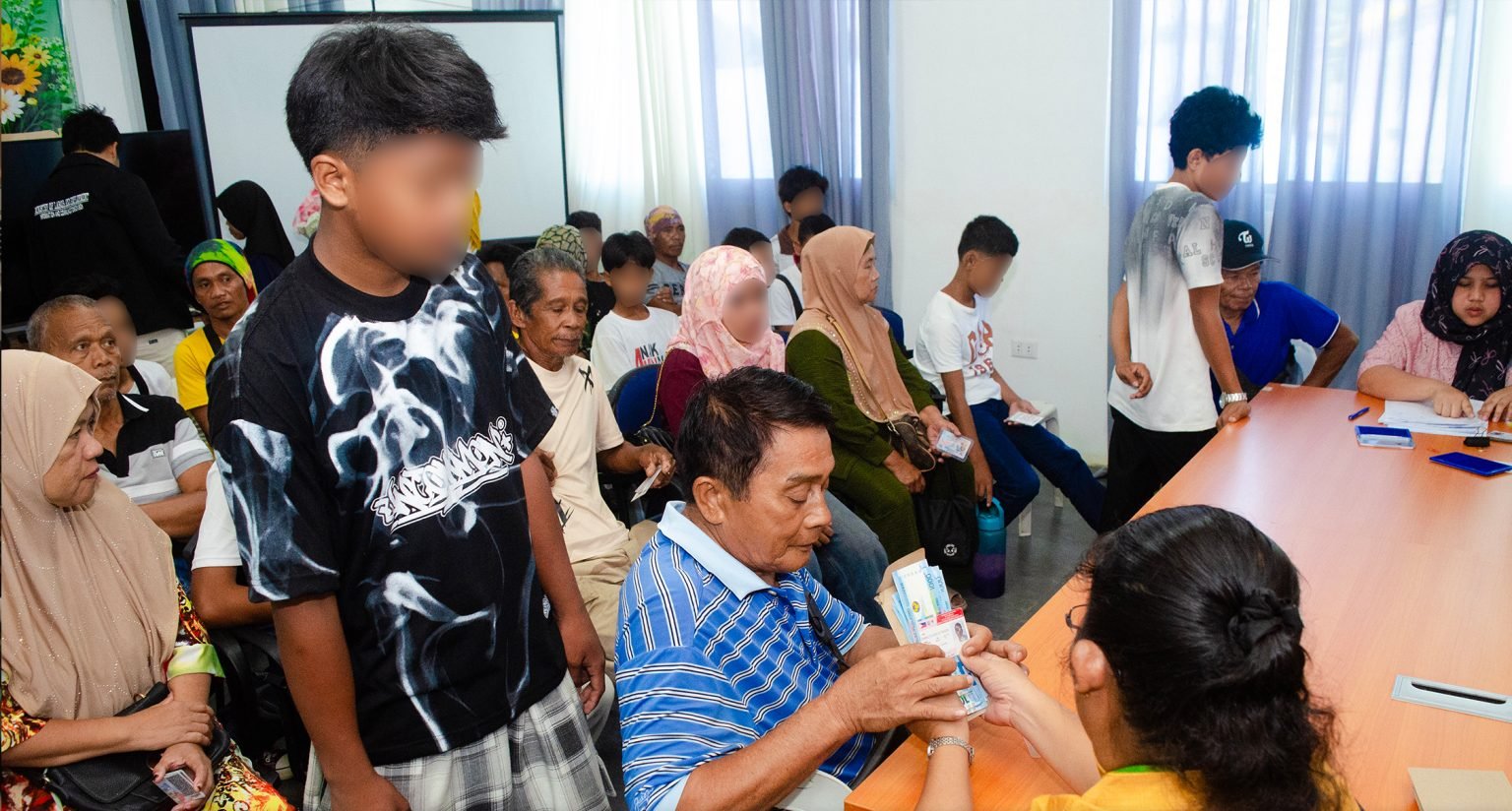
A total of 121 Bangsamoro children rescued from child labor and hazardous work individually received a total of P20,000 in cash aid and school supplies from the Ministry of Labor and Employment (MOLE) in Cotabato City on Oct. 5, 2026. (Photo courtesy of MOLE)
COTABATO CITY (October 13) — The Bangsamoro government has released P2.42 million in cash and educational assistance to 121 children rescued from child labor and hazardous work, but the real test is whether the intervention keeps them in school and prevents them from returning to exploitative work.
The Ministry of Labor and Employment (MOLE) said Monday, October 12, that each beneficiary received P15,000 in cash and P5,000 worth of school supplies under its Bangsamoro Child Labor Sagip Program (BCLSP).
The package amounts to P1.815 million in cash assistance and P605,000 in educational supplies, bringing the total to P2.42 million.
The assistance was distributed last week in Cotabato City through the ministry’s Bureau of Employment Promotion and Welfare (BEPW).
Sara Jane Sinsuat, BEPW director, said 84 beneficiaries came from Maguindanao del Norte and 37 from Cotabato City. The children attended the distribution with their guardians.
The assistance can ease immediate financial pressures, but it does not automatically resolve the poverty and unmet basic needs that can push children into work. Without sustained support for their families, rescued children may remain vulnerable to the same conditions that exposed them to exploitation.
When poverty competes with education
Sinsuat said the program aims to help children continue their education while addressing circumstances that expose them to child labor, including poverty and inadequate support for basic needs.
She urged beneficiaries to take their studies seriously and save money for emergencies and future needs.
But preventing child labor cannot depend on children’s financial discipline alone. When families struggle to pay for food, transportation and other essentials, children may face pressure to earn rather than attend school.
Hazardous work can expose children to injury and exploitation while depriving them of classroom time, rest and opportunities for healthy development. Interrupted education can also limit their future employment prospects, perpetuating the economic hardship that contributed to their entry into work.
The BCLSP combines cash assistance with school supplies to help reduce these pressures. Whether that support produces lasting results, however, must be demonstrated through follow-up monitoring.
Government must account for results
The MOLE should report how many of the 121 beneficiaries have returned to school, remain enrolled and attend classes regularly. It should also disclose how many have been assessed for continuing risks of child labor and what assistance has been provided to their families.
The ministry, working with local governments, schools and social welfare offices, should establish a follow-up monitoring schedule and refer families needing livelihood assistance or social protection to appropriate programs.
Authorities should also track whether any beneficiary returns to hazardous work and document the action taken to address the circumstances behind the recurrence.
These measures would help determine whether the P2.42-million intervention is more than a one-time distribution. Public reporting should identify results while protecting the children’s identities and privacy.
The ministry also conducted information campaigns during the distribution on illegal recruitment, human trafficking and irregular migration. These efforts should be linked to accessible reporting and referral mechanisms so children and families know where to seek help when exploitation occurs.
The BCLSP is part of the Bangsamoro government’s effort to rescue children below 18 from exploitation and hazardous work and help them pursue their education, according to Sinsuat.
But rescue is only the first step. The government must show that the children remain protected, families receive appropriate support and the conditions that drive child labor are being addressed.
The P2.42 million has been distributed. The next measure of accountability is how many of the 121 children stay in school—and how many are kept from returning to hazardous work.