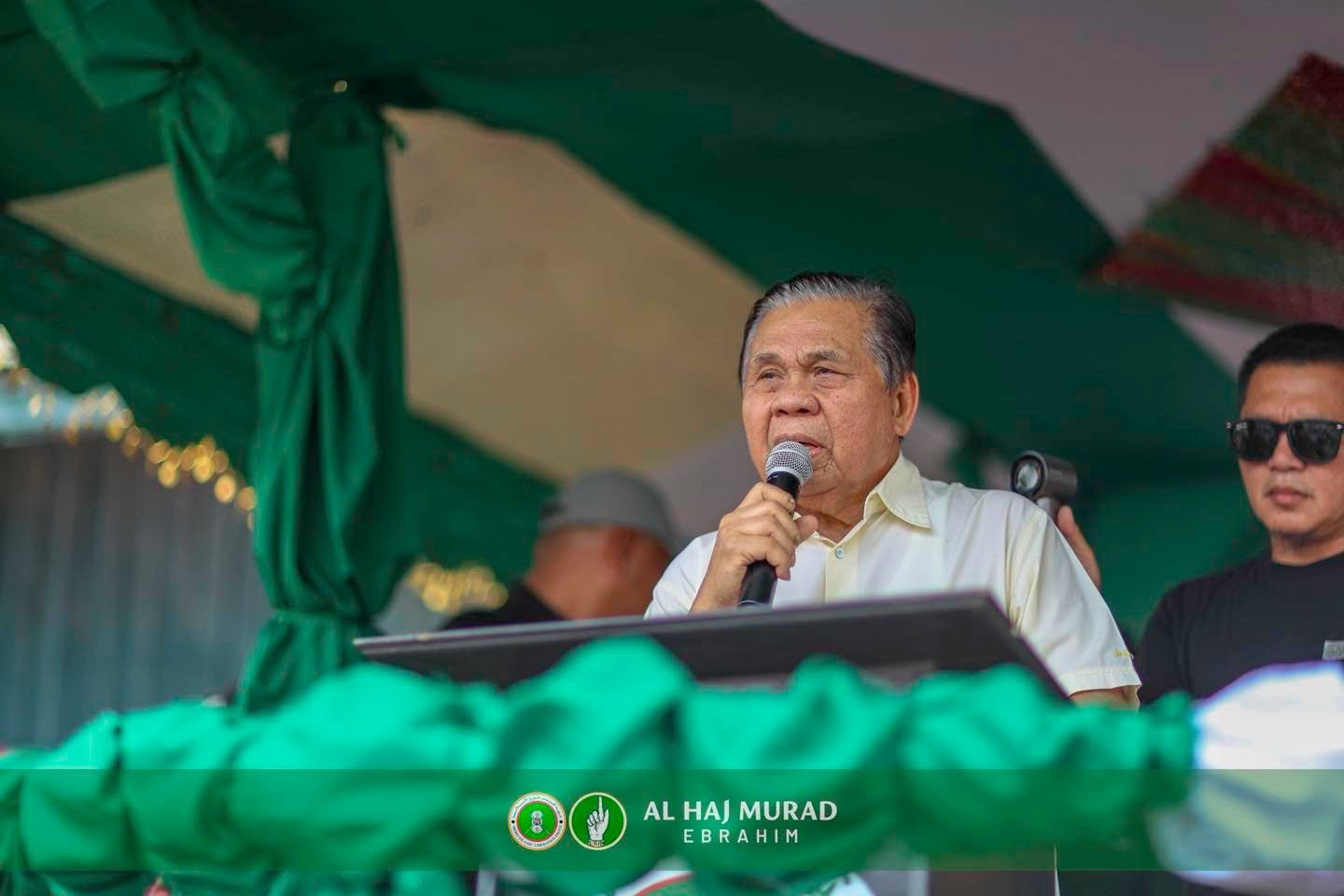
COTABATO CITY (October 13) — Nearly five decades after formal peace negotiations began, thousands of former Moro Islamic Liberation Front (MILF) combatants are still waiting to complete the process of laying down their arms, prompting a Bangsamoro civic group to urge President Ferdinand Marcos Jr. to meet MILF chair Al Haj Murad Ebrahim before the region’s Parliament opens on Oct. 30.
AMANA BARMM said a meeting between Marcos and Murad could help revive efforts to complete the decades-long peace process, particularly the stalled decommissioning of former combatants.
“Fifty years. Twenty months. One meeting,” said Sultan Alim Saad Amate, the group’s convenor, in a statement Monday.
AMANA said Murad had requested a meeting with Marcos in a letter dated Oct. 1. The group wants Malacañang to act before the opening of the Bangsamoro Parliament, arguing that unresolved peace commitments require direct attention from the national government and the MILF leadership.
The appeal comes as the Bangsamoro Autonomous Region in Muslim Mindanao (BARMM) prepares for a new parliamentary term following the Sept. 14 elections.
For communities that have endured decades of armed conflict, the issue goes beyond political meetings. The implementation of peace agreements affects security, the return to normal community life and opportunities for former combatants to rebuild their lives outside armed struggle.
Final decommissioning phase remains unresolved
The unfinished decommissioning of former MILF combatants remains a major hurdle in implementing the 2014 Comprehensive Agreement on the Bangsamoro.
As of July 4, 2024, 26,145 of the 40,000 combatants covered by the decommissioning program had completed the process, leaving 13,855 still to undergo decommissioning. Of the 7,200 weapons covered by the program, 4,625 had been accounted for, leaving 2,575, according to figures cited in reports on the peace process.
The fourth and final phase, involving approximately 14,000 combatants and 2,450 weapons, was deferred in 2025 amid disagreements over the government’s delivery of socioeconomic commitments.
The MILF raised concerns over the fulfillment of these commitments, while the government disputed the assessment and maintained that it had provided substantial assistance to combatants who had already been decommissioned.
The delay has left the final phase unresolved, although the broader peace process continues.
On Sept. 25, 2026, government and MILF peace panels reaffirmed their partnership and agreed to develop an updated roadmap for implementing outstanding commitments. However, the latest information cited here does not establish a new completion date for the final decommissioning phase.
AMANA said about 14,000 former combatants were still waiting to lay down their arms, adding that no further decommissioning had taken place since July 2024. The figure is broadly consistent with the reported number assigned to the final phase, although the exact status of the remaining combatants and weapons requires confirmation from the peace panels.
For former combatants and conflict-affected communities, the unresolved questions include when the final phase will resume, what commitments both parties must fulfill, and when the remaining combatants and weapons will be processed.
Political leadership shifts, MILF role remains
The appeal also highlights the distinction between political leadership in the BARMM government and leadership of the MILF.
In March 2025, Marcos appointed Abdulraof Macacua, a former MILF chief of staff, as interim chief minister, replacing Murad. Macacua now leads the Bangsamoro Federalist Party, according to AMANA.
The group argued that the change in regional political leadership did not eliminate Murad’s role as MILF chair or his importance to the peace process.
“The seat moved. The command stayed,” Amate said.
AMANA also noted that Marcos had met Macacua and leaders of the BARMM Grand Coalition following the September elections but had yet to meet the MILF leadership.
The coalition was formed by Basilan Gov. Mujiv Hataman, former governor Suharto “Teng” Mangudadatu, Lanao del Sur Gov. Mamintal “Bombit” Adiong Jr. and Sulu Vice Gov. Abdusakur Tan.
For AMANA, direct engagement with Murad remains important because regional political arrangements and the implementation of the MILF peace commitments are related but distinct matters.
“The table is set. One chair is empty,” Amate said.
Calls for a broader Bangsamoro coalition
Beyond the proposed presidential meeting, AMANA endorsed the United Bangsamoro Justice Party’s proposal for a “rainbow coalition” government bringing together the MILF, the Moro National Liberation Front (MNLF), other elected parties, Indigenous Peoples and settlers.
The United Bangsamoro Justice Party, founded by the MILF, won 30 seats in the September elections, including all six elected sectoral seats, according to AMANA.
“Many colors, one Bangsamoro,” said Maulana Mamutuk, the group’s co-convenor.
The proposed coalition would seek to bring different political groups and communities into a shared governing arrangement. Its effectiveness, however, would depend on whether political inclusion translates into cooperation on governance, public services and the implementation of peace commitments.
Mamutuk also cited a September Social Weather Stations survey, saying Marcos’ national rating had fallen to minus 11 while Mindanao was the only region where his rating had improved. The specific survey and rating measure should be verified before publication.
“Mindanao moved first. Now, Malacañang,” Mamutuk said.
Beyond promises
AMANA wants Marcos to meet Murad before Parliament opens on Oct. 30, presenting the proposed meeting as an opportunity to address unfinished commitments and renew dialogue between the national government and the MILF.
For Bangsamoro communities, the significance of such a meeting will ultimately depend on what follows: clear commitments, a timetable for resolving outstanding issues and measurable progress in implementing the peace agreement.
The region’s political transition has created a new parliamentary landscape. But the enduring test of the peace process is whether promises made at the negotiating table lead to greater security, meaningful opportunities for former combatants and lasting peace for communities that have borne the costs of conflict.