DAVAO CITY (May 28) — As police in Davao brace for possible enforcement orders against Senator Ronald “Bato” dela Rosa, a fierce legal showdown is unfolding over the government’s move to strip the former police chief of his firearms licenses — a battle his lawyer now calls a looming “constitutional crisis.”
At the center of the controversy are 118 firearms reportedly registered under dela Rosa, now facing revocation amid legal developments tied to the International Criminal Court (ICC) investigation into the Duterte administration’s bloody anti-drug campaign.
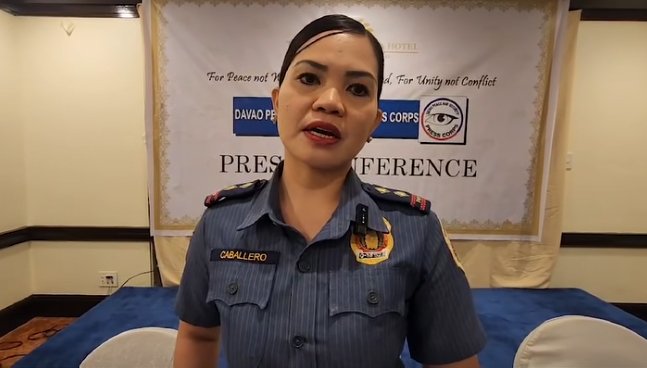
Speaking during Wednesday’s Davao Peace and Security Press Briefing at The Royal Mandaya Hotel, Davao City Police Office (DCPO) spokesperson Captain Hazel Caballero said local police are prepared to support the National Bureau of Investigation (NBI) if directed by higher headquarters.
“Once the Davao City Police Office receives the proper documents — especially if the licenses are officially revoked — we will follow and implement those instructions,” Caballero said.
The warning was blunt: once revoked, the firearms can no longer legally be carried or used anywhere.
“Failure to comply will constitute illegal possession of firearms,” she added.
The DCPO said it is awaiting formal guidance from Philippine National Police chief General Jose Melencio Nartatez Jr., but declined to comment on reports that the NBI had classified dela Rosa as “armed and dangerous.”
“We know his personality and many here respect him,” Caballero said carefully, avoiding direct remarks on the NBI’s assessment.
But while local police projected restraint, dela Rosa’s camp went on the offensive.
In a sharply worded statement, defense lawyer Atty. Israelito Torreon accused authorities of weaponizing the law and bypassing unresolved constitutional questions surrounding the ICC case.
“This is a constitutional crisis executed in stages,” Torreon said.
He argued that the PNP Firearms and Explosives Office wrongly cited Section 4(g) of Republic Act 10591 — a provision dealing with qualifications for obtaining a firearms license, not revocation.
“The law is clear,” Torreon stressed. “A pending case is not enough to revoke a firearms license absent a final conviction or court order.”
The lawyer also challenged the government’s reliance on the constitutional Doctrine of Incorporation to justify recognizing ICC processes, insisting that international tribunals do not automatically carry the authority of Philippine courts.
Torreon further warned of what he described as a dangerous contradiction: the state allegedly branding dela Rosa “armed and dangerous” while simultaneously revoking his legal right to carry firearms — all before the Supreme Court has ruled on whether the ICC warrant can even be enforced locally.
“The Executive’s answer is not to wait for the Court,” Torreon said. “It is to act before the Court can answer. That is not law enforcement. That is a constitutional crisis.”
The escalating standoff now places dela Rosa — once among the country’s most feared anti-drug enforcers — at the center of a widening clash between executive power, police authority, and constitutional limits.