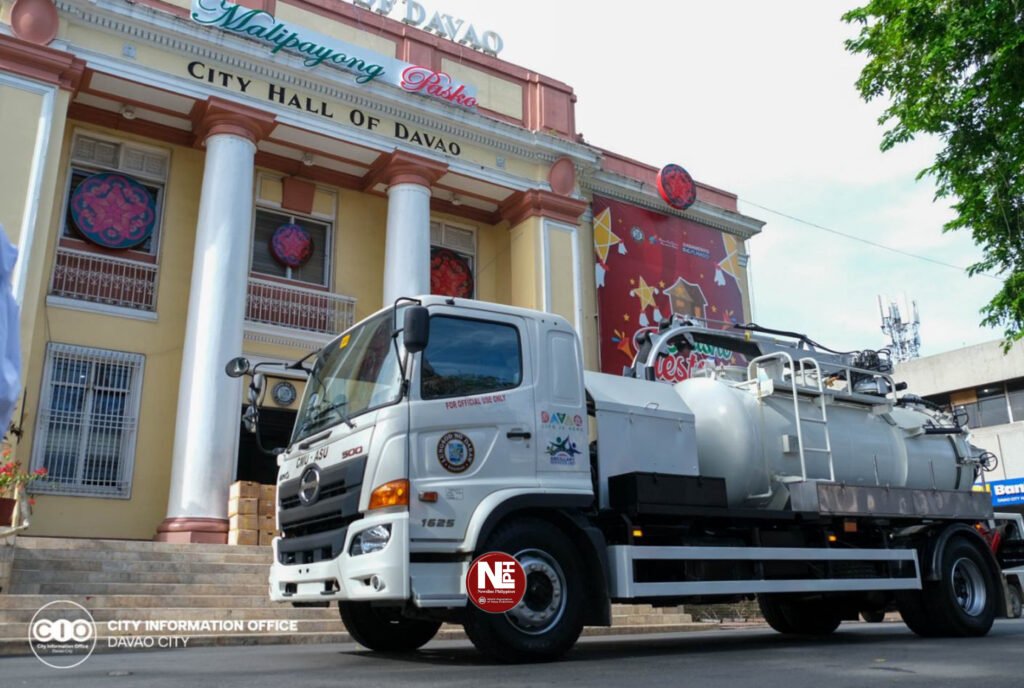
DAVAO CITY(January 7) — In response to increasing extreme rainfall and persistent urban flooding, the Davao City government has acquired a heavy-duty vacuum jetting truck to bolster its disaster-preparedness strategy and improve drainage maintenance across the city.
The ₱18-million vehicle, funded by the City Disaster Risk Reduction and Management Office, uses high-pressure jetting combined with vacuum suction to remove hardened sludge, sand, and debris from clogged canals and drains—tasks that manual cleaning cannot fully address.
The truck is expected to accelerate canal clearing, helping floodwaters recede faster after heavy rains and reducing street flooding in vulnerable neighborhoods.
“This equipment is a game-changer for our drainage operations. Manual clearing risks leaving blockages behind, but the vacuum jetting truck can break down hardened sludge and debris and draw them up efficiently,” said Paul Bermejo, head of the city’s Ancillary Services Unit.
Climate and urban vulnerability
Davao City’s geography and growing urban density make it particularly vulnerable to flooding.
Extreme rainfall events have increased in frequency over the last decade, while decades of urban expansion have reduced natural water-absorbing areas like wetlands.
Studies indicate that over 95% of historic urban wetlands have been lost, leaving many neighborhoods—including Matina Aplaya, Tugbok Proper, and Talomo Proper—prone to prolonged street inundation after heavy rains.
The city’s disaster office said the vacuum jetting truck will initially be deployed in these high-risk barangays, where clogged drains and blocked canals frequently worsen runoff, disrupt daily life, and pose public health risks.
Linking technology to climate resilience
The acquisition complements broader urban planning and climate-adaptation efforts, including canal rehabilitation, regular maintenance schedules, and community awareness programs.
By integrating modern drainage equipment with strategic infrastructure planning, Davao City aims to protect property, improve mobility, and enhance urban resilience against climate-related flooding.
“With climate change intensifying rainfall patterns, urban resilience is no longer optional—it is essential for protecting our communities,” Bermejo added.